Allulose vs Monk Fruit: Why Choosing Just One Is the "Culinary Mistake" Ruining Your Heart-Safe Baking 🍪
If you are currently stuck debating Allulose vs Monk Fruit for your next batch of healthy cookies, you are asking the wrong question.
You are likely standing at a crossroads in your health journey. You have done the hard work of ditching sugar. You have weathered the bitter aftertaste of early stevia products. But now, you are navigating a new wave of anxiety. You’ve seen the scary headlines linking erythritol—the filler in almost every "natural" bag on the shelf—to heart attacks and strokes. You’ve tried baking with pure monk fruit extract, only to pull a tray of sad, flat, rubbery discs out of the oven. 😔
I understand that frustration completely. As a PhD student in agriculture and a lifelong organic farmer, I treat my kitchen like a laboratory and my garden like a pharmacy. I know what it’s like to want to protect your family’s hearts while still giving them a birthday cake that actually tastes good.
I am here to tell you that the battle between these two sweeteners is a trap. The scientific reality is that these ingredients are not competitors; they are biological soulmates. Nature separated the two essential properties of sugar—Structure and Signal—into these two distinct plants.
In this guide, we are going to dismantle the marketing myths. We will look at the biochemistry of why your cookies fail without allulose, the microbiology of how monk fruit repairs your gut, and the toxicology of why you must purge erythritol from your pantry today. We aren't just baking a cake; we are engineering a metabolic shield. 💪
🌱 The Metabolic "Take Away" Summary
If you are standing in the grocery aisle debating Allulose vs Monk Fruit, you might be missing the bigger picture. As an agricultural researcher and lifelong farmer, I’ve learned that nature rarely works in isolation. While you want to protect your heart from the dangers of erythritol, choosing just one of these safe alternatives usually leads to baking disasters or bland desserts. Here is the "Symbiotic Solution" you need to know:
- 🛡️ The Safety Mandate: We strictly avoid erythritol-based blends. New clinical data links erythritol to "sticky platelets" and clotting risks, making purity our #1 priority.
- 🧱 The Structural Engineer: Allulose acts as the "Body." It provides the bulk, moisture, and browning (Maillard reaction) that pure monk fruit lacks, preventing your cookies from turning into flat, pale pucks.
- 🧬 The Medicinal Soul: Pure Monk Fruit acts as the "Signal." It feeds the beneficial Akkermansia bacteria in your gut and boosts sweetness without the cooling aftertaste of fillers.
- 🧪 The Golden Ratio: Stop choosing sides. Combine them (1 cup Allulose + ½ tsp Pure Monk Fruit) to create the ultimate heart-safe, metabolic-healing sugar replacement.
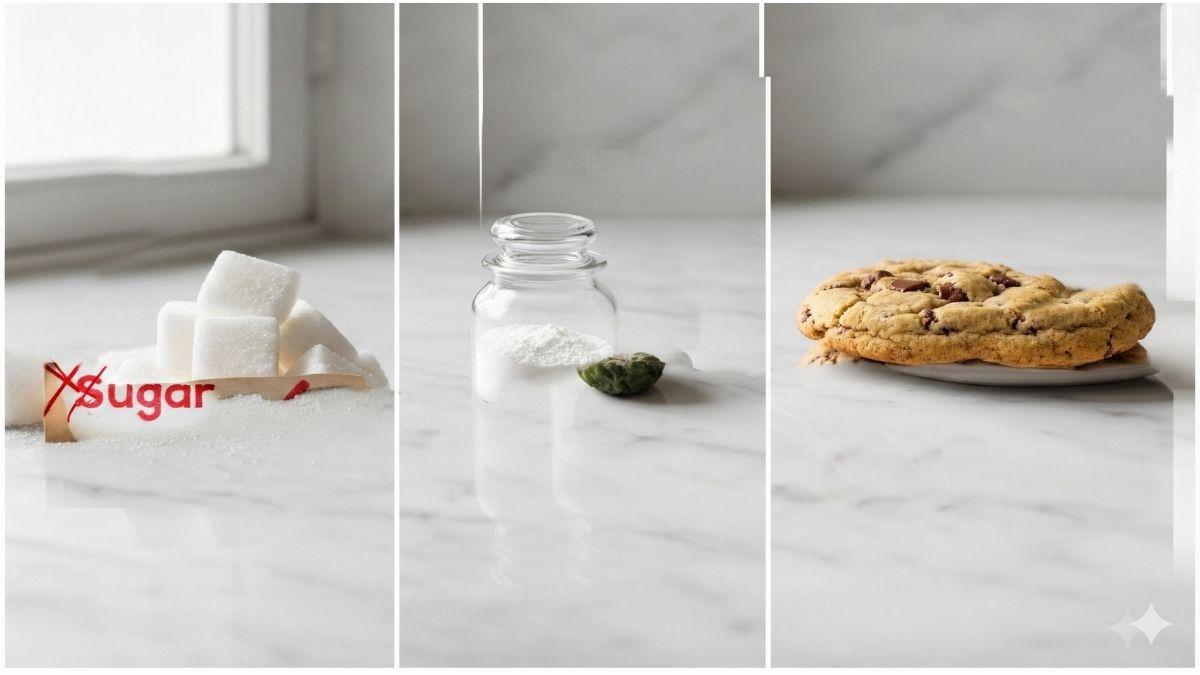 While many bakers struggle with the "flat puck" effect of pure monk fruit or the clotting risks of erythritol, this page highlights the "Structural Symbiosis" approach: using Allulose for bulk and Monk Fruit for sweetness
Part 1: The Safety Mandate – The Erythritol Crisis 💔
Before we discuss flavor or fluffiness, we must address the "Precondition" that brought you here: fear. Is your current sweetener safe?
For the last decade, the keto and organic communities—myself included—relied on erythritol. It was cheap, it had bulk, and we thought it was biologically inert. However, science evolves, and as a scholar, I must follow the data. Landmark studies recently published by researchers at the Cleveland Clinic have fundamentally shattered this safety assumption.
The Mechanism of "Sticky Blood"
The research found that erythritol is not inert. When consumed in the quantities found in standard "1:1 Sugar Replacements" (often 30 grams or more in a dessert), it causes a massive spike in plasma levels that persists for days. Crucially, erythritol was found to enhance platelet reactivity.
Think of your platelets as the body’s emergency responders. Their job is to clump together to stop bleeding if you get cut. Erythritol appears to put these responders on "high alert." It lowers the threshold for triggering a clot. For someone with existing metabolic concerns—like diabetes or a family history of heart disease—this "priming" effect increases the risk of inappropriate clotting (thrombosis), which can lead to heart attacks or strokes.
The Verdict on Erythritol vs Monk Fruit
This is where the distinction of erythritol vs monk fruit becomes life-saving. If you are holding a bag labeled "Monk Fruit" that lists erythritol as the first ingredient, you are not holding a health food. You are holding a risk factor. Neither pure Allulose nor pure Monk Fruit shares this clotting mechanism. This is why we must move to the Purity Protocol.
Part 2: The Structural Engineer – Why Allulose is Mandatory 🏗️
Now that we have established what not to use, let's talk about physics. Why did your last batch of sugar-free cookies fail?
To a chef, sugar is flavor. To a structural engineer (or a food scientist), sugar is a building material. It provides mass (bulk). It is hygroscopic (holds water). It undergoes thermal degradation (browning).
The "Ghost" Problem of Monk Fruit
Pure Monk Fruit extract is a "Ghost." It is comprised of mogrosides, which are up to 300 times sweeter than sucrose. This means to get the sweetness of one cup of sugar (approx. 200 grams), you only need a tiny pinch (approx. 0.8 grams) of monk fruit.
If you take 200 grams of mass out of a cookie recipe and replace it with 0.8 grams of powder, you have created a structural void. There is nothing to hold the cookie up. There is no mass to trap air bubbles. The result is a dense, collapsed puck. Furthermore, mogrosides do not brown. Your cookies will come out as pale as they went in, lacking that complex "roasted" flavor we crave.
Enter Allulose: The Body
This is where Allulose (D-psicose) enters the equation. Allulose is a "Rare Sugar" found in figs and raisins. Chemically, it is a monosaccharide, the C-3 epimer of fructose. Because it is a real sugar structure, it possesses the physical properties of sugar:
- Mass & Bulk: It provides the physical volume needed to structure a cake.
- Hygroscopicity: It binds water better than cane sugar, ensuring your muffins stay moist for days (unlike the dry, sandy texture of erythritol).
- The Maillard Reaction: This is the "Scientific Authority" key. Allulose is a reducing sugar. Under heat, it reacts with amino acids to create browning and caramelization. In fact, it browns better and faster than sugar.
The Sensory Win: Unlike erythritol, which absorbs heat when it dissolves (creating a weird "cooling" or minty sensation), allulose behaves neutrally. It tastes like warm sugar, not cold chemicals. ✨
Part 3: The Medicinal Signal – Why Monk Fruit is the "Soul" 🧘
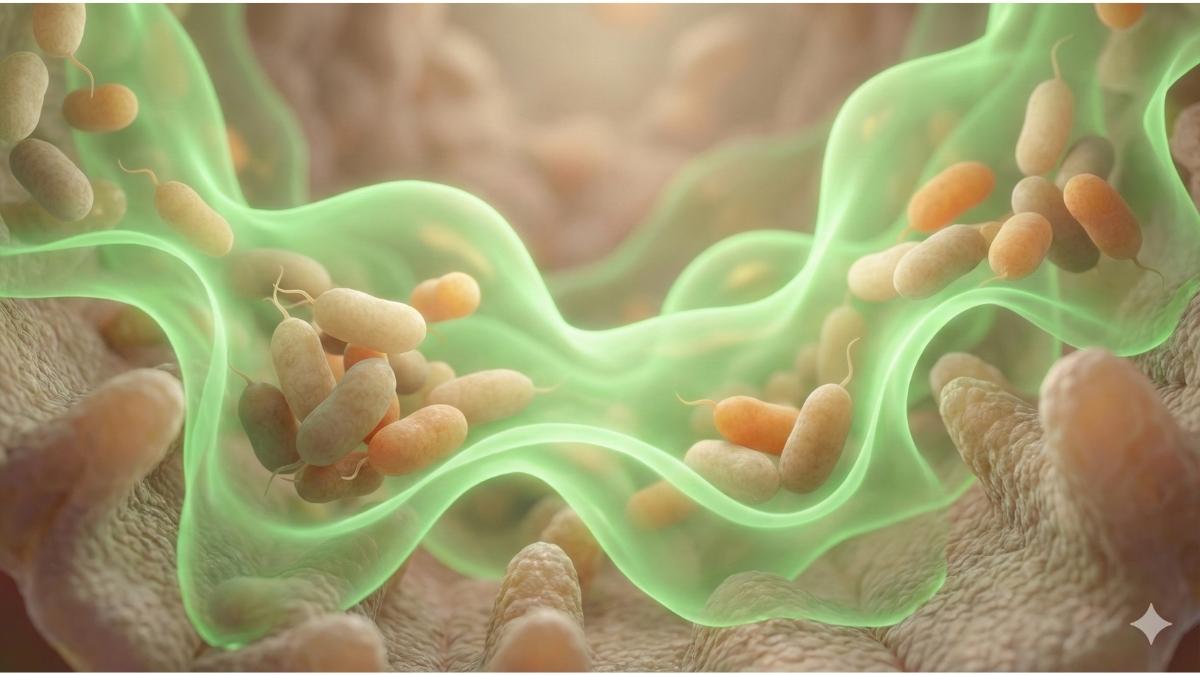 Pure Monk Fruit (Mogroside V) acts as a selective fertilizer for Akkermansia muciniphila, a keystone bacterium that strengthens the intestinal wall and prevents systemic inflammation caused by "leaky gut"
If Allulose is the body, Monk Fruit is the soul. You might ask, "Why not just use Allulose?"
The answer is Potency and Biology.
- The Potency Gap: Allulose is only 70% as sweet as sugar. If you use it 1:1, your desserts will taste bland. You would need to use more allulose to match the sweetness, which increases the cost and the risk of digestive "rumbling."
- The Biological Signal: This is where my research gets exciting. Pure Monk Fruit is not just a sweetener; it is a "Prebiotic Pharmaceutical."
Feeding the "Mason": Akkermansia muciniphila
In the soil, we feed the microbes to feed the plant. In your body, you must feed your gut bacteria to feed your metabolism. Pure monk fruit extract (specifically Mogroside V) acts as a selective fertilizer for a keystone bacterium called Akkermansia muciniphila.
Akkermansia is the "Mason" of your gut. It strengthens the mucin layer (the castle wall) of your intestines. A strong wall prevents "Leaky Gut" (intestinal permeability), stopping toxins from leaking into your bloodstream and triggering systemic inflammation. By adding a micro-dose of monk fruit to your baking, you are actively repairing your metabolic shield.
The GLP-1 "Double Tap"
You’ve likely heard of GLP-1 in the context of weight loss drugs like Ozempic. Did you know these two sweeteners stimulate your body to produce its own GLP-1?
- Allulose: Stimulates L-cells in the gut to release GLP-1 via vagal nerve activation, promoting satiety.
- Monk Fruit: The metabolite of mogrosides (Mogrol) activates the TGR5 receptor, which also triggers GLP-1 release.
By using them together, you are creating a "Symbiotic" effect that signals your brain that you are full, curbing the overeating often associated with diet treats. 🧠
Part 4: The "Purity Protocol" – Sourcing Matters 🌾
As a farmer, I have to give you a hard truth: Not all Monk Fruit is medicine.
The Pesticide Paradox
Siraitia grosvenorii (Monk Fruit) grows in the humid mountains of China. Conventional farming there often uses fungicides and insecticides, notably Chlorpyrifos, to save the crop.
Here is the paradox: Chlorpyrifos is a microbiome disruptor. Research shows it specifically kills Akkermansia muciniphila. If you buy non-organic monk fruit to feed your gut bacteria, you might be simultaneously ingesting the poison that kills them.
The Rule: Part 5: The Solution – The Structural Symbiosis Blend 🍰
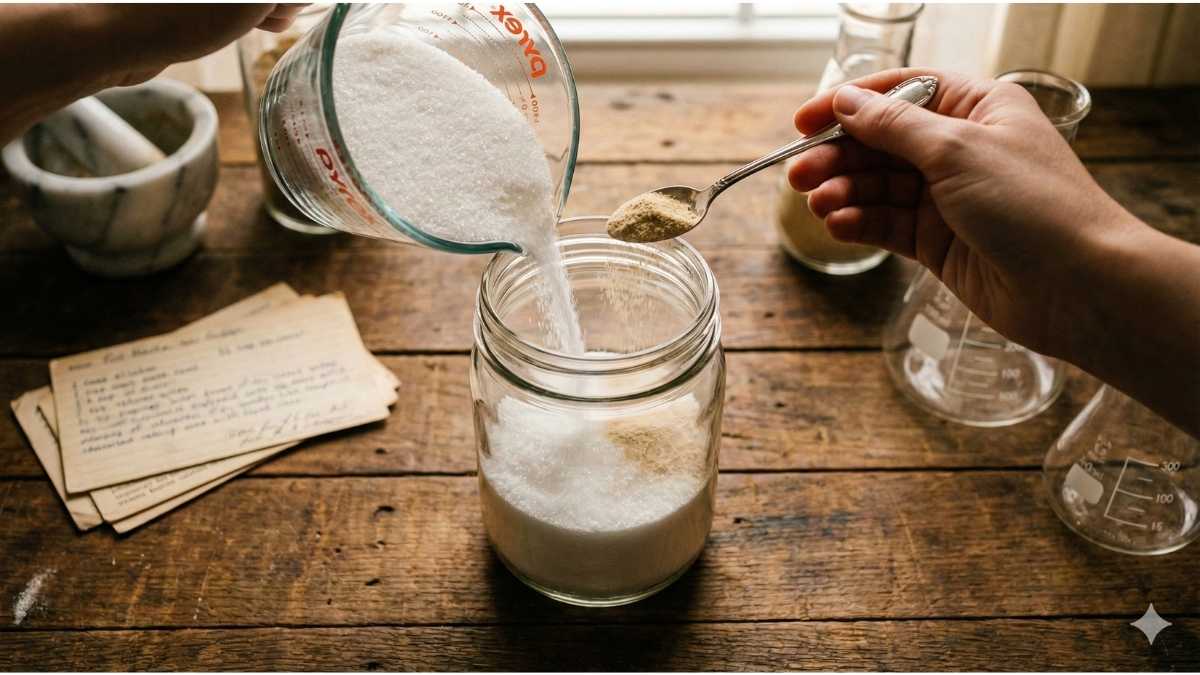 To replicate the physics of sugar without the toxicity of erythritol, combine the structural mass of Allulose (for browning and moisture) with the high-potency sweetness of pure Monk Fruit in this specific "Golden Ratio".
- For Allulose: It is made from corn. To avoid glyphosate and GMOs, look for "Non-GMO Project Verified" or Certified Organic.
- For Monk Fruit: USDA Certified Organic is non-negotiable. It is the only way to ensure the medicine isn't corrupted.
We have debunked the Allulose vs Monk Fruit rivalry. We know we need both. We need Allulose for the structure (browning/bulk) and Monk Fruit for the signal (sweetness/prebiotic).
Here is how you become the "Kitchen Chemist" and make your own Heart-Safe Structural Blend that outperforms anything on the shelf.
The "Golden Ratio" Recipe
Stop buying the pre-mixed bags that hide erythritol in the fine print. Mix this yourself.
Instead of searching for a pre-made monk fruit allulose blend, make this superior version at home:
- 1 Cup (approx. 200g) Organic Crystalline AlluloseRole: Structure, Browning, Moisture, GLP-1.
- ½ Teaspoon (approx. 1.5g) Pure Organic Monk Fruit Extract (50% Mogroside V)Role: Sweetness booster (bridges the 70% gap), Antioxidant, Akkermansia fertilizer.
Instructions:
- Place the Allulose in a dry jar.
- Add the Monk Fruit powder.
- Shake vigorously.
- Usage: Use this blend exactly 1:1 for sugar in any recipe.
The "Structural Engineer's" Baking Rules
Because Allulose is chemically distinct from sucrose, you must adjust your engineering parameters:
- The Temperature Drop: Allulose burns at 220°F (sugar burns at 320°F). You must lower your oven temperature by 25°F (e.g., bake at 325°F instead of 350°F). If you don't, the outside will char before the inside is cooked.
- The Foil Tent: If you see your cake getting too brown too early, tent it loosely with aluminum foil. This deflects the radiant heat while allowing the conductive heat to finish baking the center.
- The Cooling Rack: Allulose baked goods are softer when hot. Do not try to move them until they have cooled completely. They need time to "set" their structure.
Conclusion: The Sweetest Victory
The journey of the Metabolic Detective is one of constant learning. We learned that sugar was inflammatory. Then, we learned that the industrial "band-aid" of erythritol carried its own risks to our hearts.
But we have landed in a place of hope. By understanding the unique strengths of Allulose and Monk Fruit, we don't have to compromise. We don't have to choose between a cookie that tastes good and a cookie that heals us.
When you use this Structural Symbiosis, you are doing something profound. You are eating a cookie that browns like sugar, tastes like sugar, but biologically acts as a signal to burn fat, repair your gut wall, and protect your cardiovascular system.
You have the knowledge. You have the formula. Now, preheat that oven (to 325°F!), and take back your health. ❤️
Further Reading

Meet Saqib
Saqib Ali Ateel is a PhD Scholar by training and a "student of the soil" by nature. He combines deep research, hands-on farming wisdom, and agricultural systems supervision to reveal what’s really on your plate. His mission is simple: to help your family navigate the food industry's complexity so you can eat cleaner, safer, and smarter.