Can Organic Food Be GMO? The Definitive Answer on Purity
& Labels
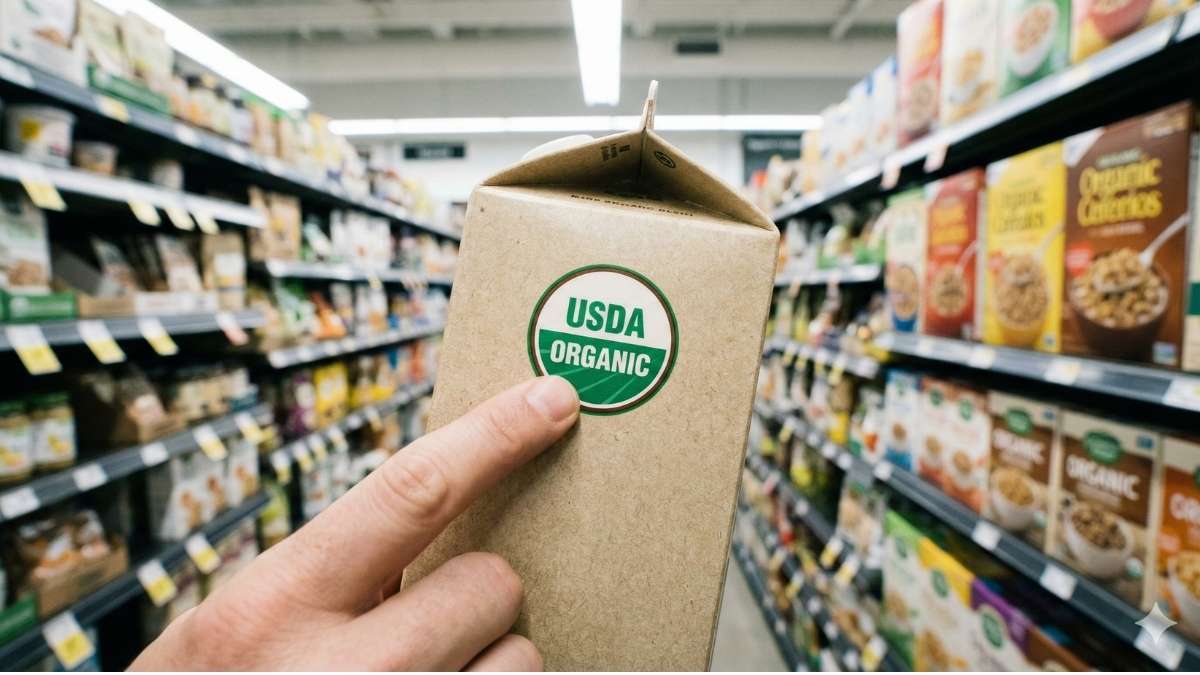
The swirl of information out there can be exhausting. You're standing in the grocery aisle, looking at a product with the green USDA Organic seal, and that familiar question pops up: Can organic food be GMO?
Maybe you’ve heard confusing reports about contamination, or you’ve seen products carrying both the Organic seal and the Non-GMO Project Verified butterfly. If organic means no GMOs, why would they need a second label? It’s enough to make any informed consumer—especially a parent or primary shopper—feel skeptical and uncertain about the food they choose for their family.
We understand that seeking clarity on this topic isn't just about labels; it's about protecting your family and feeling confident in your choices. That’s why, as a PhD Student in agriculture who also grew up on a farm, my goal is to break down the regulatory complexity into simple terms.
The short answer is an absolute NO.
The intentional use of GMOs is fundamentally and unequivocally prohibited in certified organic products.
The complete answer, however, is a deep dive into the fascinating world of agricultural policy—a world that separates prohibition (the law) from contamination (the reality of coexistence in farming).
Quick Clarity: Stop Confusing GMO Law with Farming Reality
- The Law is Absolute: Intentional use of GMOs (genetic engineering) is strictly prohibited by federal law; any knowing violation voids the USDA Organic certification instantly.
- The Regulatory Gap: Due to farm coexistence, trace contamination is possible, and the USDA Organic seal verifies the farmer's process (buffer zones), not the final product's measurable purity.
- The Gold Standard Guarantee: For maximum confidence, look for products with Dual Certification (Organic + Non-GMO Project Verified) which guarantees the product tests below the 0.9% measurable threshold.
The Definitive Stance: Can Organic Food Be GMO?
From an academic perspective, the relationship between certified organic food and genetic engineering is straightforward: they are mutually exclusive.
The official rule, backed by the U.S. Federal government, states that the use of genetically modified organisms (GMOs), or any ingredients derived from them, is strictly prohibited within the production and handling of any USDA Certified Organic product. This prohibition is not merely a suggestion; it is a foundational component of the regulatory framework.
As a PhD Scholar in agriculture, when I study the federal guidelines, this is the first and most critical point: the USDA National Organic Program (NOP) views genetic engineering as an “Excluded or Prohibited Method”. The moment an organic farmer uses GMO seed, or feeds GMO alfalfa to their livestock, they are in violation of the standards set by the Organic Foods Production Act of 1990 (OFPA), the law that created the NOP.
This means the answer to can organic food be GMO is an absolute No on the basis of intentional production. The core principle of organic integrity is that the producer must demonstrate a commitment to using only allowed substances and only allowed methods.
The Regulatory Foundation: Why GMOs Are Banned Under NOP
To truly trust the organic label, you need to understand the legal mechanism behind the prohibition. It helps reinforce that this is a system of integrity, not just a marketing claim.
Genetic Engineering is an ‘Excluded Method’
The NOP regulations are detailed in 7 CFR Part 205. This comprehensive rulebook specifies all the requirements an operation must meet to earn and maintain certification.
The prohibition against genetic engineering places it in a category called “Excluded Methods”. This grouping is significant because it places genetic modification on par with other practices that are fundamentally incompatible with organic philosophy, such as the use of ionizing radiation or sewage sludge. Organic certification is a rejection of the method used to alter the food at a genetic level.
What I’ve learned in my research is that this regulatory choice reflects a deeply rooted philosophical divide. The organic movement is founded on environmental stewardship and maintaining soil health by avoiding most synthetic inputs and focusing on natural cycles. Biotechnology, while often aiming for efficiency or pest resistance, represents a technological intervention that runs counter to the holistic, natural systems agriculture that the organic world prioritizes.
Because of this foundational commitment, the entire organic system hinges on the producer’s documented commitment to avoiding this specific practice.
The Organic System Plan (OSP): Process, Not Purity Tests
This is where the concept of trust meets verification. Since GMOs are a prohibited method used on the farm, the government verifies the farm's process, not just the final product.
Your Farmer’s Mandatory Blueprint
The primary enforcement tool of the NOP is something called the Organic System Plan (OSP). Think of the OSP as the certified organic farmer's Bible—it is a detailed, mandatory written document that outlines everything they do, from the seed they buy to the cleaning protocols they use.
This plan must specifically include measures to prevent contact with all prohibited substances, which include GMOs. Every year, a third-party, USDA-accredited certifying agent visits the farm and inspects the records and the land to confirm that the producer is meticulously following this plan. This verification of process is the core of the USDA seal’s integrity.
The Farmer's Line of Defense: Buffer Zones and Cleaning
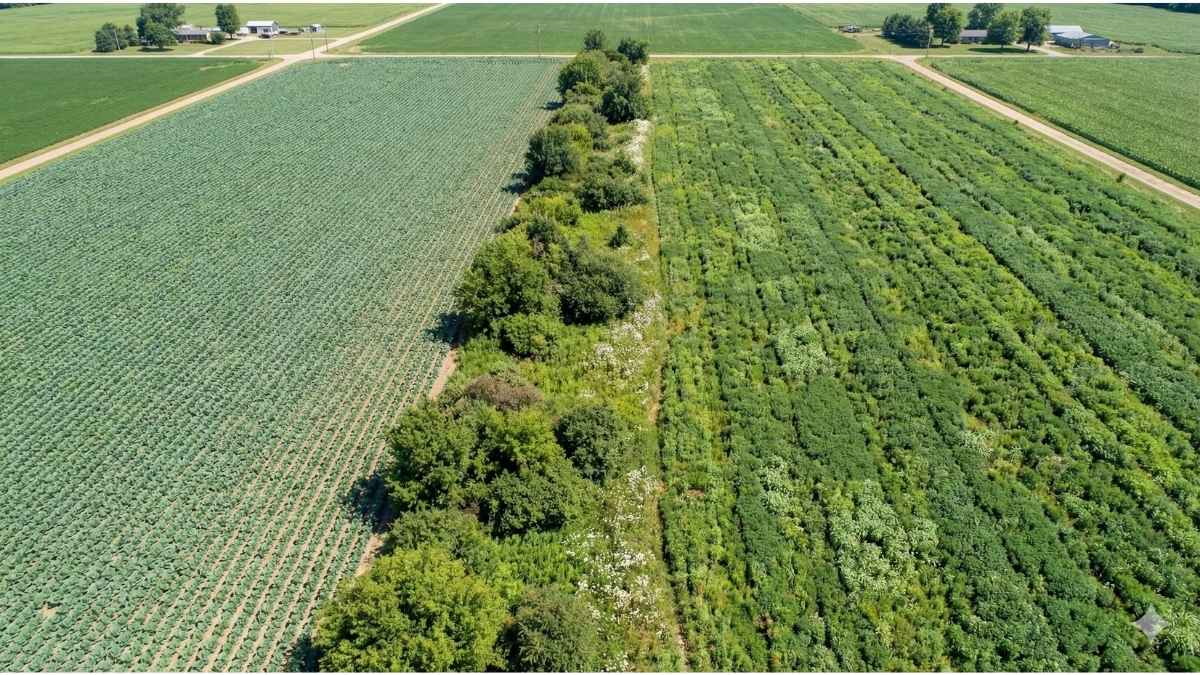
Growing up on a farm taught me that you can't control what your neighbor plants. Because organic and conventional farming systems often exist side-by-side, there is a real, practical risk of contamination, primarily from pollen drift or shared farm equipment.
To address this, the OSP mandates specific preventive practices, which I've used in my own home garden, only on a massive scale:
- Buffer Zones: Organic farms must designate physical barriers—like strips of non-organic crops or natural hedgerows—at the edges of the land. These buffer zones act like property lines, catching any drift, and the crops grown in them are never sold as organic.
- Timing Strategies: Producers must manage planting and harvesting times carefully to avoid flowering at the same time as neighboring GMO crops, which is a key defense against cross-pollination.
- Equipment Cleaning: When equipment is shared between a conventional farm and an organic farm—a common practice in rural communities—rigorous, documented cleaning protocols must be followed to ensure no GMO seed or grain residue inadvertently contaminates the organic product.
The Regulatory Gap: Why Is Organic Food Non-GMO, But
Still Risky?
This is where the confusion about organic food vs non-GMO food starts, and it requires us to address the reality of inadvertent contamination.
Despite the farmer's best efforts (buffer zones, OSP adherence), trace amounts of GMO material can still show up. Why doesn't the USDA just test every product for GMOs, like they do for pesticides?
This is the key regulatory gap: The NOP has no specific numerical tolerance levels defined for the inadvertent presence of GMOs.
Think of it this way:
- For Prohibited Pesticides: The NOP does have an action threshold. If a certified organic crop is tested and found to contain pesticide residues above 5% of the EPA tolerance, it cannot be sold as organic. There is a measurable limit.
- For GMOs: There is no threshold.
The NOP’s regulatory structure views GMOs not as a substance to be managed below a residue limit, but as a completely prohibited method. Therefore, if trace amounts are found accidentally, the farm is not automatically in violation. Instead, the certifying agent investigates the cause—Did the farmer clean the mill properly? Was the buffer zone too small?—and requires corrective actions. The focus is on fixing the process, not rejecting the final product based on a quantifiable measure of purity.
This flexibility is pragmatic in the farming world, where zero contamination is nearly impossible. However, for a consumer like you who is looking for measurable assurance, this process-based system creates a need for an extra layer of verification.
The Consumer’s Gold Standard: GMO vs Organic Foods
The regulatory gap between the NOP's process-based certification and the consumer’s desire for measurable purity is precisely why the marketplace created a solution: the Non-GMO Project Verified seal. This is the difference in the world of GMO vs organic foods.
The Rise of Testing-Based Verification
The Non-GMO Project (NGMP) emerged as a direct, market-driven response to this lack of a measurable threshold.
While the NOP asks, “Did the farmer intend to use GMOs and follow their protective plan?” the Non-GMO Project asks, “Does the final product measure below a set threshold?”.
The critical difference is that the NGMP standard requires third-party technical administrators to impose mandatory verification steps, including testing, documentation, and affidavits for high-risk ingredients. This is a massive shift in focus from process to outcome.
The Magic Number: The 0.9% Action Threshold
The most significant difference between the two programs lies in the measurable limit for contamination.
The Non-GMO Project Verified seal utilizes a specific action threshold of 0.9% for contamination. If testing reveals a high-risk product (like corn, soy, or canola derivatives) that exceeds this limit, it cannot receive NGMP verification.
My research as a PhD Scholar suggests this threshold is important because it is strategically aligned with the regulatory standard used by the European Union (EU) to trigger mandatory GMO labeling. It provides a recognized, quantifiable benchmark for purity assurance that the federal organic standard does not.
The fact that the NGMP uses a non-zero tolerance (0.9%) is a practical acknowledgment that achieving scientific "zero" is often unfeasible given the widespread presence of GMO crops in the environment. This 0.9% threshold provides a rigorous, testable, and attainable standard for purity assurance.
Comparative Standards: Organic vs. Non-GMO Project
Verified
To help you feel completely empowered in the grocery store, here is a breakdown of what each label guarantees:
Official Source: A product that is USDA Organic is also, by definition, Non-GMO. View USDA Guidance on Preventing GMO Presence (PDF) →
Dual Certification: Why It Matters for High-Risk Foods
If your goal is to buy the very best, the combination of both seals is often referred to as the "gold standard" in food certification.
- Organic Certification provides the guarantee of systemic integrity—no synthetic pesticides, no sludge, commitment to soil health, and the foundational promise that no GMOs were intentionally used.
- Non-GMO Project Verified Certification provides the specific, measurable assurance of purity—the promise that the final product was tested and found to be below the 0.9% action threshold.
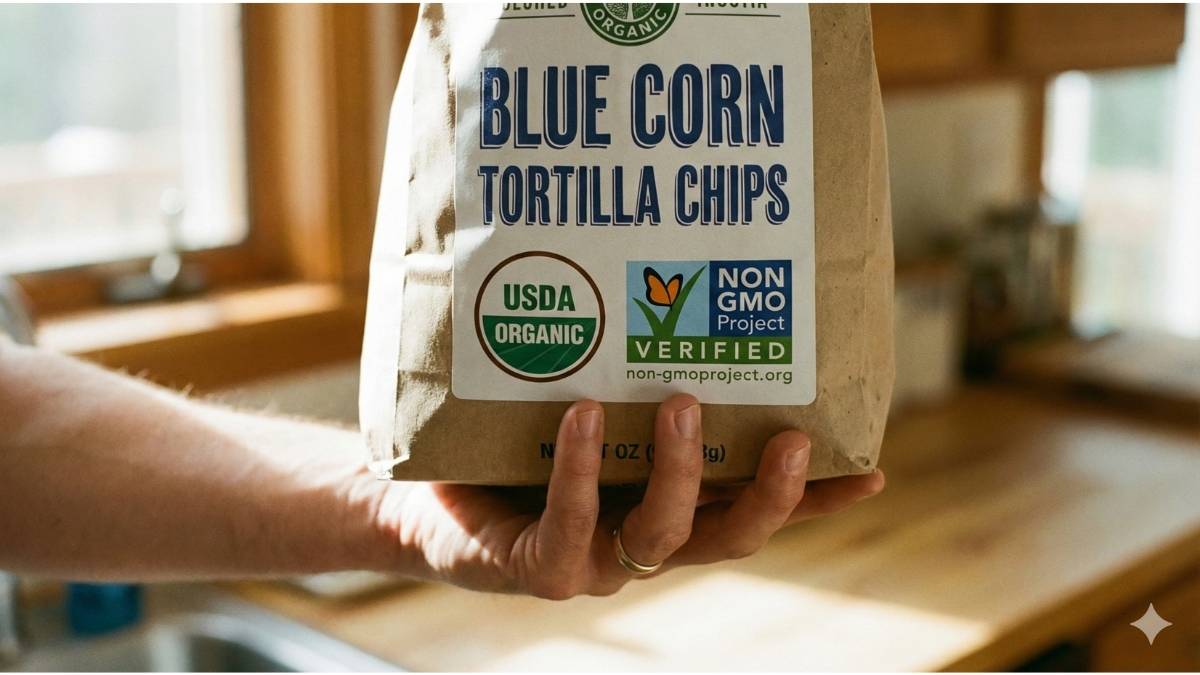 The Consumer's Gold Standard: Seeking Dual Certification (USDA Organic + Non-GMO Project Verified) guarantees both systemic integrity and measurable purity below the 0.9% threshold.
Prioritizing Your Purchases
For products containing ingredients that are highly susceptible to contamination—such as anything derived from corn, soy, canola, cotton, or beets, or high-risk animal derivatives like milk, eggs, or meat —seeking that dual certification provides maximum assurance.
When I’m shopping for my own family, I know that the organic system works because I see the diligence required for compliance on the farm. But the presence of that butterfly seal on high-risk items gives me the extra, measurable proof that eases any remaining uncertainty.
Conclusion: Reclaiming Confidence in the Organic Aisle
We started with a question rooted in skepticism and concern: Can organic food be GMO?
The definitive answer is that the system of organic certification—backed by federal law—is built on the absolute prohibition of genetic engineering. The NOP is rigorous in its audit of the producer’s process, ensuring every possible measure, from buffer zones to deep cleaning, is taken to protect the integrity of the food.
However, because zero-contamination is an environmental impossibility in co-existing agriculture, the most informed consumer choice is to seek the dual certification. When you see both the USDA Organic seal and the Non-GMO Project Verified seal, you are buying a product that guarantees both the holistic integrity of the farming system and the measurable, testable purity of the final ingredients.
Your desire for highly authoritative, pure food is valid. By understanding the difference between process-based prohibition and testing-based verification, you are now empowered to look beyond the headline and make confident, knowledgeable choices for your family.

Meet Saqib
Saqib Ali Ateel is a PhD Scholar by training and a "student of the soil" by nature. He combines deep research, hands-on farming wisdom, and agricultural systems supervision to reveal what’s really on your plate. His mission is simple: to help your family navigate the food industry's complexity so you can eat cleaner, safer, and smarter.