🌾 Glyphosate in Oats: Why Residues Are Dropping But Risks Are Evolving
This report synthesizes recent agricultural monitoring data and peer-reviewed toxicological research. It evaluates these findings to clarify the specific health implications of residue levels in the current oat supply.
For years, the narrative was simple: industrial weedkillers were ending up in consumer breakfast products. However, recent data reveal a "Paradox of Progress." While herbicide residues are objectively dropping due to market shifts, emerging science suggests that even "legal" levels may disrupt gut health.
The following analysis examines the latest agronomic data and medical research to provide an accurate assessment of the current oat landscape.
Latest Safety Update: Glyphosate & Your Health
- 📉 Residues Are Dropping: Thanks to market bans on "desiccation" (pre-harvest spraying), contamination levels have fallen significantly since 2018.
- 🧠 New Gut-Brain Risks: Emerging science suggests that even "compliant" low doses may deplete beneficial gut bacteria and trigger anxiety-like behaviors.
- 🍲 Cooking Won't Help: Glyphosate is heat-stable and water-soluble. It survives boiling and baking, so sourcing is your only defense.
- 🛡️ The "Clean" Solution: To avoid both Glyphosate and the new chemical substitute (Chlormequat), choose Certified Organic or verified Residue Free brands.
📉 Glyphosate in Oats: Are Residues Actually Decreasing?
If the question is whether the situation is improving, the answer is yes. But the credit belongs to market dynamics rather than regulatory action.
The "No Desiccation" Shift
Historically, farmers in Canada and the Dakotas sprayed glyphosate in oats right before harvest. This process, called desiccation, dries the crop evenly. It makes harvesting efficient, but it spikes residue levels.
Starting in the early 2020s, major grain buyers like Richardson International and Grain Millers Inc. banned this practice. They acted to protect their brands, not because the EPA forced them to.
- ✅ The Result: Farmers selling to premium buyers now sign affidavits promising not to spray pre-harvest.
- 📊 The Data: This "enforced abstinence" has drastically lowered the amount of herbicide entering the food supply.
What the Latest Data Says
We tracked the numbers to see if the policy worked. The drop is significant:
- The Peak Era (2018): Independent testing found glyphosate levels as high as 2,837 ppb in popular oat cereals.
- The Current Era: Recent tests show peak levels plummeting to less than 500 ppb. Many samples now test near 20 ppb.
- USDA Findings: The USDA consistently reports that over 99% of samples are "compliant."
📊 Data Snapshot: The Shift in Residues
🎓 The Scholar’s Nuance: Be careful with the word "compliant."
The EPA allows a massive 30,000 ppb (30 ppm) for glyphosate in oats. Just because a sample is "legal" doesn't mean it is biologically neutral.
🧠 The New Health Consensus: Beyond Cancer Risks
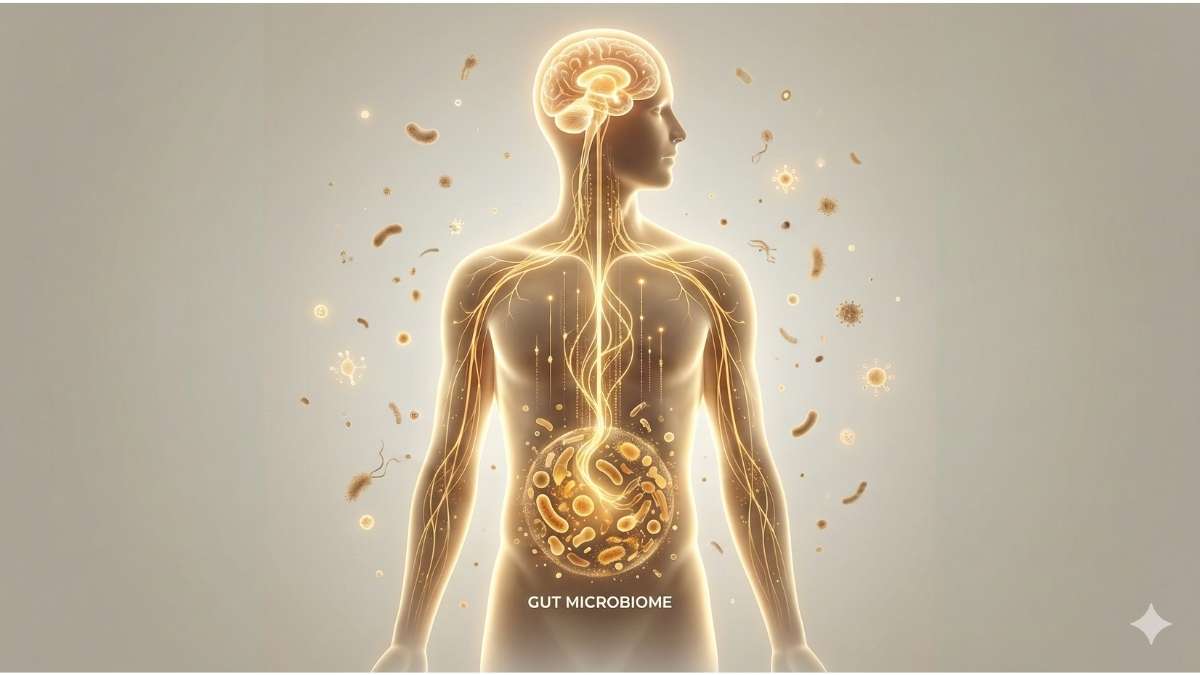 The Invisible Link: New research suggests that gut dysbiosis caused by low-dose exposure can influence neural pathways associated with anxiety.
For a decade, the debate focused on carcinogenicity (cancer). Today, the scientific focus has shifted to the Gut-Brain Axis.
The Microbiome Blind Spot
Regulators have long argued that glyphosate is safe for humans. They claim it targets the shikimate pathway, a biological process plants use to make amino acids. Since humans don't have this pathway, they deem it safe.
The Correction: While human cells don't have this pathway, our gut bacteria do. 🦠
A comprehensive genomic analysis revealed that 54% of human gut bacteria possess the shikimate pathway. When we ingest residues, we aren't poisoning our cells directly. Instead, we are acting like an antibiotic to our internal ecosystem.
💡 The "Daily Drop" Analogy
Imagine your gut bacteria are a thriving garden. Acute poisoning (high levels) would be like dumping a bucket of bleach on the garden—everything dies instantly.
The "Low-Dose" exposure we see today is different. It’s like watering that garden with a very mild antibiotic every single morning. It won't kill the garden in a day, but over months and years, the delicate flowers (beneficial bacteria) die off, and the weeds (pathogens) take over. This is why "legal" levels can still cause long-term health issues.
The Microbiome Connection & Anxiety
New research published in journals like Frontiers in Toxicology paints a concerning picture of low-dose exposure.
- Bacterial Depletion: Even at doses considered "safe" (the Acceptable Daily Intake), beneficial bacteria like Bifidobacterium pseudolongum were significantly depleted in study subjects.
- The Anxiety Link: Recent studies show that subjects exposed to these safe doses displayed increased "freezing" behaviors and anxiety.
- The Mechanism: These bacteria help produce serotonin. When glyphosate kills them, the neural pathways in the brain governing threat response can go haywire.
⚖️ Why "Legal" Doesn't
Mean "Safe"
It is reasonable to ask why the EPA allows these levels if such risks exist. The answer lies in outdated data and a reckoning with historical studies.
The Ghostwriting Scandal
For two decades, regulators relied on a landmark safety paper from the year 2000 by Williams, Kroes, and Munro. It was the "gold standard" defense for glyphosate.
The Update: The journal Regulatory Toxicology and Pharmacology eventually retracted this paper. Why? It was revealed to be ghostwritten by the manufacturer (Monsanto), with undisclosed industry influence. The scientific foundation for current safety limits has cracked. 🚫
The "Missing" Guidelines
The European Food Safety Authority (EFSA) is generally stricter than the US. Yet, they have renewed glyphosate's license.
Why?
In their recent conclusions, EFSA explicitly admitted they have "no internationally agreed guidelines for the risk assessment of microbiome."
Translation: They know it might hurt the microbiome. But they don't have a standardized ruler to measure the damage. Therefore, they cannot legally ban it based on that risk yet.
🍲 Can You Cook or Wash
Glyphosate Out?
A common question is whether washing oats or boiling them removes the chemical. The short answer is: No, and the cooking method matters.
The Boiling Problem
Glyphosate is highly water-soluble. A pivotal study on pasta found that when boiled, 73% of the glyphosate migrated from the grain into the boiling water.
- With Pasta: You drain the water, effectively removing the majority of the residue.
- With Oatmeal: You eat the water (or milk) the oats were cooked in.
The Farmer’s Take: The chemical might detach from the fiber, but it stays in your bowl. You are ingesting 100% of the residue present.
Baking Stability
If you are baking cookies or granola bars, heat won't help either. NIST stability studies show that glyphosate is chemically stable. The internal temperature of a cookie in the oven rarely exceeds 100°C. This is far too low to break the robust chemical bond.
⚠️ The Emerging Threat:
Chlormequat Substitution
In farming, when you take away one tool, another often takes its place. As glyphosate use drops, we are seeing a rise in Chlormequat Chloride.
- What is it? A plant growth regulator. It keeps oat stems short and sturdy so they don't fall over.
- The Data: Investigations by the Environmental Working Group (EWG) have found Chlormequat in over 90% of oat-based foods tested. It was also found in 80% of human urine samples.
- The Risk: Animal studies link it to reproductive toxicity and fetal development issues.
This highlights the risk of simply swapping "Conventional Brand A" for "Conventional Brand B." Consumers may inadvertently trade one chemical exposure for another.
🚜 The Farmer's
Perspective: Why Do They Spray?
 The Safe Alternative: Swathing (cutting the crop to dry naturally) avoids chemicals but requires more labor and distinct weather conditions.
To understand the food system, we must understand the farm. Farmers generally don't want to spray expensive chemicals. They do it because oats are "indeterminate" growers.
- The Problem: In a single field, some oat heads are ripe while others are still green. Green seeds can rot in storage.
- The Chemical Fix: Glyphosate kills the whole field at once. This forces it to dry evenly.
- The Mechanical Fix (Swathing): The alternative is to cut the crop and lay it in rows (swaths) to dry in the sun.
The Cost: Swathing requires two passes over the field. This means more fuel and more labor. If it rains on the swath, the crop can be ruined. Farmers moving away from glyphosate are taking on more financial risk. We should respect that effort by supporting the brands that pay them a premium for it.
🛒 The Expert Buying Guide
for Safe Oats
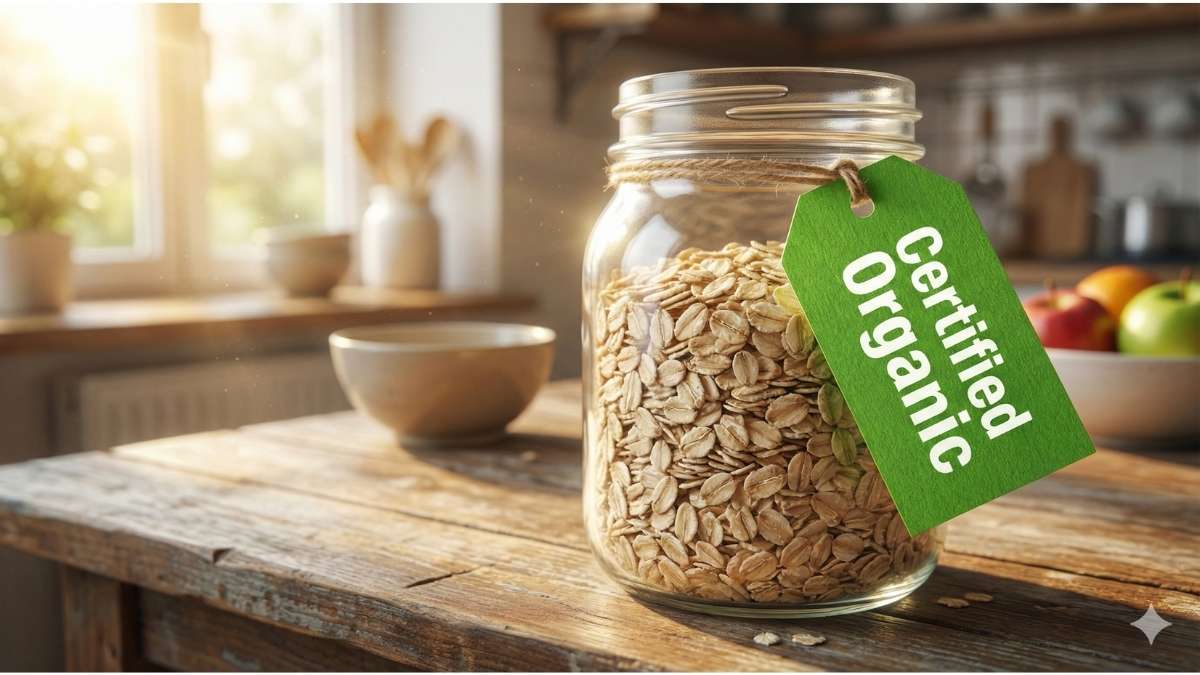
Oats provide established benefits for cardiovascular health and fiber intake. The data supports a strategy of substitution rather than elimination: choosing certified organic or verified residue-free options effectively mitigates exposure risks while maintaining nutritional value.
1. Certified Organic is Non-Negotiable 🛡️
This is the primary shield against both Glyphosate and Chlormequat. Organic standards prohibit synthetic desiccants and growth regulators. In almost every recent test, organic oats tested at or near "non-detect" levels.
2. Look for "Glyphosate Residue Free" Verification ✅
Drift happens. A neighbor spraying a mile away can contaminate an organic field. Certifications like The Detox Project verify that the final product was tested and is clean.
⚡ The 3-Second Shopping Decision
Tree
Unsure what to buy? Use this logic to make a fast choice.
Question 1: Is it for a child or someone with gut issues?
- YES: Buy Certified Organic only. (Avoids Chlormequat & Antibiotic effect).
- NO: Proceed to Question 2.
Question 2: Does the package say "Glyphosate Residue Free" (Detox Project)?
- YES: Safe Buy. (This is often cleaner than generic organic).
- NO: Check the source.
Question 3: Is it a major brand known to ban desiccation (e.g., Nature's Path, One Degree, or major retailers with strict policies)?
- YES: Acceptable Buy. (Low residue risk, but potential Chlormequat risk).
- NO (Bulk/Generic): Risk. (Avoid if possible).
The Bottom Line
While the prevalence of high-level contamination has decreased, the scientific focus has moved to the potential impacts of chronic low-dose exposure. Selecting products with organic certification or verified residue-free status remains the most effective strategy to mitigate these specific risks.
Ultimately, informed brand selection based on verified sourcing standards remains the most effective strategy to minimize dietary exposure to these contaminants.

Meet Saqib
Saqib Ali Ateel is a PhD Scholar by training and a "student of the soil" by nature. He combines deep research, hands-on farming wisdom, and agricultural systems supervision to reveal what’s really on your plate. His mission is simple: to help your family navigate the food industry's complexity so you can eat cleaner, safer, and smarter.
- Home
- Organic Food
- Glyphosate in Oats