Brand Review: Is Lakanto Monk Fruit Sweetener Actually
"Natural" or Just Corn?
You are likely staring at that orange bag of Lakanto Monk fruit sweetener in your pantry right now, asking yourself a simple but critical question: "Is this actually good for me?" Maybe you bought it to protect your family from sugar, but lately you’ve seen scary headlines about heart health or noticed a weird "minty" taste in your cookies. As a PhD student in agriculture and a farmer who has spent a lifetime with hands in the soil, I understand your confusion. The front of the bag promises ancient healing, but the back reveals a chemistry lesson we need to discuss.
I’m not here to lecture you; I’m here to help you solve this mystery so you can get back to baking with confidence. We are going to look past the marketing "halo" and dig into the real ingredients. We will talk about why your "1:1" sugar replacement might actually be 99% corn, why that matters for your heart, and whether you should keep this bag or toss it. Let’s get to the bottom of this together. 🤝
🚨 Summary in Bullets: The "Giant Slayer" Takeaway
- • The "1:1" Trap: Lakanto is not pure fruit. It is roughly 99% erythritol (a corn-derived sugar alcohol) and only ~1% monk fruit extract, essentially selling you corn at fruit prices.
- • Heart Health Warning: Recent studies link high levels of erythritol to "sticky platelets," potentially increasing the risk of clotting and heart attacks for vulnerable people.
- • The "Cooling" Flaw: If your cookies taste "minty" or cold, that is the erythritol reacting to heat in your mouth—a clear sign of filler, not the medicinal fruit.
- • The "Liquid" Loophole: Lakanto's Liquid Drops (unlike the powder) are often free of erythritol, making them a much safer, heart-smart choice for your morning coffee.
The "1:1" Deception: Why You Are Buying Corn,
Not Fruit 🌽
From what I've learned in my research and from what I've seen on the farm, true botanical extracts are incredibly potent. Pure Monk Fruit (Siraitia grosvenorii) is roughly 300 times sweeter than sugar. This means a single teaspoon of pure extract equals the sweetness of about 1.5 cups of sugar!
So, how does Lakanto Monk fruit sweetener create a product that measures exactly like sugar?
They dilute it—massive amounts of dilution.
When you look at the ingredients label, you will see "Non-GMO Erythritol" listed before "Monk Fruit Extract". In labeling law, items are listed by weight. Based on the sweetness math—erythritol is only 70% as sweet as sugar, while monk fruit is 300x sweeter—we can reverse-engineer the formula. To achieve that convenient "1:1" match, the product must be approximately 99% erythritol and only 1% monk fruit extract.
This is what I call the "Convenience Trap." You are paying a premium price for the "Monk" on the label, but physically, you are buying a bag of fermented cornstarch lightly dusted with fruit extract. You aren't eating the "Immortal's Fruit"; you are eating an industrial sugar alcohol.
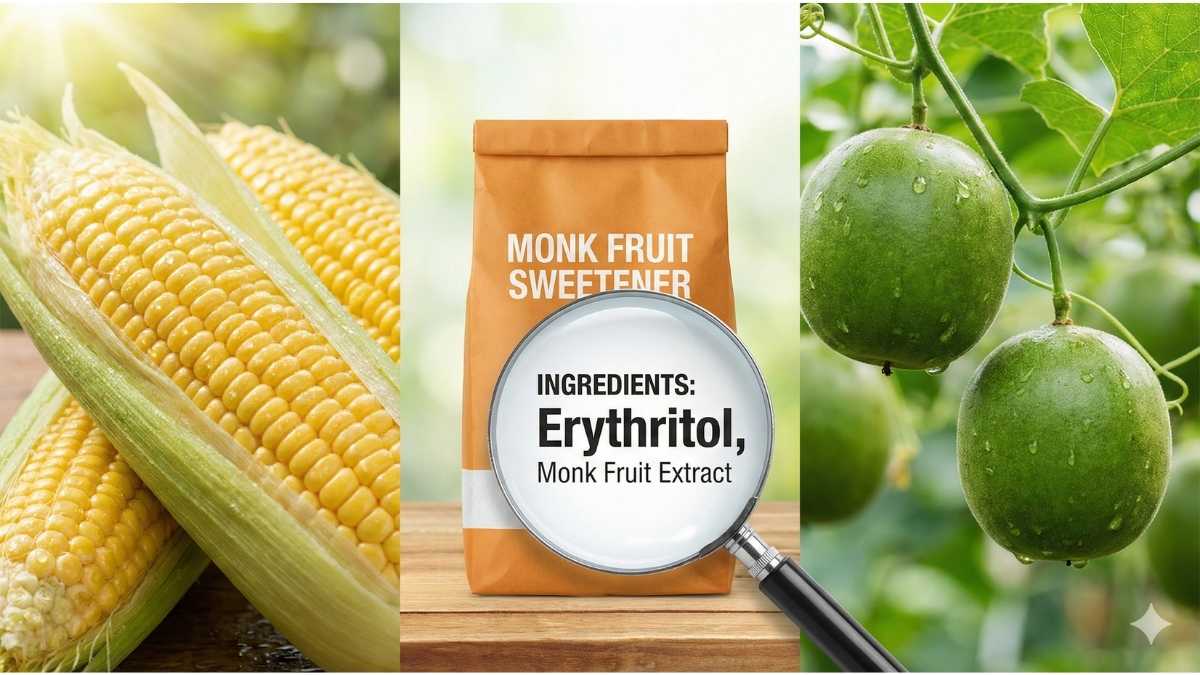 The Ingredient Reality: A visual breakdown showing how the "Classic" blend is primarily corn-derived Erythritol rather than pure Monk Fruit extract.
The Erythritol Crisis: Is Your Heart at Risk? 💔
For years, I recommended erythritol to my friends because it doesn't spike insulin. But as a scholar, I have to follow the evidence, even when it changes. And the new data cannot be ignored.
A landmark study published in Nature Medicine and corroborated by researchers at the Cleveland Clinic found a concerning link. The data suggest that high levels of circulating erythritol are associated with a higher risk of major adverse cardiovascular events (MACE), such as heart attack and stroke.
Here is the simple breakdown:
Think of your blood platelets like tiny emergency responders. Their job is to clump together (clot) only when you get a cut. The research suggests that erythritol might "prime" these platelets, putting them on high alert. This makes them "sticky" and more likely to form clots inside your blood vessels, even without injury.
While Lakanto has responded that the body produces some erythritol naturally, the amounts found in Lakanto Monk Fruit Sweetener are thousands of times higher than those found in the body. If you are a "Metabolic Detective" already managing heart risks or diabetes, this is a variable you need to take seriously. Why take the risk with a filler when you don't have to?
The "Cooling Effect": Why Your Cookies Taste
Like Mint ❄️
Have you ever bitten into a sugar-free chocolate chip cookie and felt a strange, icy sensation on your tongue? It’s weird, right? That isn't freshness; it is introductory chemistry.
This is called an endothermic reaction. Unlike sugar, which dissolves neutrally, erythritol requires heat to dissolve. It literally pulls heat energy out of your tongue to break its crystal bonds, tricking your brain into feeling "cold."
For the home baker, this is a major sensory disappointment. A warm, gooey brownie should not taste cold. This "cooling effect" is the hallmark of high-erythritol blends. Genuine, pure monk fruit does not do this. If your "monk fruit" tastes minty, it’s the corn filler talking, not the fruit.
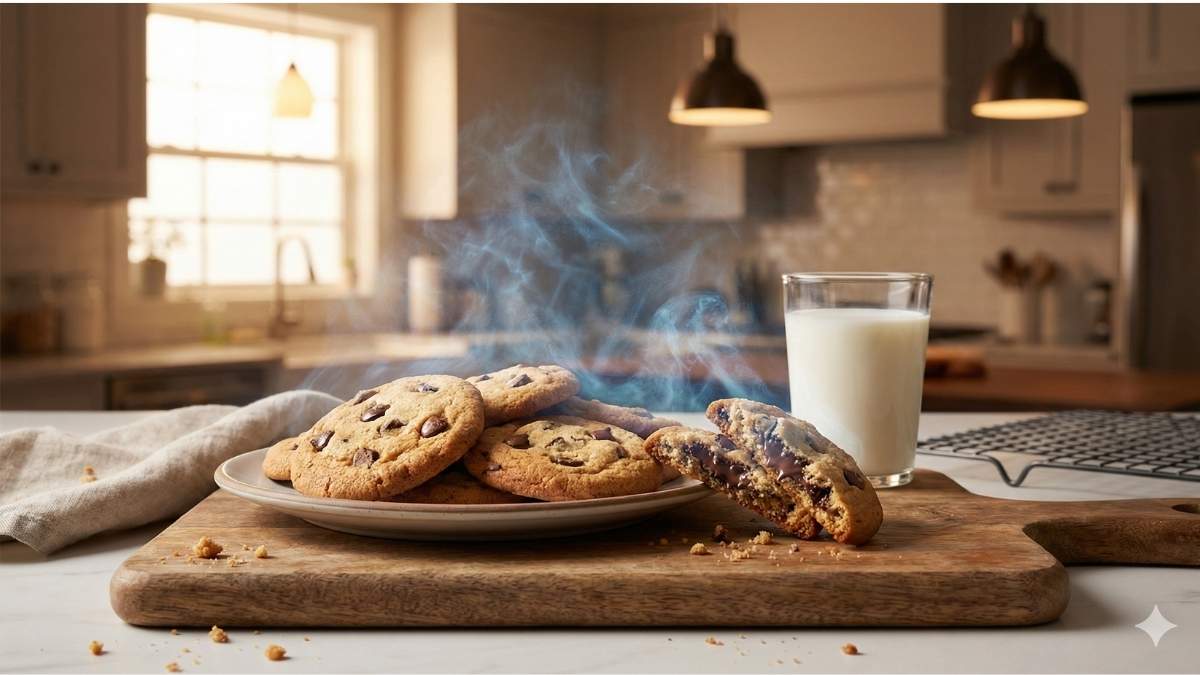 The "Cooling Effect": Why high-erythritol sweeteners create an endothermic reaction that makes warm cookies taste strangely cold or minty.
The "Bad Gas" Reality: Digestive Distress 💨
Another common complaint I see in almost every lakanto review thread is "digestive upset" or, to be blunt, "disaster pants."
Erythritol is a sugar alcohol (polyol). While it is generally better tolerated than xylitol, it can still cause osmotic diarrhea. This happens when the unabsorbed sugar alcohol sits in your colon and draws water in from your bloodstream to dilute it.
- The Difference: Pure Monk Fruit feeds your gut bacteria (specifically Akkermansia), acting as a prebiotic. It might cause mild "good gas" from fermentation.
- The Problem: Erythritol causes "bad gas" and urgency because it acts like a mechanical laxative in high doses.
If you have experienced bloating after a "keto-friendly" treat, it likely wasn't the monk fruit that hurt you—it was the filler.
The Pesticide Paradox: Why Sourcing Matters 🌱
Growing up on a farm taught me that healthy soil creates healthy food. Siraitia grosvenorii (Monk Fruit) is a finicky vine that grows in the misty mountains of China. To protect it from pests, conventional farmers often use pesticides.
If you buy the standard "Classic" (White) or "Golden" Lakanto bags, you are getting Non-GMO erythritol, but it is not necessarily organic. This introduces the "Pesticide Paradox." You are trying to heal your body with a natural sweetener, but if that sweetener carries pesticide residues, you might be harming your microbiome—specifically the Akkermansia bacteria you want to feed.
If you choose to use this brand, I strongly advise spending the extra money for their Organic line. It is the only way to ensure you aren't consuming chemical residues along with your morning coffee.
The "Liquid" Loophole: A Cleaner Option? 💧
Here is a secret for the "Curious" reader: Not all lakanto side effects apply to every product they make. While the granular bags are 99% erythritol, their Liquid Monkfruit Extract Drops are often a different story.
The liquid drops are typically water, monk fruit extract, and natural flavors. They do not rely on erythritol for bulk. This makes the liquid drops a far superior choice for your coffee or tea. You get the benefits of the fruit without the clotting risk or the cooling effect of the erythritol. However, be aware that they often contain "Natural Flavors" and preservatives, so they aren't as pristine as 100% pure extract, but they are a massive step up from the powder.
 The "Liquid Loophole": Why the liquid monk fruit drops are often free from corn-based fillers compared to the erythritol-heavy granular blends
How to Be a Metabolic Detective 🕵️♀️
So, is Lakanto Monk Fruit Sweetener safe?
If you use it once a year for a birthday cake, it’s likely fine. But if you are using it every single day in your coffee, oatmeal, and tea, you are loading your body with erythritol, not monk fruit.
My Recommendation:
1. For Baking (Volume): If you need bulk for a cake, consider mixing Lakanto with Allulose. Allulose browns better, doesn't have the cooling effect, and doesn't carry the same clotting concerns as erythritol.
2. For Daily Health (Purity): Ditch the white bag for your daily brew. Switch to 100% Pure Organic Monk Fruit Extract (powder or liquid) from brands that use no fillers. It requires a "micro-scoop" (literally a pinch), but you are getting the true anti-inflammatory, gut-healing medicine of the fruit without the corn-based baggage.
You deserve to know what you are eating. Don't settle for the "1:1" convenience if it costs you your peace of mind. Be the detective, read the back of the bag, and choose the purity your body deserves. ✨
📚 Further Reading
- ClassAction.org: The "Erythritol vs. Monk Fruit" Composition Lawsuit: This report details the class action filing which alleges that Lakanto products are deceptively marketed as "Monk Fruit" sweeteners when they are predominantly sweetened with erythritol, a cheaper and chemically processed sugar alcohol.
- Courthouse News Service: The "Reasonable Consumer" Ruling This article covers the significant legal development in Scott v. Saraya USA, Inc., where U.S. District Judge William H. Orrick denied Lakanto's motion to dismiss. The judge ruled that reasonable consumers could indeed be misled by the front-of-package "Monk Fruit" claims when the product is mostly erythritol, validating the plaintiff's argument that shoppers shouldn't have to read the fine print to discover the primary ingredient.
- Truth In Advertising (TINA.org): The "Zero Calorie" & Serving Size Lawsuit This page tracks the Cohen et al. v. Saraya USA, Inc. case, filed in October 2023. It outlines allegations that Lakanto manipulates serving sizes to legally claim "Zero Net Carbs" and "Zero Calories," when a realistic serving size would actually contain measurable calories and carbohydrates.

Meet Saqib
Saqib Ali Ateel is a PhD Scholar by training and a "student of the soil" by nature. He combines deep research, hands-on farming wisdom, and agricultural systems supervision to reveal what’s really on your plate. His mission is simple: to help your family navigate the food industry's complexity so you can eat cleaner, safer, and smarter.