The Purity Protocol: Why Liquid Monk Fruit Sweetener Is Your Heart’s Best Friend
If you are currently stirring anything other than liquid monk fruit sweetener into your morning coffee, we really need to talk.
For those of us who act as the "Proactive Protector" of our family's health, the morning ritual is sacred. You’ve likely spent years dodging sugar, navigating the confusing world of labels, and trying to do the right thing. But there is a silent saboteur hiding in your pantry. It looks like sugar, tastes like sugar, and claims to be natural. But the science now tells us it might be breaking your heart—literally.
I’m talking about erythritol, the white powder that makes up 99% of most "monk fruit" blends.
As a researcher in agriculture with dirt under my fingernails from my own organic garden, I’ve learned one undeniable truth: Nature usually gets it right, and industry usually complicates it. Today, we are going to strip away the industrial fillers and get back to the botanical truth. We are switching to the Purity Protocol.
It’s time to trade the gritty sludge for the golden drop. 🌿
Making the permanent switch to liquid monk fruit sweetener is not just a preference; it is a critical security update for your metabolic health. While we have been diligently avoiding sugar, a silent industrial disruptor has slipped into our pantries, masking itself as "natural" while creating the very inflammation and risks we are trying to escape.
✨ The Purity Protocol: Your Morning Rescue Plan ✨
-
🛑 Escape the "Natural" Trap:
Uncover why the 99% erythritol filler in powdered blends is now red-flagged for heart health, and how the liquid format brings you back to a safety profile of biological inertness. -
💧 Banish the Sludge:
Stop fighting physics. Learn why powders steal heat from your coffee and leave gritty sediment, while liquid drops integrate instantly for a smooth, barista-level experience. -
🌱 Feed Your Inner Garden:
Discover the hidden metabolic power of pure monk fruit extract—it doesn't just sweeten; it acts as a prebiotic to nourish Akkermansia, the "lean" bacteria in your gut. -
🧠 Master the Micro-Dose:
We provide the exact "drop count" formula to replace your sugar spoon, saving you money and saving your palate from chemical aftertastes.
The "Natural" Trap: Why Your Powder Is a Problem
We need to start with a little detective work. I know you read labels. You look for "No Sugar" and "Natural." But the industry knows this too, and they have used it against us.
When you buy a bag of powdered monk fruit, you assume you are buying fruit. But if you look at the ingredient list, the first item is almost always Erythritol. The actual monk fruit is just a tiny dusting at the end. Why? Because pure monk fruit is 300 times sweeter than sugar. If they gave you the pure stuff in a bag, one teaspoon would ruin your coffee. They need a filler to make it "spoonable" like sugar.
For years, we thought this filler was harmless. We were wrong.
The Heart of the Matter
In 2023, the Cleveland Clinic dropped a bombshell study in Nature Medicine. They found that erythritol isn't just passing through us unnoticed. It effectively "wakes up" your platelets—the tiny cells responsible for blood clots.
Think of your platelets like guards. Erythritol puts them on high alert. This means they are far more likely to clump together and form a clot when they shouldn't. For someone trying to protect their heart or manage metabolic risks, this is the exact opposite of what we want.
The study showed that after consuming a standard amount of erythritol, blood levels spiked and stayed in the "danger zone" for clotting for days. That’s not a risk I’m willing to take with my morning brew.
Are you? 💔
Physics Class: Why Liquid Monk Fruit Sweetener Is Structurally Superior
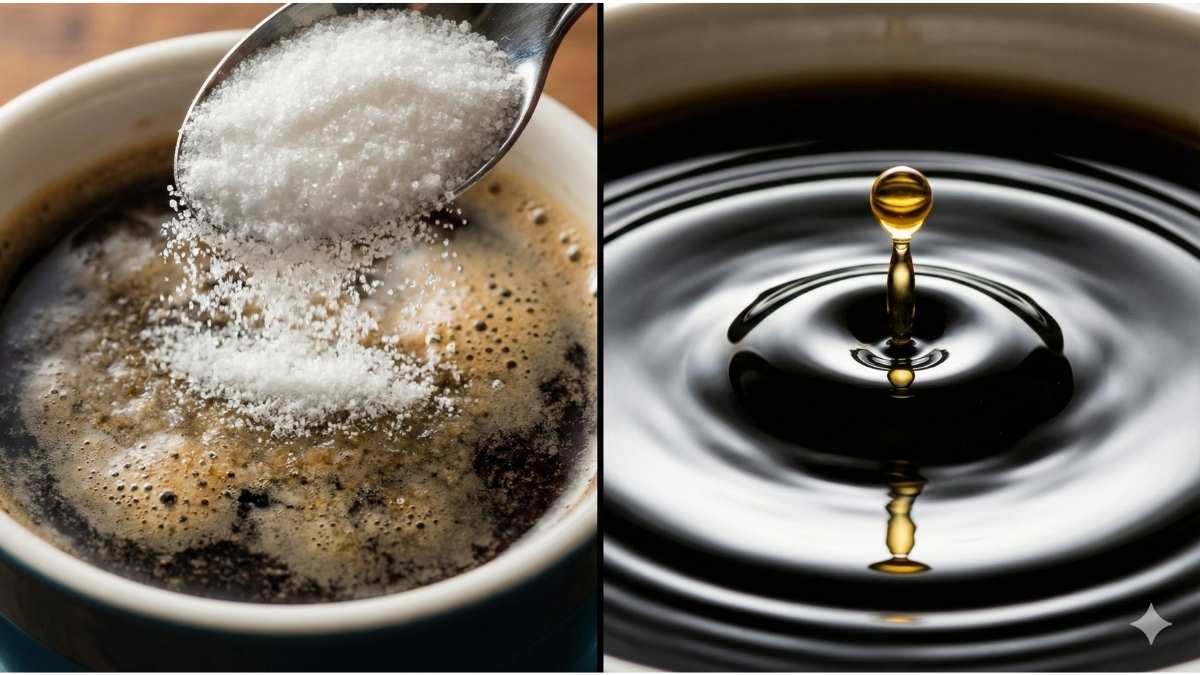 Visual Proof: Powdered sweeteners (left) often steal heat and leave gritty sediment, while liquid monk fruit (right) integrates instantly for a smooth, sludge-free experience.
Let’s put on our "Student Farmer" hats for a moment and look at the physical reality of your coffee.
Coffee is a complex, beautiful thing. It has oils, aromas, and heat. When you dump a spoonful of erythritol powder into hot coffee, a chemical battle begins. Erythritol loves to stay a crystal. To dissolve, it actually steals heat from your coffee. This is called an "endothermic reaction." It’s why some powders feel cold on your tongue.
So, not only are you adding a potential toxin, but you are also actively cooling down your coffee and killing the flavor.
The "Sludge" Factor
Have you ever reached the bottom of your cup and found that gritty, sandy sediment? That’s the "sludge."
As your coffee cools, the erythritol stops playing nice. It effectively "un-dissolves" and turns back into crystals. It ruins that last, satisfying sip.
Liquid monk fruit sweetener changes the game completely.
- Instant Harmony: Because it is already dissolved in water or organic glycerin, it integrates instantly. No stirring required.
- No Cooling: It doesn’t steal heat. Your coffee stays hot and aromatic.
- Zero Sludge: It stays mixed forever. The first sip is as perfect as the last.
The Botanical Truth: Sweetness from the "Immortals"
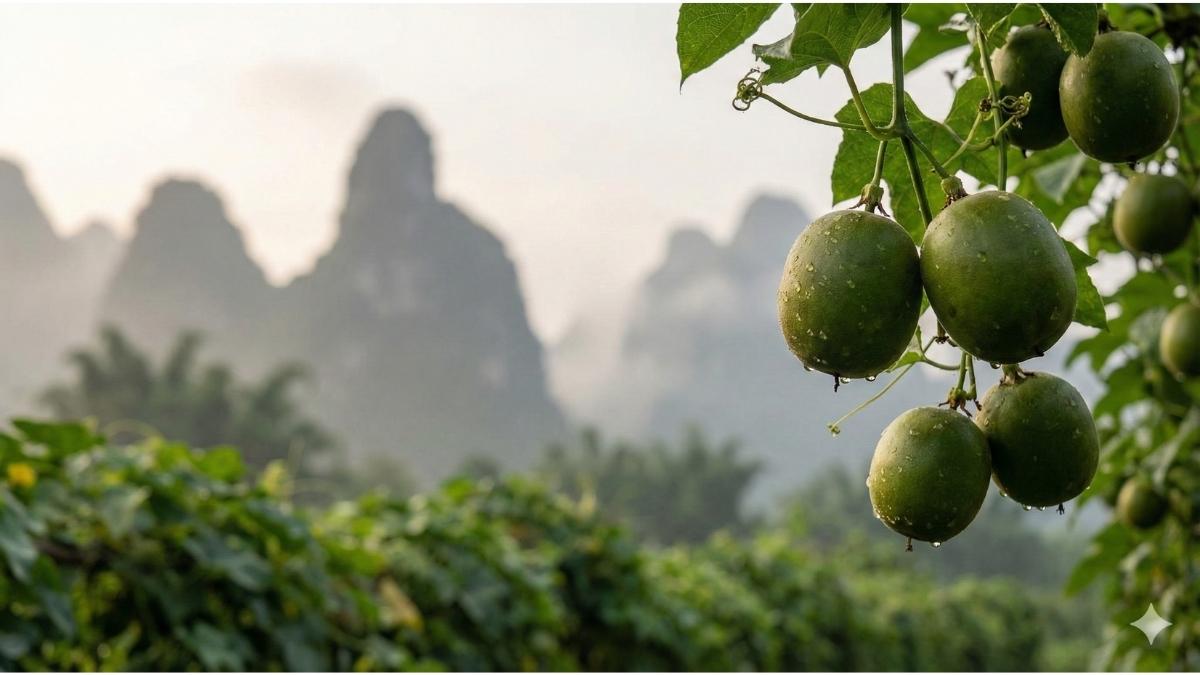 The Source: The "Longevity Fruit" (Siraitia grosvenorii) growing in the misty mountains of Guilin, China, where it develops the antioxidant mogrosides that provide its sweetness.
Now, let’s talk about the good stuff. The hero of our story is Siraitia grosvenorii, the Monk Fruit.
This isn’t a chemical made in a vat. It’s a small melon that grows on vines in the misty mountains of Guilin, China. I love the agronomy here—these vines are often hand-pollinated and grown without heavy pesticides because the terrain is so mountainous.
The locals call it the "Longevity Fruit." And the science backs this up. The sweetness comes from antioxidants called mogrosides. Unlike sugar, which spikes your insulin, or erythritol, which agitates your platelets, mogrosides act as a healing balm for your system. ✨
Feeding Your Inner Garden
Here is the most exciting part for the "Metabolic Detective."
Your gut is like a garden. You want to grow the prize-winning crops, not the weeds. There is a specific bacteria called Akkermansia muciniphila that is like the master gardener of your gut. It keeps your gut lining strong and helps manage your metabolism.
Research suggests that pure monk fruit extract actually feeds Akkermansia.
By switching to monk fruit drops, you aren't just avoiding harm. You are actively turning your coffee into a functional therapeutic tool. You are fertilizing the good bacteria with every sip. That is a massive win-win. 🏆
The Carrier: Why Vegetable Glycerin Wins
Pure monk fruit extract is a powder, but it’s too strong to use alone. It needs a carrier to become a liquid.
Most high-quality brands use Organic Vegetable Glycerin.
- What is it? It’s a clear, slightly sweet liquid usually derived from flax, coconut, or soy.
- Why we love it: It’s thick. It mimics the "mouthfeel" of sugar syrup.
- The Frothing Hack: If you love a latte, add the drops to your milk before you froth it. The glycerin helps create a rich, stable foam that water-based sweeteners just can’t match.
Always look for "Organic" on the label to ensure the glycerin isn't coming from GMO corn or soy.
How to Make the Switch: The Micro-Dosing Guide
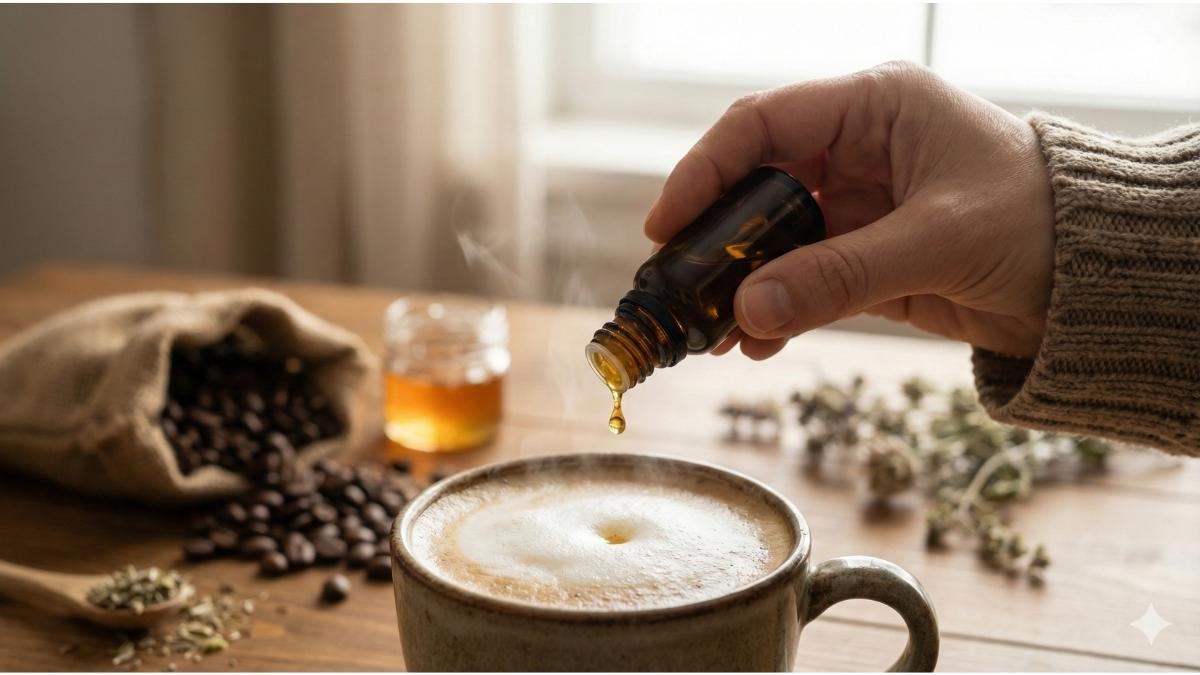 Master the Micro-Dose: Unlike spoonfuls of sugar, a precision dropper allows you to use just 4-6 drops to perfectly sweeten your brew without the chemical aftertaste
Transitioning from powder to liquid can feel tricky at first. You might be tempted to squeeze the bottle. Don't do it!
Liquid monk fruit is potent. A full squeeze will make your coffee taste like candy syrup. We need to treat this like a precision instrument.
The "Trusted Friend" Dosing Protocol:
- Start Small: For a standard mug of coffee, start with just 3 to 4 drops.
- Stir and Sip: It might not seem like enough, but let it hit your palate.
- Adjust: If you need more, add one drop at a time.
- Find Your Number: Most people land between 4 and 6 drops. Once you know your number, you will get the perfect cup every single morning.
Flavor Tip: Pure monk fruit has a subtle, fruity note—almost like a melon or caramel. This pairs beautifully with dark roast coffees and creamy nut milks. It rounds out the bitterness without the sharp, chemical spike of artificial sweeteners. ☕
Conclusion: The Era of the Dropper
The evidence is clear. We can no longer ignore the risks of powdered fillers. The "Purity Protocol" isn't about being perfect; it's about being protected.
By switching to monk fruit syrup or drops, you are making a powerful statement. You are choosing cardiovascular safety over convenience. You are choosing a better sensory experience over gritty sludge. And you are choosing to nourish your gut rather than stress it.
Throw out the packets. Buy a small bottle of organic liquid monk fruit. Your heart, your gut, and your taste buds will thank you.
Further Reading
- The Artificial Sweetener: Erythritol and Cardiovascular Event Risk
- Akkermansia Muciniphila: A Next-Generation Probiotic
- Monk Fruit Extraction: Safety Standards

Meet Saqib
Saqib Ali Ateel is a PhD Scholar by training and a "student of the soil" by nature. He combines deep research, hands-on farming wisdom, and agricultural systems supervision to reveal what’s really on your plate. His mission is simple: to help your family navigate the food industry's complexity so you can eat cleaner, safer, and smarter.