Plastic
Free Coffee Brewing: Glass, Steel, and
Pod Alternatives That Work
When your brew water hits 200°F, it does more than just wake up your coffee beans—it can actually pull compounds from the materials it meets along the way, including the internal tubing and gaskets inside your machine. In many home setups, the water travels through a "black box" of internal components before it ever reaches your grounds.
Switching to plastic free coffee brewing is a simple way to audit what your coffee touches every day, helping to minimize the plastic additives and off-flavors often found in standard brewers. It’s a straightforward path to keeping your favorite specialty roast as pure as the day it was harvested.
The "Plastic-Free" Translation Box
Before auditing your gear, it is important to distinguish between marketing terms and material reality:
- BPA-Free: Does not mean plastic-free. It simply means the chemical Bisphenol-A was replaced, often with BPS or BPF, which can still exhibit similar behaviors under heat.
- Medical-Grade Silicone: Technically a synthetic polymer, but much more heat-stable than plastic. In a 100% plastic-free goal, silicone is usually accepted for small seals/gaskets but avoided for large surface areas.
- The "Wetted Path": Every surface (tubes, reservoirs, baskets) that hot water touches from the moment it leaves the tank until it hits your mug.
🏆 The 2026 Purity Matrix:
How We Score
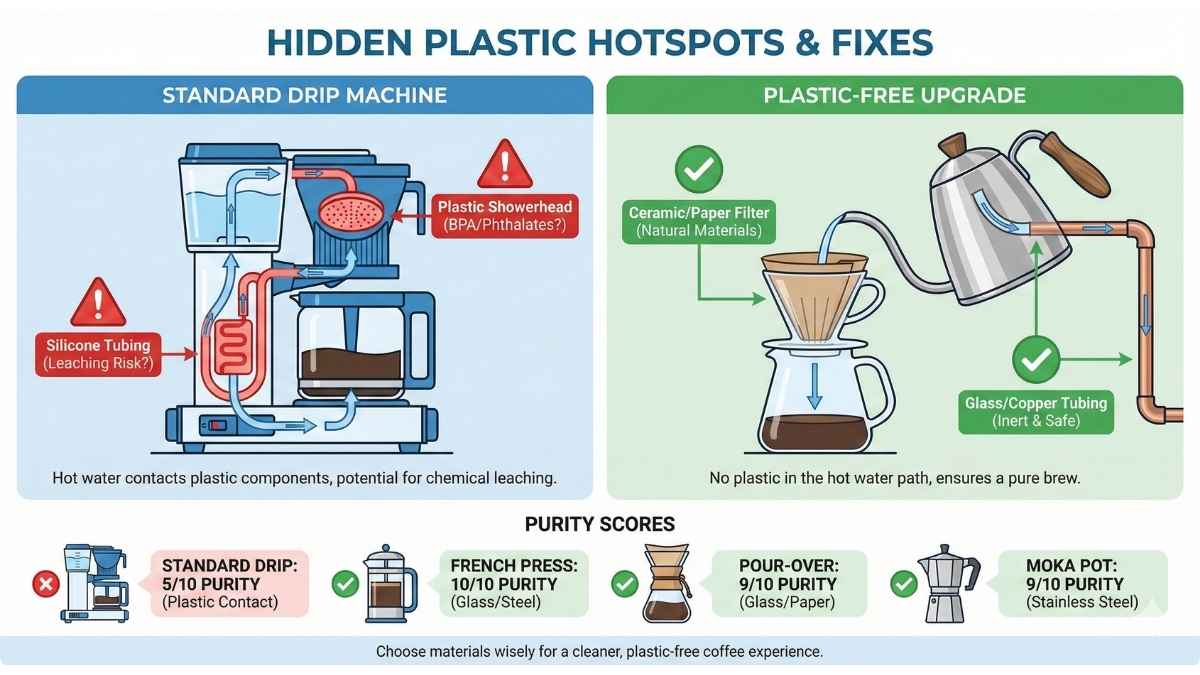 Figure 1: Visualizing the difference between a standard machine's plastic contact points and the inert materials used in our top plastic-free picks.
We evaluated these methods using a weighted scoring rubric to move beyond subjective "taste tests." Our scores are based on:
- 50% Wetted Path Material: Is the primary contact surface inert (glass/steel) or a polymer?
- 20% Seal Stability: Are gaskets made of silicone, rubber, or eliminated entirely?
- 20% Maintenance: How easily can the wetted path be deep-cleaned to prevent residue?
- 10% Heat Stability: Does the material have a low coefficient of thermal expansion.
| 🏷️ Category | 🏆 The 2026 Winner | 💯 Purity Score | ⚖️ The Technical Verdict |
|---|---|---|---|
| ⚗️ The Purist | Chemex (Glass Handle) | 100/100 | Borosilicate Glass is the lab standard. Zero flavor transfer; zero leaching vector. |
| 💪 The Heavy Body | Frieling Stainless Press | 98/100 | 18/10 Steel. We docked 2 points for the minor silicone seal on the plunger. |
| ☕ The Espresso Alt | Stainless Moka Pot | 95/100 | Exceptional for heat; however, internal "seasoning" is required to keep the steel inert. |
| ⚡ The Convenience | Technivorm Moccamaster | 85/100 | The only automatic with a copper heater; docked for the plastic filter basket. |
🔬 The Method-Specific
Audit: Where to Check for "Hidden" Plastic
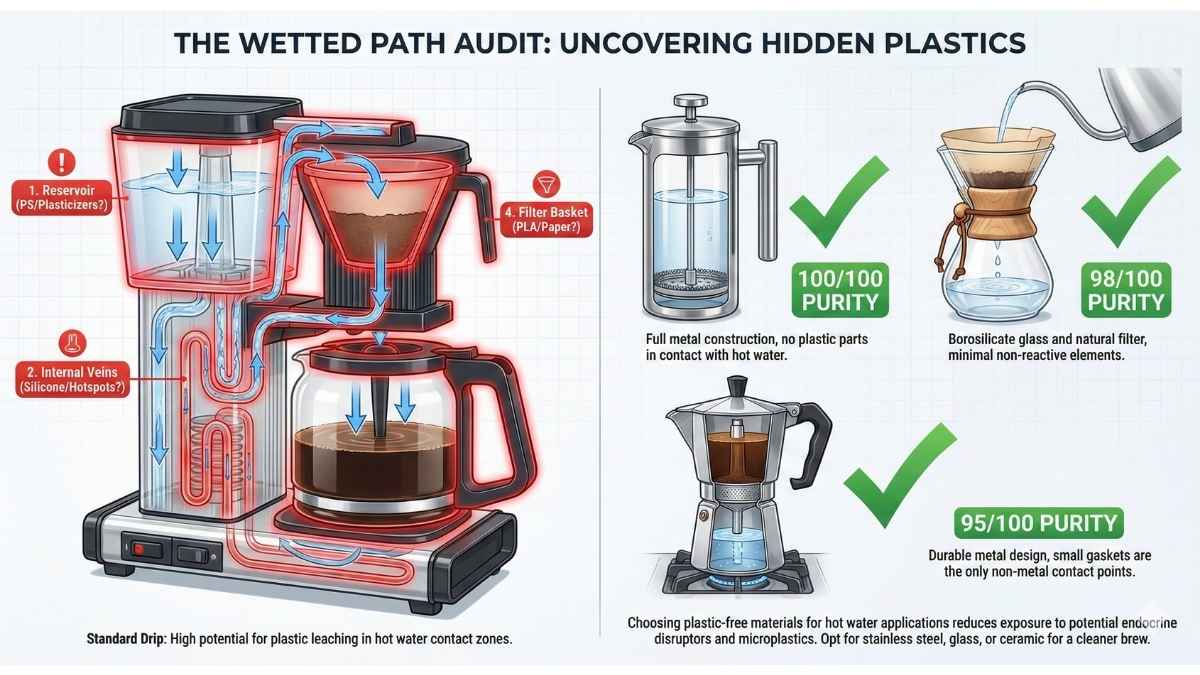 Figure 2: The "Wetted Path" Audit reveals where hot water acts as a solvent against synthetic internal components like PVC tubing and plastic showerheads
Use this checklist to perform a "Wetted Path Audit" on your specific brewing style.
1. Automatic Drip Machines
- Check the Showerhead: Many machines have a stainless carafe but a plastic showerhead that "rains" hot water. Look for scale buildup, which can trap micro-impurities.
- The Internal Veins: If the machine is light, it likely uses thin silicone tubing. High-end machines like the Moccamaster use glass or copper.
- The Basket: If using a plastic basket, always use an unbleached paper filter to create a secondary barrier.
2. Pod & Capsule Systems
- The Needle Assembly: Check the puncture needle; if it's plastic, it is a high-heat, high-pressure contact point.
- The Solution: Use 304 Stainless Steel Refillable Pods. This replaces the plastic "cup" entirely and allows for the use of organic coffee pods without plastic (by filling them with your own organic grounds).
3. French Press & Pour-Over
- Plunger Assembly: Unscrew your French press plunger. Is the disc that holds the mesh made of plastic? If so, consider a Frieling or a glass-only variant.
- The Collar: On pour-overs, ensure the "cone" is ceramic or glass, not plastic, as this is the longest contact point during extraction.
🌳 Organic Coffee Pods
Without Plastic: Solving the Greenwashing Puzzle
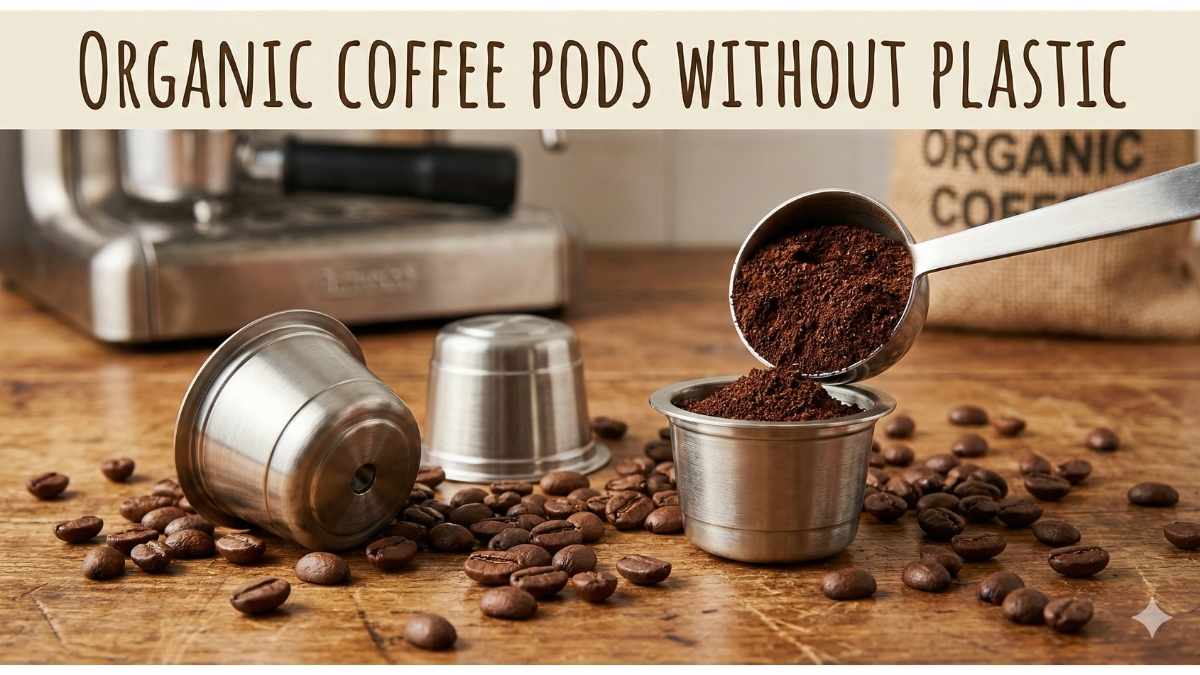 Figure 3: Stainless steel refillable capsules allow you to use organic coffee grounds without the high-heat plastic leaching of disposable pods.
If you love the speed of pods, you’ve likely seen "compostable" pods made of PLA (Polylactic Acid). While they are bio-based, they are still polymers. Some laboratory observations suggest that under the high pressure of an espresso machine (up to 19 bars), even bio-plastics can behave similarly to standard plastics.
📊 Comparison: Best Stainless Steel Refillable Pods (2026)
| 🏷️ Brand | 🛠️ Material Grade | 🔒 Seal Style | 🎯 Best For |
|---|---|---|---|
| SealPod | 304 Stainless | Silicone O-Ring | Espresso Lovers: Great for getting that perfect "crema." |
| WayCap | 304 Stainless | All-Steel Screw Cap | Zero-Waste: No adhesive lids or extra parts to buy. |
| Perfect Pod | 304 Stainless | Mechanical Hinge | Big Mugs: Perfect for a standard 8oz Keurig-style coffee. |
🧪 The Science of
"Clean" Materials
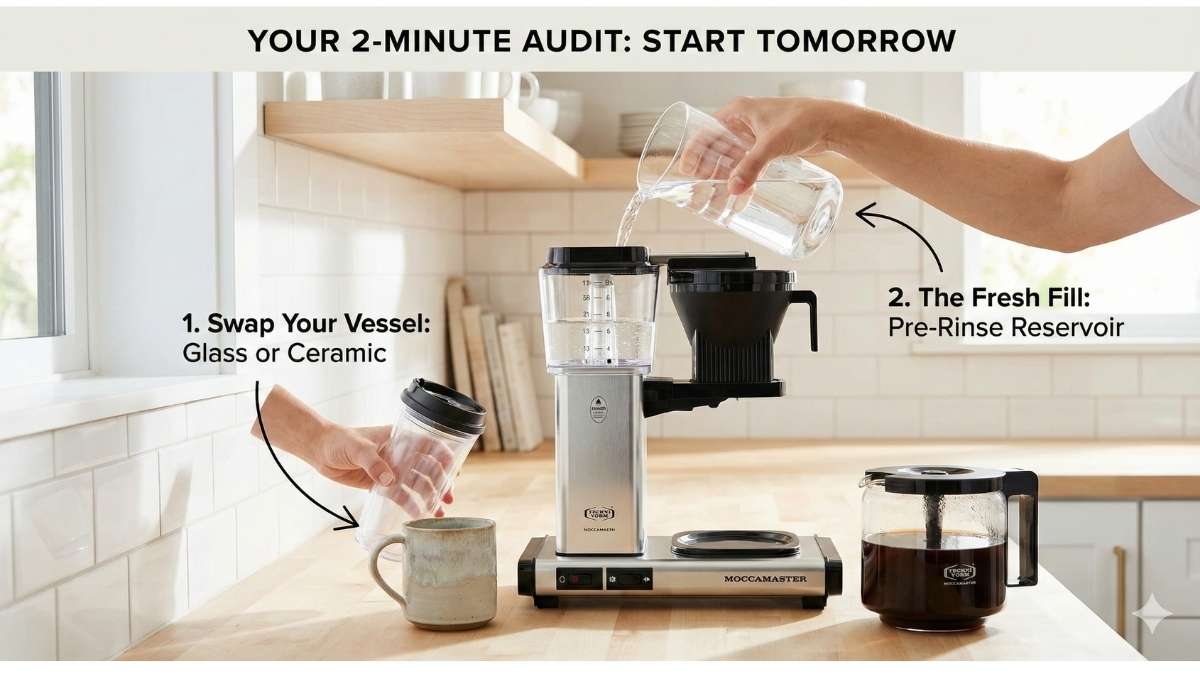 Figure 4: The 2-Minute Audit: Simple daily swaps, like using glass vessels and pre-rinsing reservoirs, minimize flavor contamination.
1. Borosilicate Glass: The Scientist's Choice
There's a reason scientists use borosilicate glass in labs. It’s non-porous and won't react with the natural acids in your coffee (180°C tolerance and pH 4.8–5.1 stability). This means you’re tasting the beans, not the equipment.
2. Passivated 304 Stainless Steel
High-quality steel goes through a process called passivation, creating a microscopically thin, protective layer. Lab reports indicate this prevents the coffee from picking up any metallic tang. To keep this layer healthy, avoid using scratchy metal scrubbers!
🔎 Deep Dive: Tips for the
Health-Conscious Brewer
- A Note on Heart Health: Research suggests that metal filters (Stainless Pods/French Press) allow cafestol to pass through. If you're managing cholesterol, unbleached paper filters are great because they trap those oils while keeping the brew plastic-free.
- The Truth About To-Go Cups: Some laboratory tests have found that the heat from fresh coffee can cause these linings to release nanoplastic particles—at levels that some researchers suggest may actually exceed what we typically find in bottled water. If you've done the work to brew plastic-free, don't forget to finish the job with a ceramic or glass mug!
❓ FAQ: You Asked, Science
Answered
Does hot water really affect plastic in coffee makers?
Scientific consensus suggests it’s more about hydrolysis than melting. Heat encourages the plastic to "share" trace compounds with the water, which can affect both taste and purity.
Can I use organic coffee pods without plastic in my Keurig?
Yes. A stainless steel reusable K-cup is the most effective "2026-ready" solution. It lets you use organic beans without the high-heat contact of a disposable plastic pod.

Meet Saqib
Saqib Ali Ateel is a PhD Scholar by training and a "student of the soil" by nature. He combines deep research, hands-on farming wisdom, and agricultural systems supervision to reveal what’s really on your plate. His mission is simple: to help your family navigate the food industry's complexity so you can eat cleaner, safer, and smarter.