100% Grass-Fed
Beef: The 2026
Purity Standard & Traceability Blueprint
The first time I smelled fermented silage behind a 'pasture-perfect' label, I realized you can’t trust the packaging—you have to pull the traceback logs. This guide shows you how to verify true 100% grass-fed beef using the same residue records and regulatory standards producers use, so you can spot the loopholes fast.
If you’d rather skip the chemistry lesson, here is the cheat sheet:
To meet strict 100% grass-fed beef purity standards, an animal’s diet must consist entirely of forage—grass, legumes, and brassicas—from weaning to harvest, with absolutely no grain or grain byproducts, alongside continuous pasture access during the growing season. Skip the hype and go straight to the At-A-Glance Value Matrix below to see which brands actually pass the test.
🏆 The 2026 At-A-Glance Value Matrix
| 🛒 Category | 🏅 The Winner | 📊 Key Metric | 👨🌾 The PhD Farmer Verdict |
|---|---|---|---|
| 🥩 Premium Retail (Amazon) | Pre Brands | ~$10-$14/lb 💰 | Highest consistency for strict no-grain protocols, sourced from strict pasture-law regions. 🌍 |
| 🍔 Ground Meat | Force of Nature 100% grass-fed ground beef | Regenerative Traceability 🌱 | Best for soil-to-plate transparency and high bioavailability. 🔬 |
| 🍳 Cooking Fat | Fatworks 100% grass-fed beef tallow | High Thermal Stability 🔥 | Optimal for high-heat cooking; physically resists oxidation at high temperatures. 🛡️ |
⚖️ Affiliate Disclosure: As an Amazon Associate, preforganic.com earns from qualifying purchases. If you click a link and make a purchase, we may receive a small commission at no extra cost to you. We only recommend products that strictly pass the PhD Farmer purity standard.
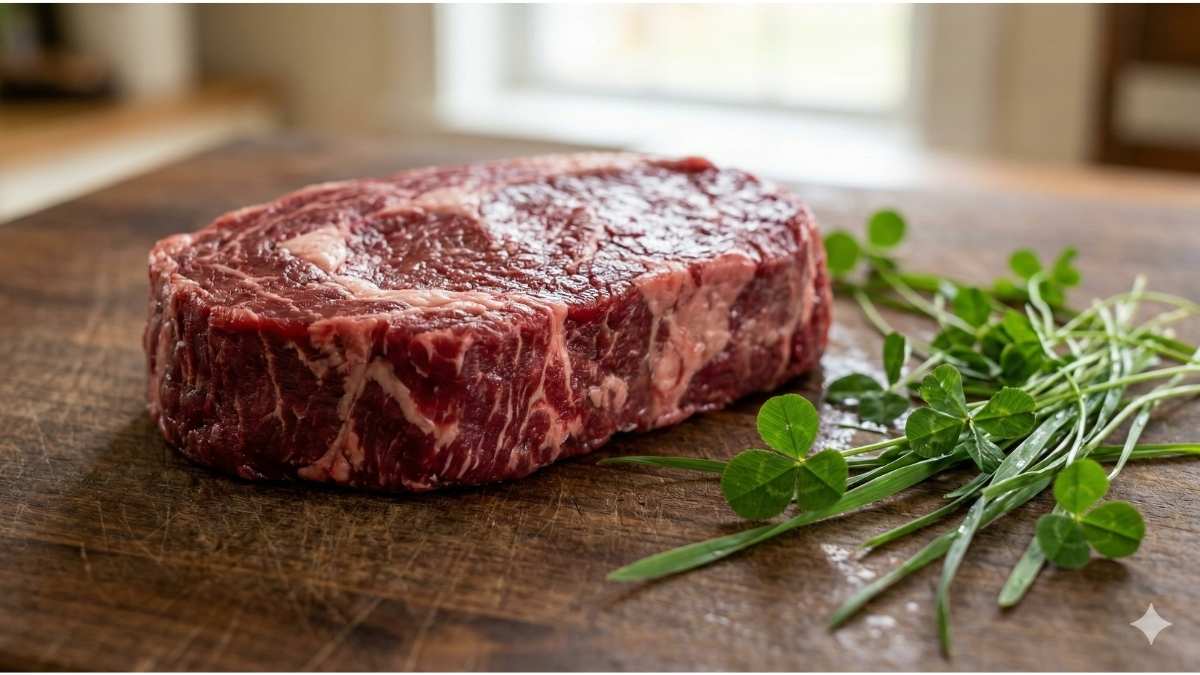 A true forage-only diet fundamentally alters the physical structure, lipid profile, and color of the beef.
🛑 The Blunt Answer: How to Buy
- 👉 If you want to avoid all grain, antibiotics, and hormones: Buy beef carrying the American Grassfed Association (AGA) seal, or use a vetted, transparent brand like Pre Brands.
- 👉 If you are on a strict budget but want clean lipid profiles: Buy 100% grass-fed ground beef. Ground meat provides the exact same Omega-3 to Omega-6 fatty acid ratio as premium cuts but at a fraction of the cost per ounce.
- 👉 If you need a cooking oil that doesn't become toxic under heat: Buy 100% grass-fed beef tallow. Its saturated fat structure prevents it from physically degrading at 400°F, unlike seed oils.
The Unit Economics & The "Purity Standard"
Matrix
To understand what qualifies as true 100% grass-fed, we have to look at the enforcement mechanisms. The USDA-FSIS regulates meat labels in interstate commerce under the Federal Meat Inspection Act. They treat "100% grass fed" as an "animal raising" claim. According to the official USDA-FSIS Animal Raising Claims Guidelines, this means a producer must submit supporting documentation to substantiate their specific claim before that label ever hits a grocery store shelf.
The Diet Purity Rule: No Grain, Ever
The standard established by the USDA-FSIS Animal-Raising Claims guideline states that a grass/forage-fed diet must be derived solely from forage after weaning. The 2026 data suggest that fraud usually happens during the finishing phase. Under a strict purity standard, grain and grain byproducts are strictly prohibited, full stop.
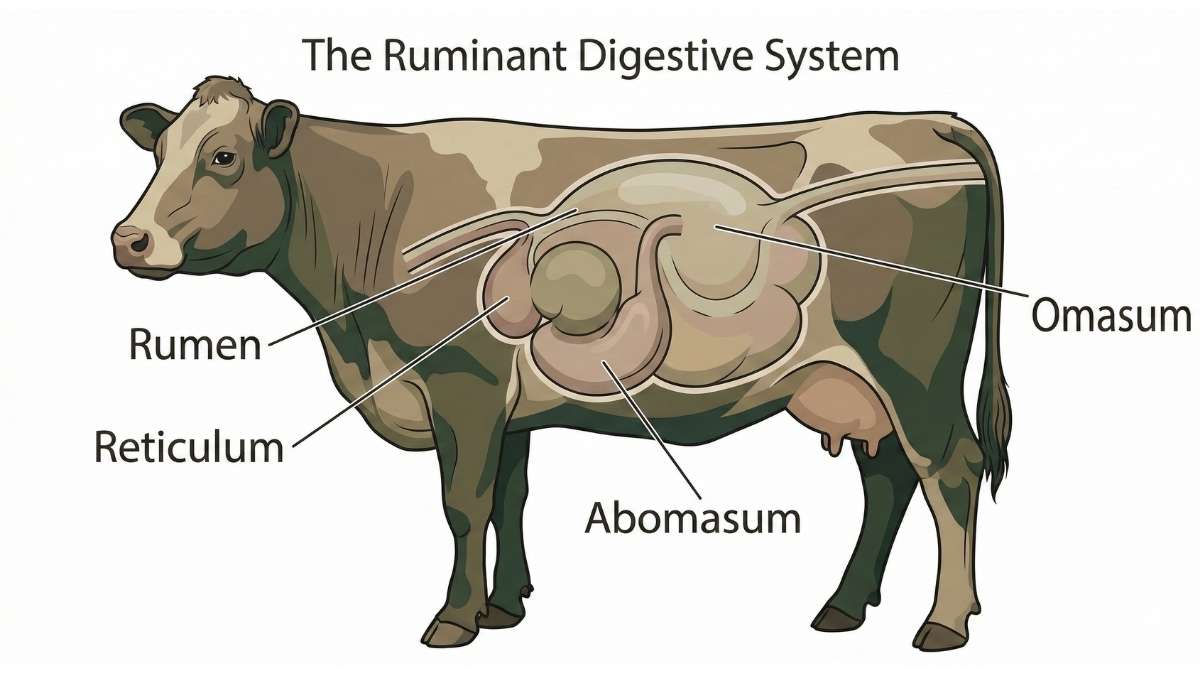 The ruminant digestive system relies on a delicate pH balance. Feeding cattle grain rapidly drops rumen acidity, fundamentally altering the nutritional density and lipid profile of the beef long before it reaches your plate.
Biologically, when cattle consume grain, their rumen acidity drops rapidly , fundamentally altering the lipid profile and nutritional density of the meat. This is why strict adherence to a forage-only diet is a biological necessity, not just a marketing preference.
Handling Winter Feeding
A common question in agricultural circles is how northern farms sustain cattle in January. Acceptable non-grain forages include conserved forages like hay, haylage, baleage, and silage. As long as the crop residue contains no grain heads, it maintains the forage-only physiological state of the animal.
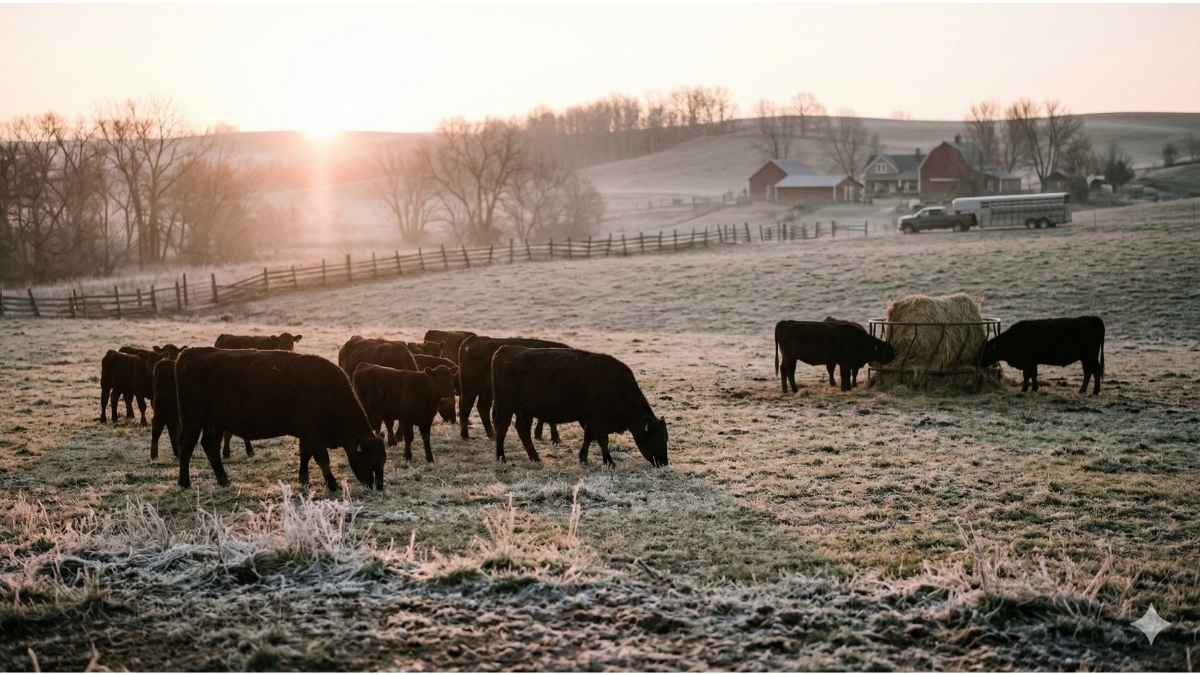 Conserved forages like hay and silage are biologically appropriate and fully compliant with strict purity standards.
If you want to protect your wallet and your health, you have to separate the legal definitions from the marketing myths.
🕵️♂️ The Truth Table: Decoding Misleading Beef Labels
| 🏷️ Feature / Label Claim | 🔬 Scientific Reality (The Regs) | 🤥 Marketing Myth | 👨🌾 The PhD Farmer Verdict |
|---|---|---|---|
| 🟢 USDA Organic | Mandates pasture access (min 120 days), but the National Organic Program (NOP) Pasture Rule does not prohibit grain feeding. 📜 | "Organic means grass-fed." ❌ | Fails the purity test. An organic cow can be fed organic corn, shifting its lipid profile and altering rumen pH. ⚠️ |
| 🍃 All-Natural | FSIS policy dictates minimal processing and no artificial ingredients post-harvest. 🏭 | "Natural means raised on pasture." ❌ | Irrelevant to animal raising. "Natural" says absolutely nothing about the animal's diet or living conditions. 🛑 |
| ☀️ Pasture-Raised | An access claim requiring custom documentation to the FSIS, but lacks a codified forage-only standard. 📝 | "Pasture-raised means no grain." ❌ | Incomplete. The animal lived outside, but could have been fed grain from a trough in the field. 🌾 |
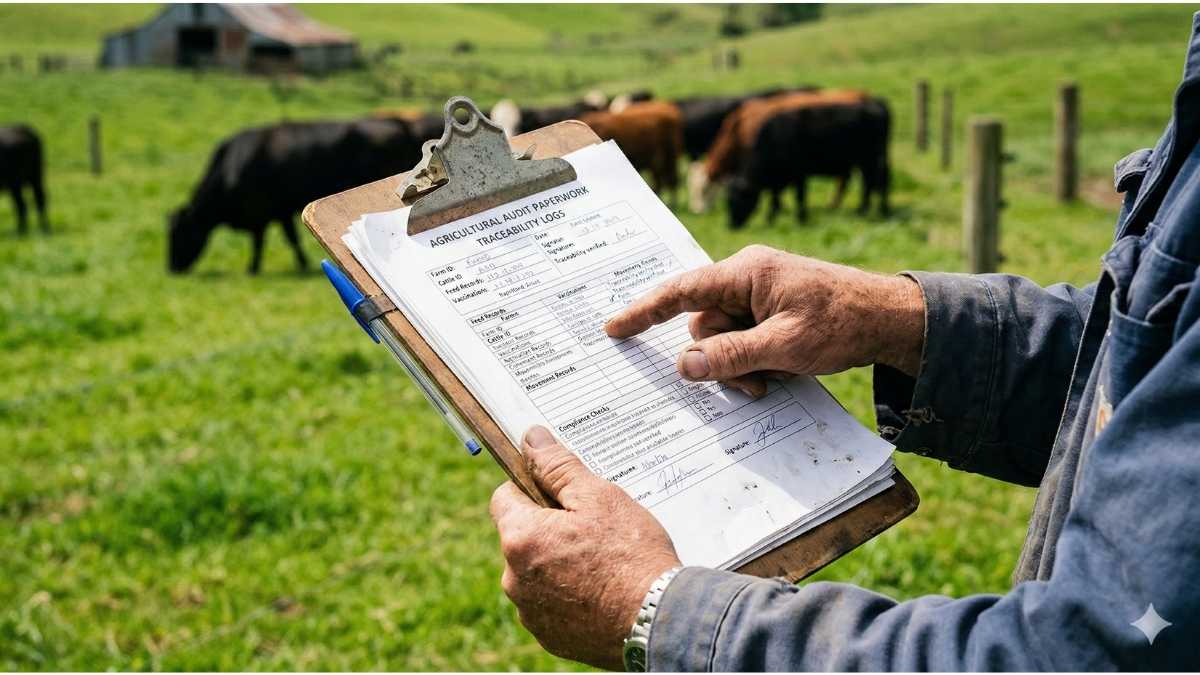 True traceability requires auditing the residue logs and feed records, not just reading the marketing label.
Deep Dive Mini-Reviews
Evaluating Pre Brands Against Purity Standards
When I calculate the unit economics of sourcing highly audited meat, Pre Brands holds up mathematically. They utilize commercial claim stacking—pairing their 100% grass-fed beef claim with "no antibiotics," "no added hormones," and a verified Non-GMO Project diet. Because they rely on stringent supplier protocols from New Zealand and Australia (regions with strict, codified national pasture laws) and offer direct availability on Amazon, they provide a reliable, harm-reduction choice for those who do not have a local, trusted farm.
- Pros: Aggressive vetting of suppliers; guaranteed no grain; easy Amazon sourcing.
- The Catch: You lose the direct connection to the specific farm lot, as sourcing is aggregated from southern hemisphere farms.
- Smart Buy: Utilize Amazon's Subscribe & Save on their bulk steak packs to bring the price-per-pound down closer to local grocery store levels.
Sourcing 100% Grass-Fed Ground Beef
Ground beef is the workhorse of a clean diet. Whether you buy it from Whole Foods, Amazon Fresh, or a premium regenerative brand like Force of Nature, you are getting a high-protein, highly bioavailable food.
- Pros: The most cost-effective way to ingest high-quality ruminant protein.
- The Catch: Big-box retailers may source globally; check the country of origin labels.
- Smart Buy: Buy in bulk and freeze. Ground beef suffers zero nutritional degradation when frozen properly.
Finding Authentic 100% Grass-Fed Beef Tallow
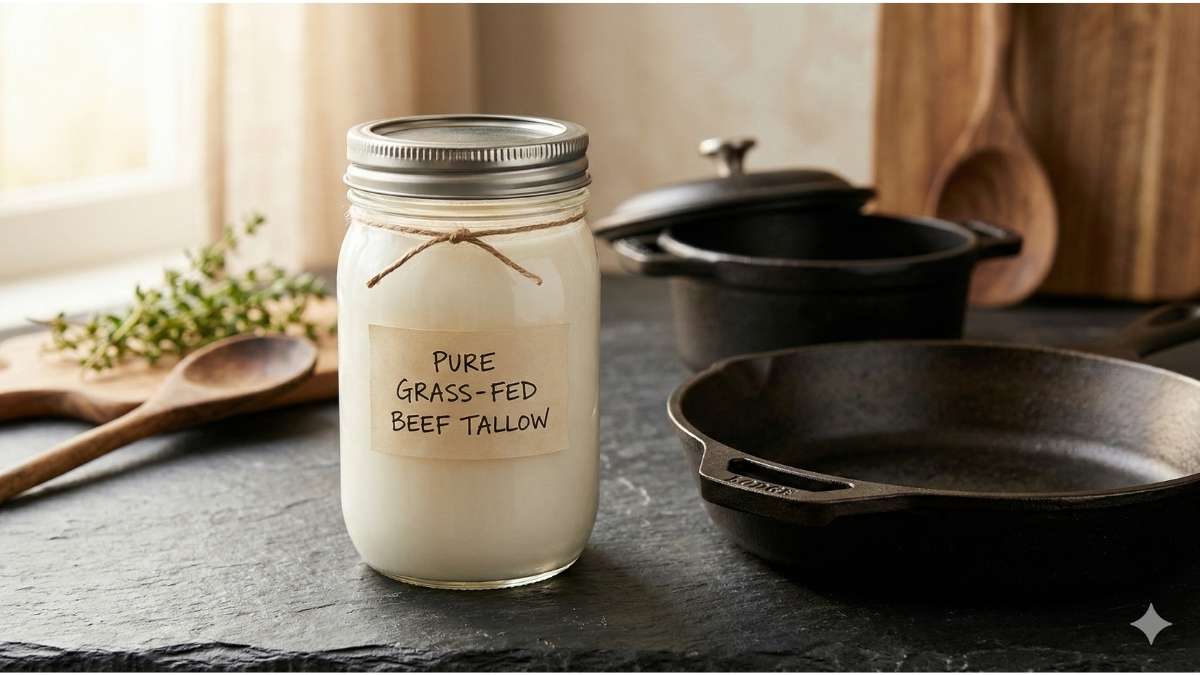 Pure grass-fed tallow provides unmatched thermal stability, physically resisting oxidation at high temperatures.
Tallow is rendered suet (kidney fat). 100% grass-fed beef tallow is essential for high-heat cooking because of its thermal stability.
- Pros: Extremely high smoke point; rich in fat-soluble vitamins.
- The Catch: Finding true suet-derived tallow (rather than trim fat) requires careful label reading.
- Smart Buy: Look for brands like Fatworks that specifically mention "kidney fat" or "suet" on the label for the highest concentration of stearic acid.
FAQ: The "People Also Ask" Brief
Is "grass-finished" the same as 100% grass-fed?
"Grass-finished" indicates the animal consumed a forage diet through the final fattening phase near slaughter. However, it lacks a single federally codified definition, functioning instead as a separate FSIS raising claim. True 100% grass-fed encompasses the entire lifecycle post-weaning.
Are mineral supplements allowed?
Yes. Routine mineral and vitamin supplementation (like salt licks or chelated minerals) is legally permitted and biologically necessary to maintain animal health, provided the core diet remains forage-only.
Which third-party certifications matter?
If you want bulletproof verification, look for the seal backed by the American Grassfed Association (AGA) Ruminant Standards or A Greener World's (AGW) "Certified Grassfed." These private standards enforce strict 100% forage diets and prohibit antibiotic/hormone usage.

Meet Saqib
Saqib Ali Ateel is a PhD Scholar by training and a "student of the soil" by nature. He combines deep research, hands-on farming wisdom, and agricultural systems supervision to reveal what’s really on your plate. His mission is simple: to help your family navigate the food industry's complexity so you can eat cleaner, safer, and smarter.
- Home
- Meat & Dairy
- 100% Grass-fed Beef