Best Organic Low Acid Coffee for GERD & Gastritis
(2026 Guide)
Finding the best organic low-acid coffee shouldn't mean choosing between your morning ritual and your gut health.
There is a specific smell in a coffee orchard after a heavy rain—a mix of wet earth and fermenting fruit. It's a beautiful reminder that coffee is a living, breathing crop. But if you are here, you likely have a love-hate relationship with that crop. You love the ritual, but you hate the burning sensation, the acid reflux, or that gnawing cramp that follows your morning cup.
I get it. And as a researcher and a farmer, I can tell you that you aren't just "getting old" or losing your tolerance. You are likely just drinking the wrong chemistry.
I don't look at the marketing label first; I check the chemical fingerprint. Most stomach issues aren't caused by the acidity of the liquid itself—they are caused by a specific waxy lipid on the bean and a lack of proper roasting.
If you'd rather skip the chemistry lesson and just want to wake up without the pain, here is the cheat sheet I built after doing the nerdy deep-dive on the 2026 options so you don't have to.
🏆 The "PhD Farmer’s" Top Picks (2026)
-
Best Overall (Science-Backed):
Purity Coffee (EASE / Dark Roast)
The Farmer Verdict: While I usually tell bio-hackers to drink light roast, if your stomach hurts, you need this. It’s roasted specifically to maximize NMP (a compound that actually soothes the stomach). -
Best for GERD/Reflux:
Lifeboost Organic Decaf
The Farmer Verdict: If you have heartburn, caffeine is the enemy because it relaxes your stomach valve. This uses the Swiss Water process to remove caffeine without using nasty chemicals. -
Best Budget "Clean" Option:
Fabula Coffee
The Farmer Verdict: Real organic coffee can get expensive. This is a solid, certified clean option that won't break the bank for your daily brew.
As an Amazon Associate, preforganic.com earns from qualifying purchases at no extra cost to you.
🛑 The Diagnostic: What Do
You Actually Need?
Before you spend a dime, let's figure out your specific trigger. The "perfect" coffee for a metabolism junkie might actually wreck the stomach of a gastritis patient.
Find your profile below to see your specific chemical "prescription."
The Science: It's Not the pH, It's the "Hidden Water
Path"
Most marketing copy tries to sell you on "alkaline" coffee. Honest truth? That's mostly fluff.
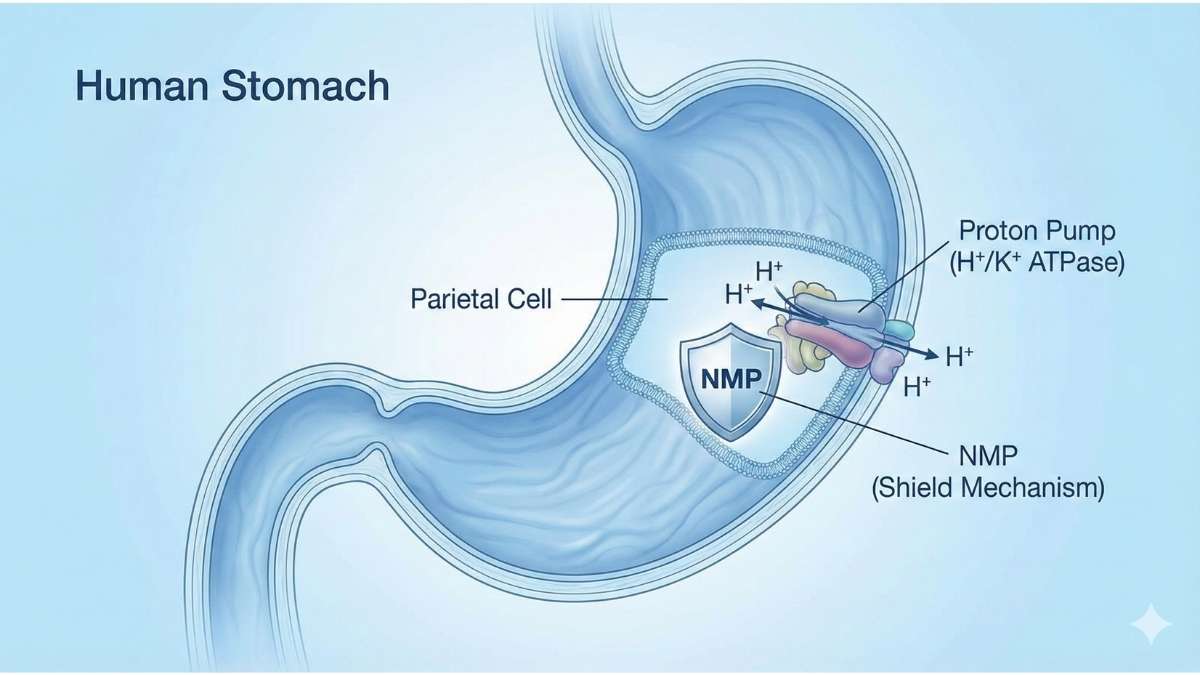
A banana has a pH of about 5.0. Coffee sits between 4.85 and 5.10. Your stomach acid is a pH of 1 or 2. Trust me, the beverage acidity isn't what's burning you. The real villains are Titratable Acidity and Waxy Lipids.
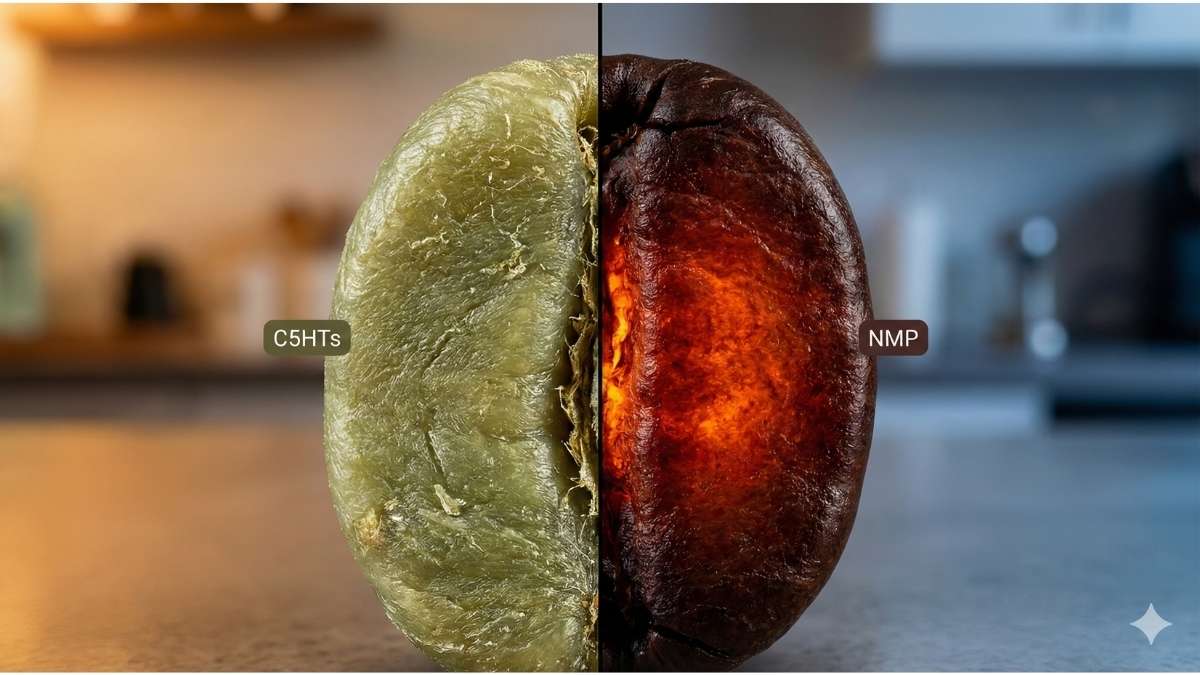
1. The Waxy Villain: C5HTs
Imagine a shiny green apple. That wax on the skin? Coffee beans have something similar called N-alkanoyl-5-hydroxytryptamides (C5HTs). In nature, this wax protects the bean. In your stomach, it acts like a pest. Clinical studies show that when you ingest these waxy lipids, they tell your stomach lining to pump out aggressive amounts of acid—way more than you need to digest the liquid.
2. The Roasting Paradox (The "Switch")
This is where the science gets really cool (and helpful). The heat of the roaster doesn't just cook the bean; it flips a chemical switch.
- Light Roasts: Great for antioxidants, but they retain all those waxy C5HT irritants.
- Dark Roasts: The heat burns off the wax and creates a brand new compound called N-methylpyridinium (NMP).
NMP doesn't exist in the raw bean; it is born in the fire. Research confirms NMP actively blocks gastric acid secretion
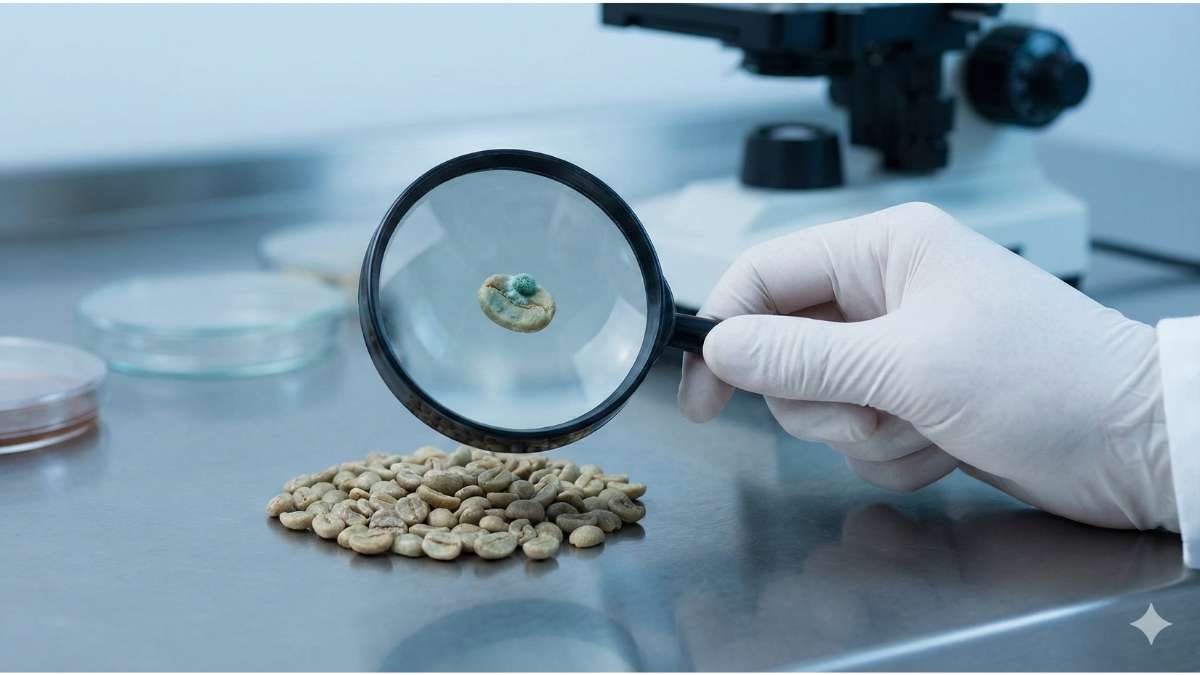 Roasting kills the fungus, but only third-party lab testing can confirm if the toxins were left behind.
🛒 The Shoppable Buyer's
Matrix (Expanded)
I have analyzed the Certificates of Analysis (COAs) and roasting profiles of the leading brands. Here is how they stack up against the best low acid organic coffee criteria.
Deep Dive Reviews
1. The Clinical Standard: Purity Coffee (Ease Blend)
- The Science: Purity is obsessed with chemistry. While their light roasts are "medicine" for metabolism, they engineered this Ease blend specifically for us. It's a dark roast that burns off the waxy irritants but is handled carefully to avoid creating carcinogens.
- The Catch: It's pricey. You are paying for the lab testing.
- Verdict: If your budget allows, this is the safest bet for a happy gut.
2. The Sensitive Stomach Specialist: Lifeboost (Dark Roast)
- The Science: Lifeboost markets heavily on being "Low Acid," and they back it up. Their beans are washed (wet-processed), which data shows significantly reduces mold risk compared to natural processed beans.
- The Catch: They claim a pH of 6.0, which is chemically unusual and likely depends on the water you brew with.
- Verdict: The go-to for anyone who gets heartburn immediately after sipping.
3. The Budget "Clean" Pick: Fabula
- The Science: Sourced from high-altitude organic farms. High altitude is nature's pesticide—the cooler air means fewer bugs and less mold pressure, so the beans are naturally cleaner.
- The Catch: Slightly less transparency on the specific lot-by-lot reports compared to Purity.
- Verdict: A fantastic entry point if you want a reliable, clean subscription without the premium price tag.
4. The Grocery Store Backup: Kicking Horse (Grizzly Claw)
- The Science: Sometimes you just need to grab a bag at the store. This is USDA Organic and Fair Trade.
- The Catch: They don't publish the intense mycotoxin reports the online brands do.
- Verdict: It works for gastritis because the deep roast creates high NMP, and the organic label ensures you aren't drinking glyphosate.
⚙️ The 7-Day "Sensitive
Stomach" Protocol
If you are suffering now, don't just switch beans. Change the physics of your brew.
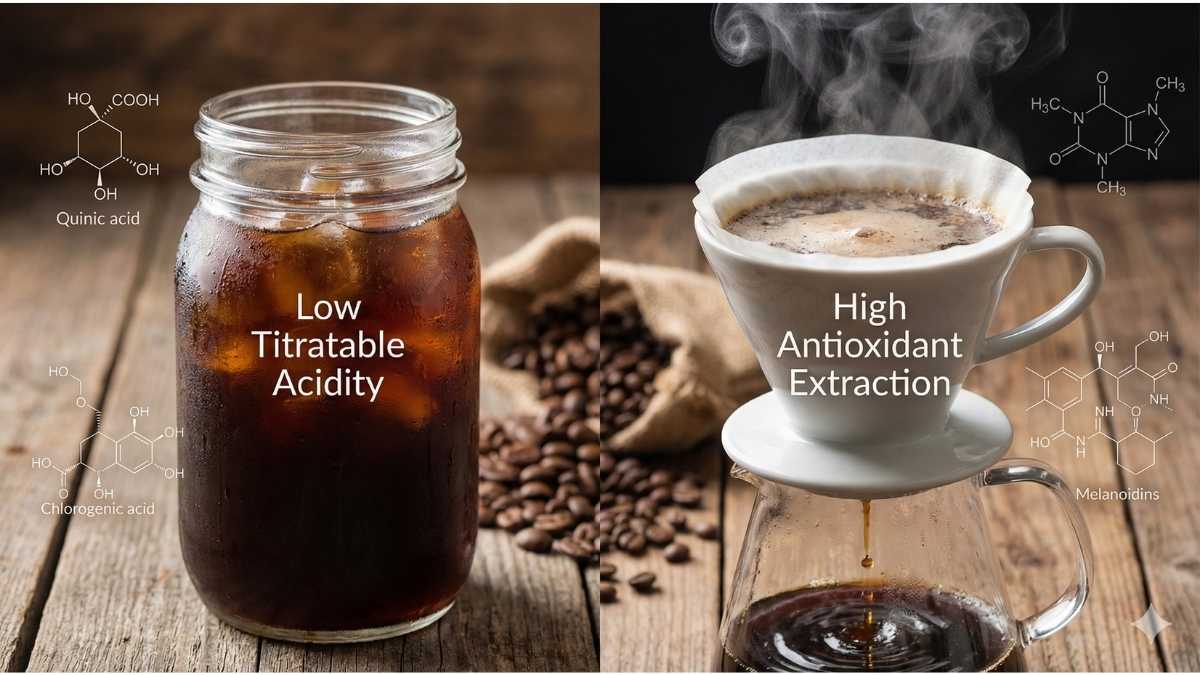
1. Switch to Cold Brew: By using cold water, you reduce the energy used for extraction. This leaves behind about 50-60% of the acids found in hot coffee.
2. Use Paper Filters: If you use a metal mesh filter, you are letting oils (diterpenes) into your cup. These can irritate the gut. Paper traps them.
3. The "Dark" Shift: Move to a French Roast for 7 days to maximize that soothing NMP intake.
❓ Frequently Asked Questions
Q: Is "Low Acid" coffee the same as Decaf?
No. "Low Acid" refers to the chemistry (pH and lipids). Decaf refers to the caffeine. You can have a high-acid decaf or a low-acid caffeinated coffee. However, if you have GERD, you need both.
Q: What does "Prop 65" mean on my coffee bag?
This refers to Acrylamide, a byproduct of roasting. Ironically, the light roasts that bio-hackers love actually have higher acrylamide levels than dark roasts, because the chemical degrades as the roast gets darker.
Q: Why do the EU and the US have different rules?
The European Union has a strict limit for mold toxins (Ochratoxin A). The US FDA has no hard enforcement limit. That loophole is why I always recommend brands that voluntarily meet the stricter European standards—it’s just a smart way to avoid taking a risk with your morning cup that you don't have to.

Meet Saqib
Saqib Ali Ateel is a PhD Scholar by training and a "student of the soil" by nature. He combines deep research, hands-on farming wisdom, and agricultural systems supervision to reveal what’s really on your plate. His mission is simple: to help your family navigate the food industry's complexity so you can eat cleaner, safer, and smarter.