The Golden Secret: Finding a Heart-Safe Monk Fruit Brown
Sugar Substitute That Actually Tastes Good
If you are searching for a safe monk fruit brown sugar replacement that won't wreck your gut or heart, take a deep breath. You are in the right place. As someone who has spent years both researching agricultural biochemistry in the lab and getting my hands dirty in organic soil, I know exactly why you’re here. You want the warm, molasses-like comfort of brown sugar for your morning oatmeal or your grandmother’s cookie recipe, but you’re terrified of the hidden dangers lurking in those "sugar-free" bags.
You have every right to be skeptical. The labels are confusing, and the stakes—your metabolic and cardiovascular health—are incredibly high.
✨ The Golden Takeaway ✨
- ➤ The Peel is the Secret: Golden monk fruit gets its color and maple flavor from the seed and peel, unlike the pulp-only White extract.
- ➤ Organic is Non-Negotiable: Because Golden extract uses the peel, you must choose Certified Organic to avoid concentrated pesticide residues.
- ➤ Ditch the Erythritol: New research links erythritol to heart risks; swap it for Allulose to get safe browning and moisture in baking.
- ➤ Function Matters: Use White extract for delicate flavors (lemonade/meringue) and Golden for rich, earthy recipes (oatmeal/cookies).
🏔️ The Tale of Two
Extracts: Unlocking the Golden Secret
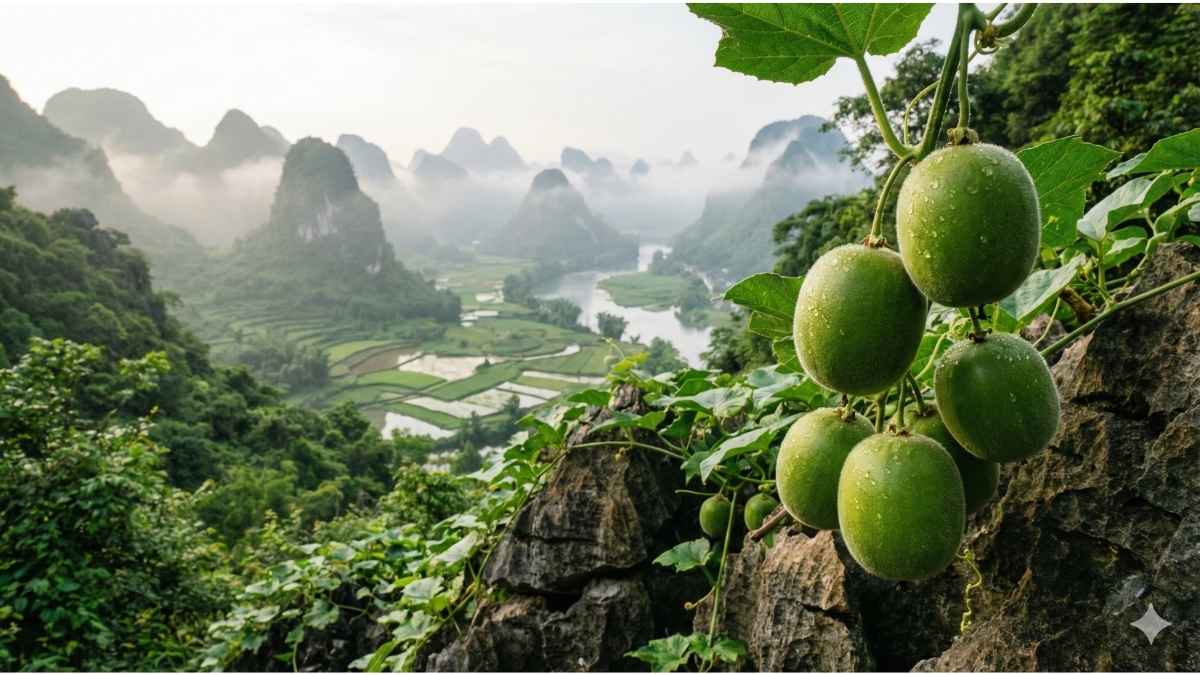 The "Golden" color and maple flavor of brown sugar alternatives come from processing the peel of the Siraitia grosvenorii melon, which is also where pesticide residues accumulate, making USDA Certified Organic status non-negotiable for safety.
To understand the monk fruit brown sugar dilemma, we have to look at the fruit itself. Siraitia grosvenorii, or Monk Fruit, is a small melon that grows on steep, misty mountainsides in Southern China. Growing up around farming, I learned early on that nature doesn't waste anything. However, industrial processing often does.
The difference between "White" (Classic) and "Golden" monk fruit isn't just dye or marketing—it’s botany.
White Monk Fruit: The "Pulp" Isolate
Think of White Monk Fruit extract as the "white sugar" of the natural world. It is highly refined. Manufacturers take the fruit, crush it, and use hot water to extract the sweet compounds called mogrosides. Then, they filter out everything else—the color, the fiber, and the flavor nuances.
- The Result: A clean, sharp, intense sweetness.
- Best Use: It’s a ghost. It disappears into lemonade, tea, or fluffy meringues without altering the flavor profile.
Golden Monk Fruit: The "Whole Fruit" Experience
This is where the magic happens. Golden monk fruit sweetener is less refined. Crucially, the extraction process often includes the seed and the peel of the fruit. In my research, I’ve found that the peel is rich in specific aromatic compounds, like sotolon—the exact same compound found in maple syrup and fenugreek.
- The Result: A warm, complex flavor with notes of caramel, maple, and roasted nuts. It naturally mimics brown sugar.
- Best Use: Anything that needs "soul." Coffee, oatmeal, BBQ sauces, and chocolate chip cookies.
🧠 The "Golden" color isn't just pretty; it signifies the presence of flavonoids and other phytonutrients from the skin that are stripped away in the white version.
🛡️ The Purity Protocol:
Why Organic is Your Shield
Here is where I have to take off my "Farmer" hat and put on my "PhD Scholar" hat. We need to talk about toxicology.
There is a concept I call The Pesticide Paradox. The peel of a fruit is its first line of defense against insects and fungus. Consequently, it is also where pesticide residues accumulate the most.
Since golden monk fruit sweetener utilizes the peel to achieve that delicious brown sugar taste, it is inherently more vulnerable to pesticide contamination if the farming practices aren't pristine. In conventional Chinese agriculture, fungicides are often used to combat the humidity of the growing mountains.
If you buy non-organic Golden Monk Fruit, you risk ingesting concentrated residues of these chemicals.
- The Rule: For White Monk Fruit (pulp only), organic is good. For Golden Monk Fruit (peel included), Certified Organic is non-negotiable. Look for the USDA seal. It is your only assurance that the "Golden Secret" isn't a toxic one.
💔 The Heart-Breaker: Why
You Must Avoid Erythritol
This is the hardest part of the conversation, but as a trusted friend, I need to be honest with you. For years, we thought Erythritol was the perfect filler. It’s natural, zero-calorie, and granulated.
But the science has shifted.
In February 2023, a landmark study published in Nature Medicine dropped a bombshell. Researchers found that high levels of erythritol in the blood were linked to a significantly higher risk of heart attack and stroke. The mechanism appears to be platelet reactivity—essentially, erythritol makes your blood clot easier.
For someone on an anti-inflammatory or heart-safe diet, this is a dealbreaker. You cannot protect your metabolic health while endangering your cardiovascular health.
The Allulose Advantage 💪
So, what do we use instead to get that "cup-for-cup" bulk? Allulose.
Allulose is a rare sugar found in figs and raisins. It is chemically a sugar, but your body doesn't metabolize it like one.
- Safety: It does not carry the thrombotic (clotting) risks of erythritol.
- Baking Science: Unlike erythritol, which stays white and crunchy, Allulose browns and caramelizes. It holds moisture. If you want a soft, chewy "brown sugar" cookie, Allulose is chemically superior.
🕵️ The Ingredient Comparison Guide
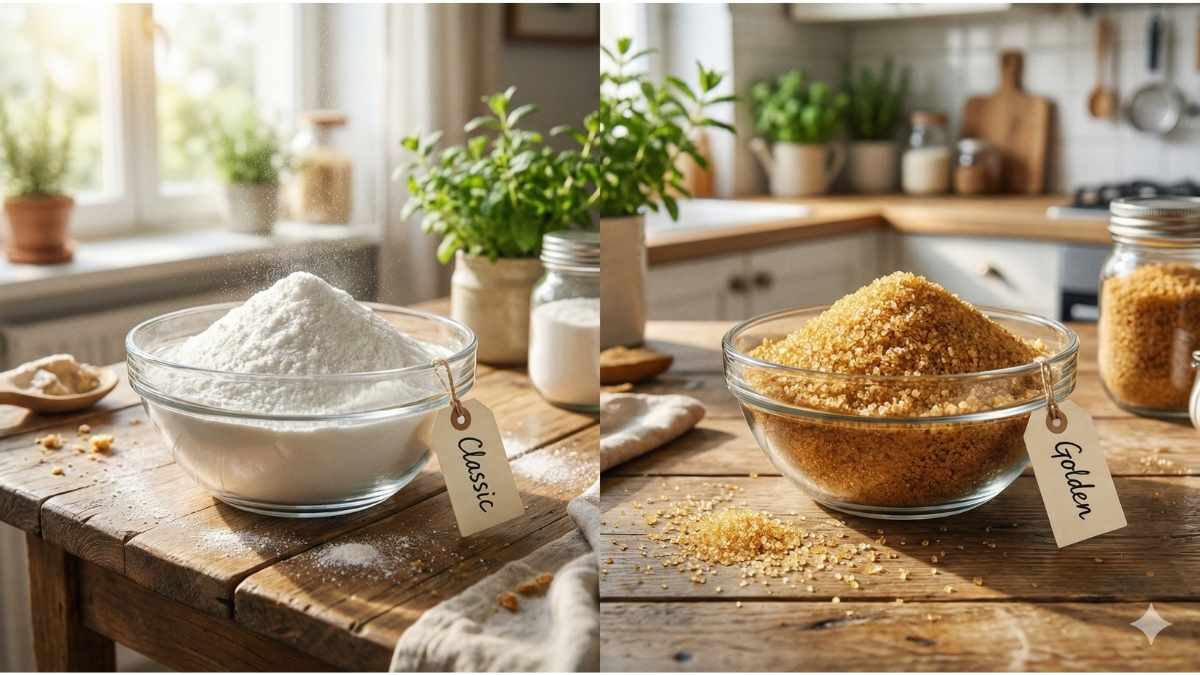 While White extract isolates the sweet mogrosides from the pulp for a neutral taste, the Golden variety retains the seed and peel to preserve aromatic compounds like sotolon, which chemically mimics the caramel notes of traditional brown sugar.
Use this table to make the right choice for your kitchen instantly.
| Feature 🧐 | White (Classic) Monk Fruit ⚪ | Golden (Brown) Monk Fruit 🟡 |
|---|---|---|
| 🌱 Source | Pulp Only (Refined) | Pulp, Seed & Peel (Whole) |
| 👅 Monk Fruit Taste | Clean, Sharp, Neutral | Maple, Caramel, Molasses |
| 👃 Aroma | None | Roasted, Toasted, Warm |
| ✨ Best For | 🍋 Lemonade, Tea, Meringue | 🍪 Cookies, Coffee, Oatmeal |
| 🛡️ Organic Need | High | Critical (Due to Peel Exposure) |
| 🥄 Carrier to Use | Allulose (for health) | Allulose (for texture & health) |
🍰 How to Use Golden Monk
Fruit Like a Pro
 To prevent sugar-free cookies from turning into "hard, minty rocks" associated with erythritol, this "Farmer's Blend" utilizes Allulose for moisture retention and bulk, combined with Golden Monk Fruit for intense sweetness333333333.
Switching to a natural monk fruit brown sugar alternative can be tricky if you don't know the chemistry. Sugar provides "bulk" and "moisture." Pure Monk Fruit provides neither—it is just intense sweetness.
The "Farmer’s Blend" Recipe:
If you can't find a pre-made Organic Monk Fruit + Allulose blend, you can mix it yourself in your kitchen. It’s cheaper and safer.
1. The Base: Take 1 cup of Organic Allulose (granular). This provides the bulk and moisture.
2. The Sweetness: Add ½ teaspoon of 100% Pure Organic Golden Monk Fruit Extract.
3. The "Molasses" Kick (Optional): For that sticky, wet brown sugar texture, add 1 teaspoon of organic yacon syrup or blackstrap molasses. It adds negligible carbs per cookie but perfects the texture.
I have used this blend in my own kitchen. When you bake chocolate chip cookies with Golden Monk Fruit and Allulose, they stay soft. They don't turn into hard, minty rocks as they do with erythritol.
🌟 Conclusion: Your
Health, Your Choice
Navigating the grocery aisle shouldn't feel like a chemistry exam. But knowing the difference between the "soulless" sweetness of White extract and the nutrient-dense, aromatic complexity of Golden extract gives you the power to choose.
Remember the Golden Secret: Real flavor comes from the whole fruit (peel and all), but safety comes from the Organic label.
By choosing a Certified Organic, Erythritol-Free Golden Monk Fruit (ideally blended with Allulose), you are doing more than just cutting calories. You are respecting your body’s need for safety and your soul’s need for sweetness. You are guarding your heart and delighting your taste buds simultaneously.
So go ahead. Bake those cookies. Sweeten that morning oats. You’ve done the detective work, and the reward is sweet indeed.
📚 Further Reading
- Cleveland Clinic: A deep dive into the recent study linking erythritol to blood clotting and cardiovascular events.
- Healthline: A comprehensive overview of monk fruit mogrosides and their antioxidant properties.
- Environmental Working Group (EWG): Understanding why choosing organic matters for fruits where you consume the peel.

Meet Saqib
Saqib Ali Ateel is a PhD Scholar by training and a "student of the soil" by nature. He combines deep research, hands-on farming wisdom, and agricultural systems supervision to reveal what’s really on your plate. His mission is simple: to help your family navigate the food industry's complexity so you can eat cleaner, safer, and smarter.
- Home
- Pure Monk Fruit
- Is Monk Fruit Safe
- Monk Fruit Vs Stevia
- Monk Fruit Brown Sugar