Is Monk Fruit Safe? The 'Metabolic Shield' That Defends Your Gut & Heart From Toxic Fillers
You are likely here because you saw the headlines. You might be standing in the grocery aisle, holding a bag of a "natural" sweetener, wondering whether the white powder inside will help your waistline or hurt your heart. If you are asking, "Is monk fruit safe?" because you read about recent studies linking sugar substitutes to blood clots and stroke, you are right to be cautious.
As a PhD student in agriculture and a farmer by birth, I can tell you that your skepticism is your best defense. But I also want to tell you that you might be blaming the wrong ingredient. The danger often lies not in the ancient fruit itself, but in the modern industrial fillers hiding in the bag.
Is Monk Fruit Safe? The Erythritol Crisis Explained
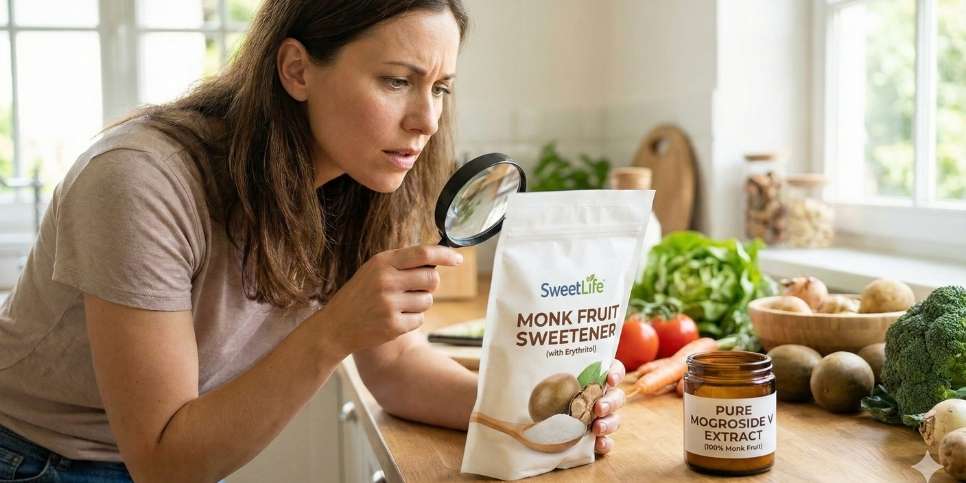 To ensure safety, consumers must distinguish between riskier "Proprietary Blends"—which often contain erythritol linked to clotting—and "100% Pure Extract," which offers anti-inflammatory benefits.
When the Nature Medicine study dropped in 2023, it sent shockwaves through the keto and organic communities. The researchers found that erythritol—a sugar alcohol used to bulk up almost every "monk fruit" sweetener on the shelf—was associated with "enhanced platelet reactivity."
Let me break that down in simple, trusted-friend terms. Think of your blood platelets like tiny emergency workers. Their job is to rush to a site of injury and form a clot to stop bleeding. The study suggested that erythritol puts these workers on high alert, making them hyperactive. They might start forming clots when they don't need to, which can block blood flow to the heart or brain.
This is where the confusion starts. Because the bag says "Monk Fruit" in giant letters, people assume the fruit is the villain. But chemically, Monk Fruit (a gourd) and Erythritol (a fermented corn sugar alcohol) are strangers.
From an academic perspective, the toxicology reports on pure Siraitia grosvenorii (Monk Fruit) are reassuringly boring. The FDA has granted it GRAS (Generally Recognized As Safe) status, and studies show no adverse effects even at high doses. The "risk" you are feeling is real, but it belongs to the filler, not the fruit.
The "Diarrhea Detective": The Truth About Monk
Fruit Side Effects 🕵️
One of the most common questions I see is "monk fruit side effects," usually regarding gas, bloating, or diarrhea. If you have ever eaten a "keto cookie" and spent the rest of the afternoon regretting it, you know this pain.
Here is the "Farmer’s take" on why this happens.
When you eat a blend containing erythritol or xylitol, you are consuming a "sugar alcohol." Your body cannot fully digest it. It sits in your intestines and pulls water in from your bloodstream—a process called osmosis. This flood of water creates the "urgency" and diarrhea. It’s a mechanical reaction to a foreign substance.
Pure Monk Fruit works differently. It contains zero sugar alcohols. Instead, its sweetness comes from mogrosides. These are large, complex antioxidant molecules. They do not pull water into your gut. In fact, research suggests they are not just "neutral"—they are actually beneficial.
If you are experiencing digestive distress, flip the package over. If the first ingredient ends in "-ol" (erythritol, sorbitol, xylitol), you have found your culprit. It’s not the monk fruit hurting your stomach; it’s the vehicle it rode in on.
The Metabolic Shield: How Mogrosides Protect Your Gut
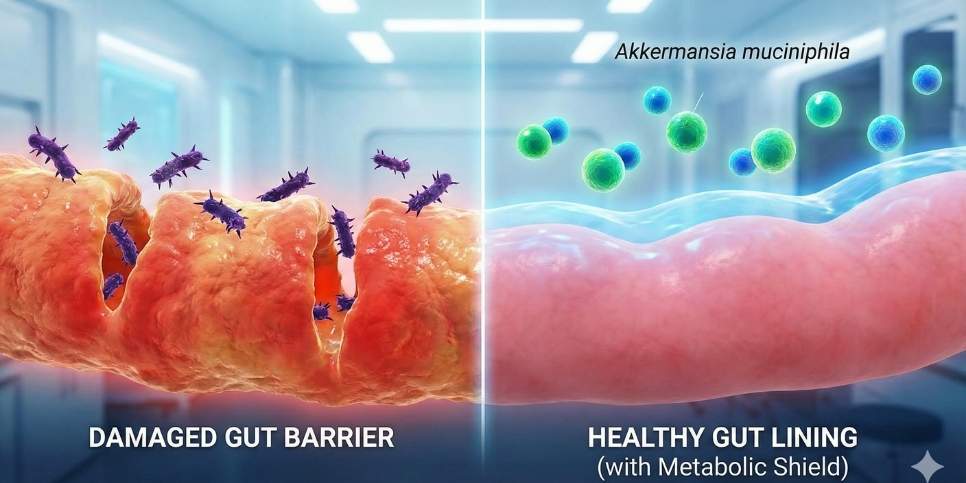 This illustrates how pure mogrosides feed Akkermansia muciniphila, strengthening the mucus mortar of the gut wall to prevent bacterial endotoxins (LPS) from leaking into the bloodstream.
Now that we have cleared the name of the fruit, let’s talk about why I call pure Monk Fruit a "Metabolic Shield." This is where my research as a PhD scholar gets exciting. We used to think zero-calorie sweeteners were just "inert"—they passed through us like ghosts. But we are learning that pure monk fruit can positively interact with your microbiome.
Specifically, it seems to be a favorite food for a very special bacteria called Akkermansia muciniphila.
Think of your gut lining like a castle wall. To protect the bricks, you need a thick layer of mortar (mucus). Akkermansia is the mason that maintains this mortar. When you have high levels of Akkermansia, your gut barrier is strong, preventing toxins from leaking into your bloodstream (a condition called "Leaky Gut").
The Shield Effect:
1. The Prebiotic Boost: Unlike sugar, which feeds harmful yeast, or sucralose, which can reduce healthy bacteria, mogrosides appear to act as a selective prebiotic. They feed the Akkermansia, helping them thrive.
2. Stopping the Leak: By strengthening the mucus layer, this "Metabolic Shield" prevents bacterial endotoxins (LPS) from entering your blood. This is crucial because endotoxins trigger systemic inflammation and insulin resistance.
So, when you choose pure monk fruit, you aren't just cutting calories. You are potentially fortifying the very wall that keeps your metabolism safe.
The Anti-Inflammatory "Cooling" Effect
In Traditional Chinese Medicine (TCM), Monk Fruit is not used for cookies; it is used as a tea for "cooling" heat in the lungs. Growing up, I learned that "heat" in the body often translates to what modern science calls inflammation.
We now have the data to back this ancient wisdom. Monk fruit benefits extend deep into our cellular machinery. Studies indicate that mogrosides can inhibit the NF-kB pathway.
Imagine NF-kB as a master light switch in your cells. When it gets flipped "ON" by stress, sugar, or toxins, it lights up your body with inflammation. Chronic inflammation is the root of heart disease and diabetes. The science suggests that mogrosides help keep a heavy hand on that switch, keeping it in the "OFF" position.
While erythritol might be "priming" platelets for trouble, pure monk fruit is helping calm the system. It is a functional food that works with your biology, not against it.
Practical Farming: How to Ditch the Fillers
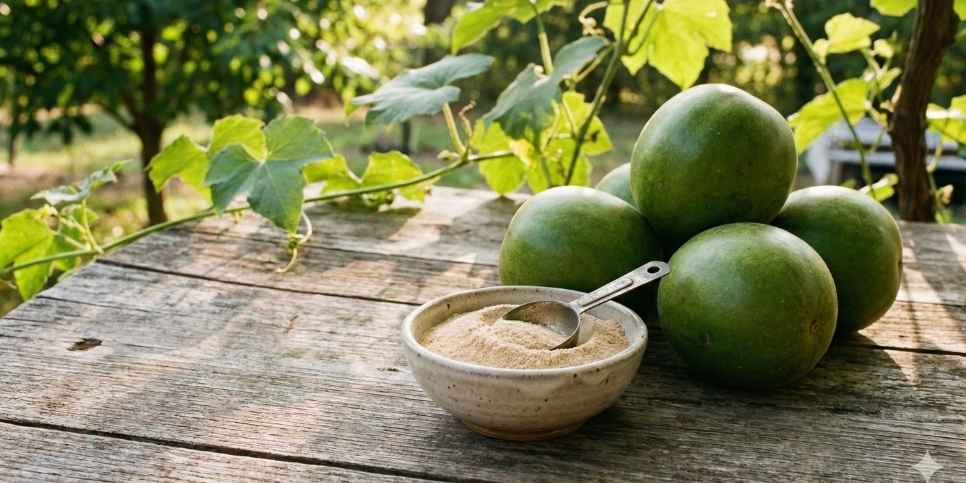 Because pure extract is 200 to 300 times more potent than sugar, it requires dissolving a fingernail-sized "micro-scoop" into liquid ingredients rather than using a standard cup-for-cup swap.
As a gardener, I know that the best things in life take a little extra work. Pure monk fruit is potent. It is 200 to 300 times sweeter than sugar. This means you cannot just swap it cup-for-cup like you do with the retail blends.
If you try to bake a cake with pure extract using a standard recipe, it will fail. The "bulk" of the sugar is missing.
Here is my advice for making the switch:
- The Micro-Scoop: Pure extract usually comes with a tiny scoop, the size of a fingernail. That tiny scoop equals about one teaspoon of sugar. Trust the scoop.
- The Liquid Fix: Because the powder is so fine, it can clump. I always dissolve my pure monk fruit in the liquid part of the recipe (the egg, milk, or oil) before adding it to the dry ingredients.
- The Aftertaste: Some people detect a slight "melon-rind" aftertaste. This is the taste of the antioxidants! To mask it, add a pinch of salt or a splash of vanilla. It balances the flavor profile perfectly.
By mastering the micro-dose, you free yourself from the industrial fillers. You save money (because one small jar lasts months), and you restore your peace of mind.
Conclusion: Reclaiming Your Confidence
The fear you feel when you read about "heart risks" and "sweeteners" is valid. The food industry has made it incredibly difficult to know what is safe. But you don't have to live in fear.
By understanding the difference between the Fake (erythritol blends) and the Pure (100% extract), you can step out of the "Risk Aversion" trap and into a place of empowerment. You are not just avoiding sugar; you are building a Metabolic Shield. You are feeding the good bacteria that protect your gut, calming the inflammation that threatens your heart, and enjoying the sweetness of life without worry.
Trust the fruit. Ditch the filler. Your heart and your gut will thank you. ❤️
Further Reading
- The Nature Medicine Study: For a deep dive into the research regarding erythritol and cardiovascular risk, review the findings from the Cleveland Clinic.
- Akkermansia and Gut Health: To understand the critical role of Akkermansia muciniphila in maintaining your metabolic barrier, this review offers excellent scientific context.
- Monk Fruit Safety Overview: A comprehensive look at the safety profile and history of Siraitia grosvenorii from a trusted medical news source.

Meet Saqib
Saqib Ali Ateel is a PhD Scholar by training and a "student of the soil" by nature. He combines deep research, hands-on farming wisdom, and agricultural systems supervision to reveal what’s really on your plate. His mission is simple: to help your family navigate the food industry's complexity so you can eat cleaner, safer, and smarter.