Monk Fruit with Allulose: The Structural Engineer's Guide
to Heart-Safe Organic Baking 🍪
You are likely here because you have tried baking with pure monk fruit and ended up with a flat, pale disappointment, or you are terrified of the recent heart-health data surrounding erythritol. I understand that frustration completely. As a PhD student in agriculture and a lifelong farmer, I treat my kitchen like a laboratory. When we remove sugar, we aren't just removing sweetness; we are removing the "structural integrity" of our food.
To fix this, we need to stop thinking like cooks and start thinking like engineers. The answer isn't another packet of questionable white powder from the grocery store; it is mastering the combination of Monk Fruit with Allulose. This specific blend is the only way to reclaim the golden browning, moist crumb, and volume of traditional baking without compromising your cardiovascular safety.
🚀 Actionable Pro-Tips Summary
- ✅ The "Structural" Fix: Pure Monk Fruit provides the sweetness, but Allulose provides the bulk, browning, and moisture. You need both for structural integrity.
- ❤️ Heart-Safe Protocol: Strictly avoid erythritol-based blends. Recent studies link erythritol to increased platelet reactivity and clotting risks.
- 🔥 The Temperature Hack: Allulose browns faster than sugar. Lower your oven temperature by 25°F and check baked goods 5 minutes early to prevent burning.
- 🥣 The Golden Ratio: Mix 1 cup of Allulose with ½ teaspoon of Pure Monk Fruit Extract (50% Mogroside V) to create a perfect 1:1 sugar replacement.
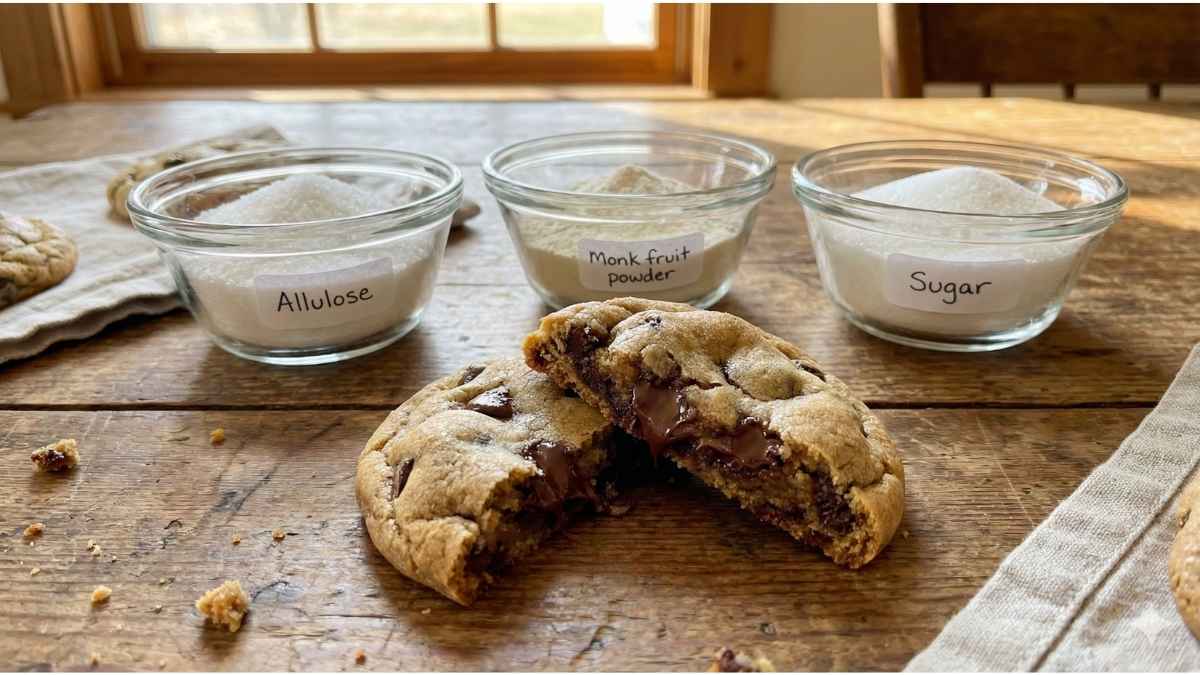 While pure Monk Fruit provides intense sweetness, it lacks the mass required for structural integrity. Combining it with Allulose restores the hygroscopic properties of traditional sugar, ensuring baked goods hold moisture and volume rather than turning into dense pucks
The Chemistry of the Flop: Why Pure Monk Fruit Fails
Alone 🧠
If you have ever tried to bake a cake using only pure monk fruit extract, you know the result: a tiny, dense puck that looks more like a cracker than a confection.
Here is the science behind why that happens. In traditional baking, sugar is hygroscopic (it holds water) and provides bulk (volume). When you put a cup of sugar into a batter, it melts and creates a structural web that traps air and moisture.
Pure Monk Fruit is 250 times sweeter than sugar. This means to replace one cup of sugar, you only need a tiny pinch—roughly 1/64th of a teaspoon. You have successfully replaced the sweetness, but you have lost the mass. There is no "bulk" to hold the cake up, and no sugar molecules to caramelize.
This is where the "baking with monk fruit" struggle usually begins. Most people panic and reach for the bag labeled "Monk Fruit Baking Blend" at the store. But that bag is almost certainly 99% Erythritol, and that is where the danger lies.
The Erythritol Trap: Protecting Your Heart💔
For your family's health, you need to look past the front label. The industrial food system loves erythritol because it is cheap and bulks up well. However, recent research published in Nature Medicine has thrown a massive red flag on this ingredient.
Studies indicate that erythritol can "prime" your blood platelets, making them more reactive and prone to clotting. For anyone managing cardiovascular risks, this is the exact opposite of what we want. We are trying to heal our metabolic health, not introduce new risks.
This is why our "Structural Engineering" solution strictly rejects erythritol. We need a bulking agent that mimics sugar’s physics without the clotting risk. Enter Allulose.
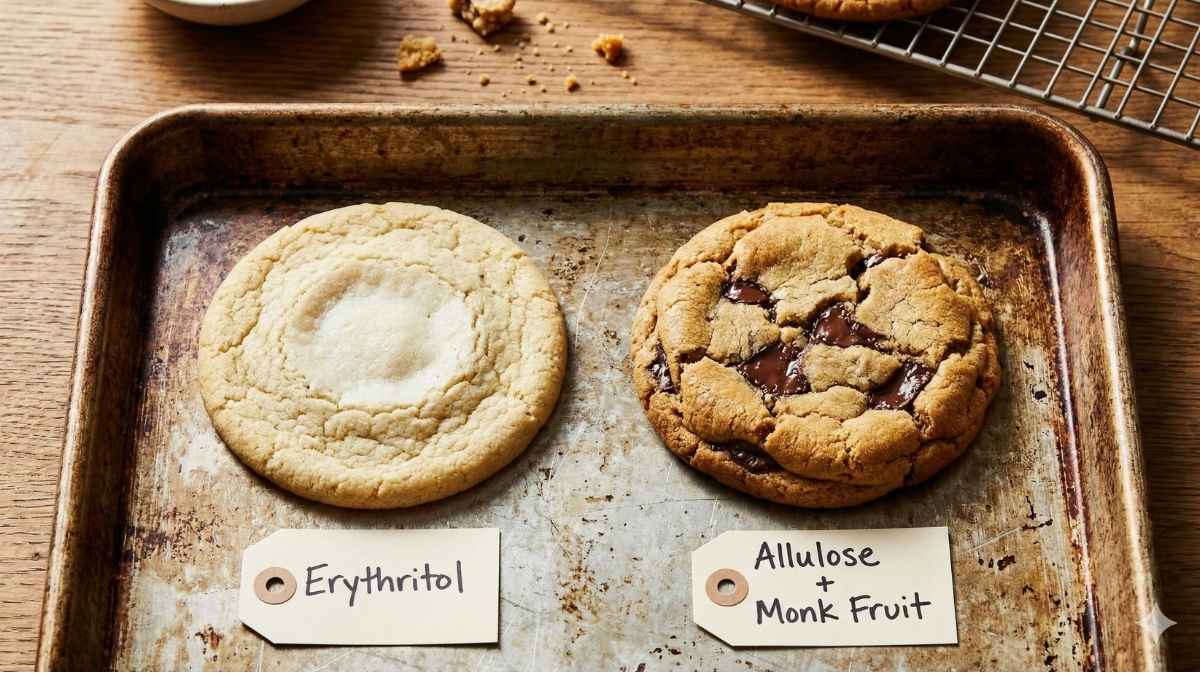 Unlike Erythritol, which fails to brown and is linked to increased platelet reactivity, Allulose undergoes the Maillard reaction. This chemical interaction creates the desired golden color and complex flavor profile while remaining safe for cardiovascular health
The Structural Solution: Why Allulose is the Perfect
Partner🛡️
Allulose is a "rare sugar" found naturally in figs and raisins. It is chemically almost identical to fructose but with a slight atomic arrangement that prevents your body from metabolizing it for energy.
Here is why it is the perfect engineering partner for monk fruit:
1. The Maillard Reaction (Browning): Unlike erythritol, which refuses to brown, allulose undergoes the Maillard reaction—the chemical interaction between amino acids and reducing sugars that gives baked goods their golden color and complex flavor. In fact, it browns better and faster than cane sugar.
2. Hygroscopicity (Moisture): Allulose loves water. It pulls moisture from the environment and holds it in your baked goods. This solves the "dry mouth" feel often associated with keto baking.
3. The "Cooling" Fix: Erythritol creates an endothermic reaction (it absorbs heat) when it dissolves, leaving a cold sensation in your mouth, like mint. Allulose does not do this. It tastes warm and neutral, just like sugar.
The Monk Fruit Conversion Chart for Pure Extract
Now, let's get practical. You don't need to buy expensive pre-mixed blends. You can be the chemist in your own kitchen. Here is the Monk Fruit Conversion Chart tailored for the Allulose blend.
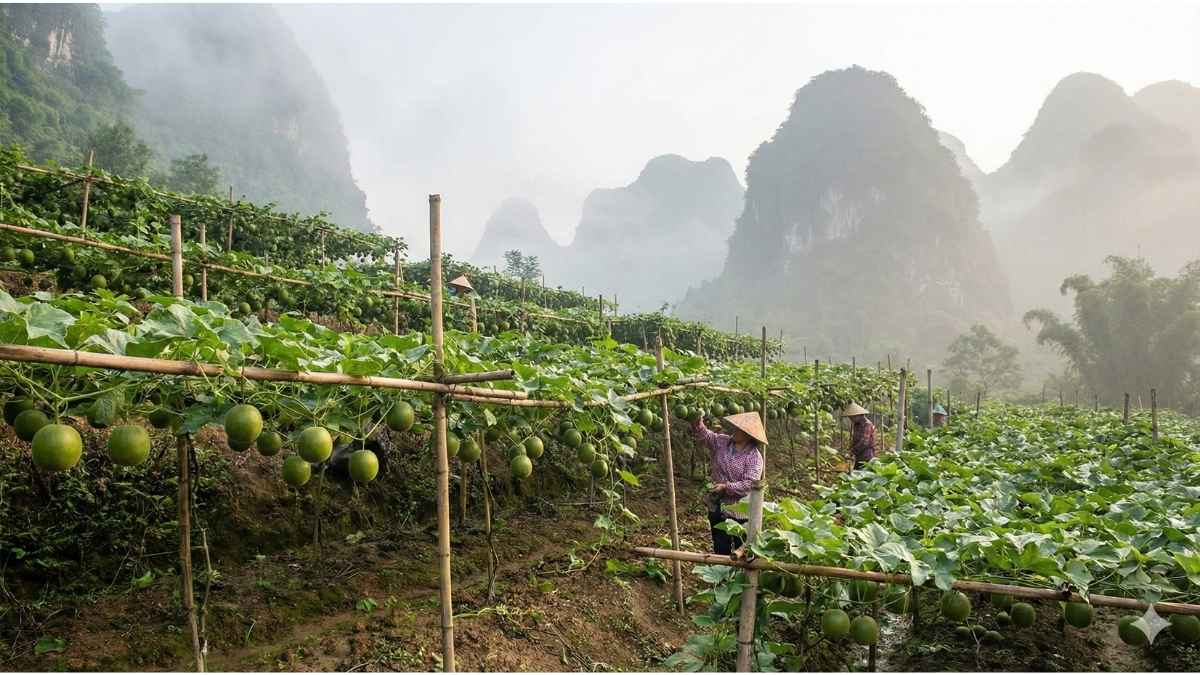 Authentic sourcing requires verifying that the product is not a "proprietary blend" diluted with fillers. A metabolic-safe choice must list "Organic Monk Fruit Extract" with 50% Mogroside V to ensure purity and avoid hidden supply chain contaminants.
Supply Chain Complexity: Ensuring Purity 🕵️♂️
Finally, as a Metabolic Detective, you must vet your sources. The label "Monk Fruit" is often used to sell cheap corn fiber.
The Label Audit:
- ❌ Reject: "Erythritol" listed as the first ingredient. "Proprietary Blend."
- ✅ Accept: "Organic Monk Fruit Extract" listed first. Look for "50% Mogroside V" on the spec sheet.
- ✅ Verify: Demand a Certificate of Analysis (CoA) to prove it is free from pesticide residues.
Pro Tips for Monk Fruit with Allulose
As we wrap up, I want to share a few "Farmer's Kitchen" secrets I've learned through trial and error. These will save you from your first batch of burnt cookies.
1. The Temperature Drop Because allulose burns easily, you must lower your oven temperature. If a recipe calls for 350°F (175°C), drop it to 325°F (160°C). It is better to bake low and slow than to ruin your organic ingredients with a charred crust.
2. The Storage Warning Remember the term "hygroscopic"? Since your new blend loves moisture, if you leave it in an open bowl on a humid day, it will turn into a sticky syrup. Treat this blend like precious cargo—store it in an airtight glass jar immediately after mixing.
3. The "Crisp" Factor Allulose makes things soft. If you desperately want a crispy cookie, you might miss the "snap" of sugar. To engineer a snap without erythritol, try adding a tablespoon of organic inulin (chicory root fiber). It adds a bit of crunch and feeds your good gut bacteria (Akkermansia), doubling down on the health benefits.
By making this switch, you aren't just baking a cake; you are engineering a food system that protects your heart and heals your metabolism. That is the power of knowing what is really in your food.
Further Reading
- A direct breakdown from a leading heart hospital explaining the recent clinical data linking erythritol to blood clotting and heart attack risk.
- A deep scientific dive into Akkermansia muciniphila, the specific bacteria that monk fruit feeds, and its role in preventing obesity and inflammation.
- The Interactive Nutrition Facts tell how it differs from sugar, and why it is exempt from being listed as "Added Sugar" on nutrition labels.

Meet Saqib
Saqib Ali Ateel is a PhD Scholar by training and a "student of the soil" by nature. He combines deep research, hands-on farming wisdom, and agricultural systems supervision to reveal what’s really on your plate. His mission is simple: to help your family navigate the food industry's complexity so you can eat cleaner, safer, and smarter.