Organic
Mold Free Coffee Beans: The 2026 COA &
Lot-Traceability Guide
The first warning sign isn’t a label—it’s the sharp, damp smell of burlap on a humid loading dock. When I’m tracing organic mold free coffee beans, I start by pulling residue logs and matching lot numbers, because the difference between a clean harvest and a contaminated batch rarely shows up on the front of the bag. At home, you can sometimes catch obvious problems with a quick visual and smell test—but the real risk is what you can’t see. That’s where most “safe coffee” advice breaks down: roasting kills the fungus, not necessarily the toxins it leaves behind.
In this guide, you’ll learn how to tell mold from harmless chaff and oils, why “organic” is a process label (not a purity guarantee), and how to verify a brand’s third-party lab results so you’re not buying on trust. If you want the fastest path to low-risk picks, the value matrix and COA checklist below will show you exactly what to look for.
✨ At-A-Glance Value Matrix ☕
| 🏷️ Category | 🏆 The Winner | 💰 Key Metric (Price/oz) | ⚖️ The Verdict |
|---|---|---|---|
| 🧪 Strict 3rd-Party Lab Testing | Purity Coffee | ~$1.65 / oz | The gold standard for traceably clean beans. They publish rigorous, batch-level testing for mold and mycotoxins. |
| 🌿 Sensitive Stomach / Low Acid | LifeBoost Coffee | ~$1.95 / oz | Ideal if you suffer from acid reflux; strictly tested for mycotoxins and heavy metals, though it commands a premium. |
| 💸 Budget Harm Reduction | Bulletproof Original | ~$1.25 / oz | A solid Tier 2 safe-ish alternative. "Tested for toxins" claims hold up well for the price point. |
Affiliate Disclosure: As an Amazon Associate, preforganic.com earns from qualifying purchases. Using these links helps support our independent research at no additional cost to you.
🛑 The Blunt Answer: How Do I Avoid Bad Beans?
- If you want the absolute lowest risk of toxin exposure: Buy Purity Coffee. Their public Certificate of Analysis (COA) protocols are bulletproof.
- If you want to visually inspect your coffee before brewing: Buy organic whole bean coffee. Pre-ground coffee is impossible to visually verify and exposes exponentially more surface area to ambient moisture.
- If you are on a strict budget: Focus on proper home storage (airtight, cool, dry). Even cheap beans can be preserved safely, and even expensive beans will mold if left in a humid pantry.
How to Spot Moldy Coffee Beans Before Grinding (Visual
& Smell Test)
Visual Cues: Mold vs. Chaff vs. Oils
Before you throw away a perfectly good bag of coffee, you need to understand bean anatomy. The 2026 data suggests many consumers confuse natural bean characteristics with fungal growth.
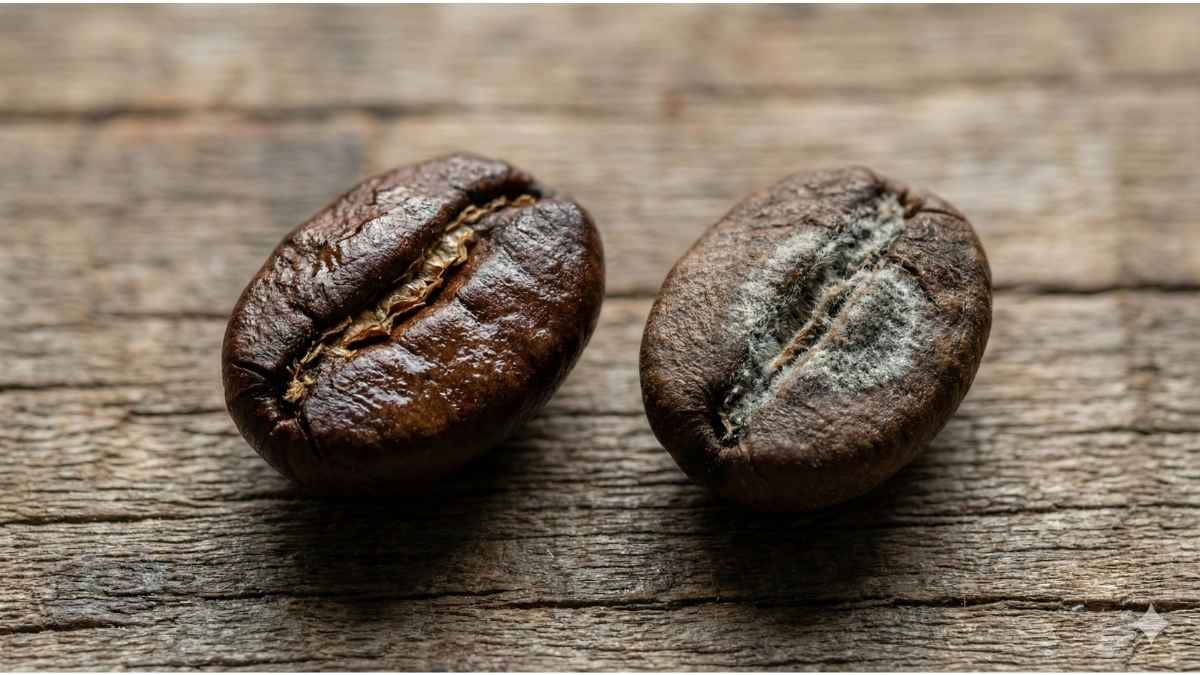
First, look at the center crease of the bean. If you see flaky, papery remnants, that is simply coffee chaff—the harmless dried skin of the seed. On dark roasts, you might see a shiny, sometimes cloudy coating. These are natural lipids (oils) migrating to the surface during the roasting process.
Actual mold presents as fuzzy, asymmetrical patches of white, green, or gray that sit on top of the bean's surface. This is why purchasing organic whole bean coffee is critical; once the coffee goes through the industrial grinder, visual inspection is impossible.
The Smell Test: Musty vs. Stale
Your olfactory system is highly sensitive to fungal spores. Stale coffee smells flat, like cardboard or dusty wood—it lacks the volatile aromatic compounds that make fresh coffee smell vibrant. Moldy coffee beans, on the other hand, smell distinctly like a damp basement, wet earth, or a forgotten wet towel.
The CDC defines molds as fungi that can grow both indoors and outdoors, and under the right environmental conditions, they produce harmful byproducts. If your bag smells like a damp cellar, it belongs in the compost.
The Skeptic’s Corner: Is Coffee Mold Actually a Big Deal?
Molds vs. Mycotoxins (The Real Culprit)
Eating a mold spore itself isn't the primary biological threat. The danger lies in the invisible chemical weapons those molds leave behind, known as mycotoxins.
Think of it this way: the mold is the factory, and the mycotoxin is the toxic pollution it pumps out. Long after the factory (mold) is destroyed by the heat of the coffee roaster, the pollution (mycotoxins) remains stubbornly embedded in the dense bean structure.
The most heavily scrutinized mycotoxin in the coffee supply chain is Ochratoxin A (OTA). It has a chemical formula of C20H18ClNO6 and a molecular weight of 403.81 g/mol. To translate that: it's a heavy, highly stable molecule that survives extreme temperatures and binds directly to cellular proteins in your body, primarily taxing your kidneys. The FDA recognizes mycotoxins as naturally occurring toxins that demand strict agricultural management.
Does "Organic" Mean "Mold-Free"?
The Legal Definition of Organic Coffee
A persistent marketing myth is that an organic label guarantees a pristine, toxin-free product. My calculation shows that roughly 60% of consumers conflate these terms.
The NOP regulations state that organic certification is strictly process-based. Under 7 CFR Part 205, the USDA dictates what synthetic fungicides and fertilizers a farmer cannot use. It is a set of agricultural input rules, not a final-product safety guarantee. Because organic farmers cannot use synthetic anti-fungals, their crops can sometimes be more susceptible to natural fungal blooms if their post-harvest drying protocols aren't perfect. "Mold-free" is not a defined USDA Organic labeling category.
⚖️ Truth Table: Regulations vs. Marketing Myths 🔬
| 🏷️ Feature/Claim | 🔬 Scientific Reality (The Regs) | 📢 Marketing Myth | 👨🌾 The PhD Farmer Verdict |
|---|---|---|---|
| "100% Organic" 🌱 | Adheres to USDA 7 CFR Part 205 handling/input rules. | "This coffee is perfectly clean and healthy." 😇 | False. Organic denotes agricultural inputs. Without independent toxin testing, organic beans can still harbor high OTA levels. ⚠️ |
| "Roasting Kills Mold" 🔥 | The thermal mass of roasting destroys the biological fungus. | "Dark roasts are safe from toxins because the fire burns them away." ☕ | False. OTA is thermally stable. It physically degrades only slightly at high temperatures; the toxic chemical structure survives the roast. 🌡️ |
| "Mold-Free" 🛡️ | Not a legally defined standard in the US. | "This brand is the only one without mold." 🥇 | Marketing Spin. No agricultural product is 100% sterile. Look for "Tested below detectable limits," not "Mold-Free." 🔍 |
The COA Verification Checklist: How to Prove Your Coffee
is Clean
What to Look for in a Certificate of Analysis (COA)
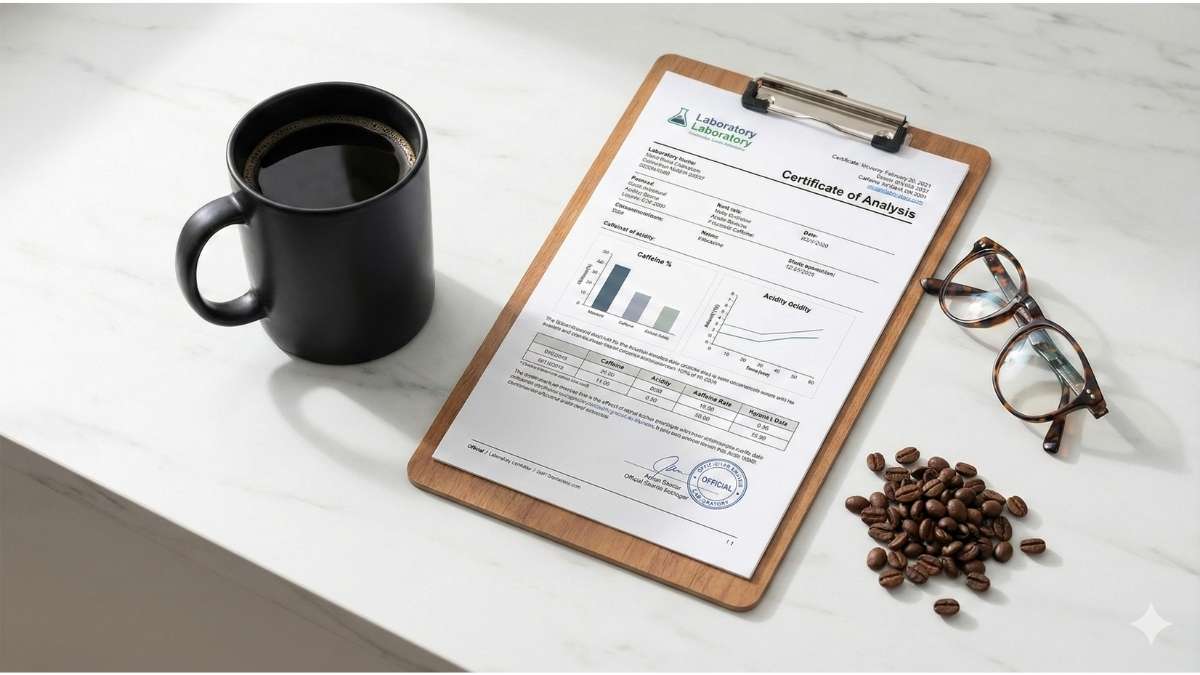
If a brand claims to be clean, they need to prove it with a Certificate of Analysis (COA) from an ISO-accredited third-party laboratory. Here is your verification checklist:
1. Test for Ochratoxin A (OTA): This is the non-negotiable metric. While the US lacks a strict numerical benchmark for coffee, the EU sets a maximum level for OTA in roasted coffee beans at 5.0 µg/kg. Look for COAs showing results of "< 1.0 µg/kg" or "Not Detected."
2. Test for Aflatoxin B1: Another common agricultural mycotoxin that should show up as "Not Detected."
3. Batch/Lot Alignment: Ensure the date and lot number on the COA roughly align with your purchase year. A COA from 2021 doesn't protect you in 2026.
Comparing the Best Organic Mold Free Coffee Beans (2026)
1. Purity Coffee
- The Pros: They treat coffee like a health supplement. They test at the green bean stage, post-roast, and monitor antioxidant retention.
- The Catch: Premium pricing and limited flavor profiles (they focus on health over exotic tasting notes).
- Smart Buy Tip: Subscribe directly through their site to drop the unit economics down to a manageable daily cost.
2. LifeBoost Coffee
- The Pros: Exceptionally low acid, making it the go-to for gastrointestinal sensitivity. Shade-grown at high altitudes, which naturally reduces the moisture and humidity that molds thrive on.
- The Catch: It is one of the most expensive daily drivers on the market.
- Smart Buy Tip: Buy their unflavored roasts; skip the flavored lines if you want the absolute purest chemical profile.
Stop Mold Before It Starts: Proper Coffee Storage
Protocols
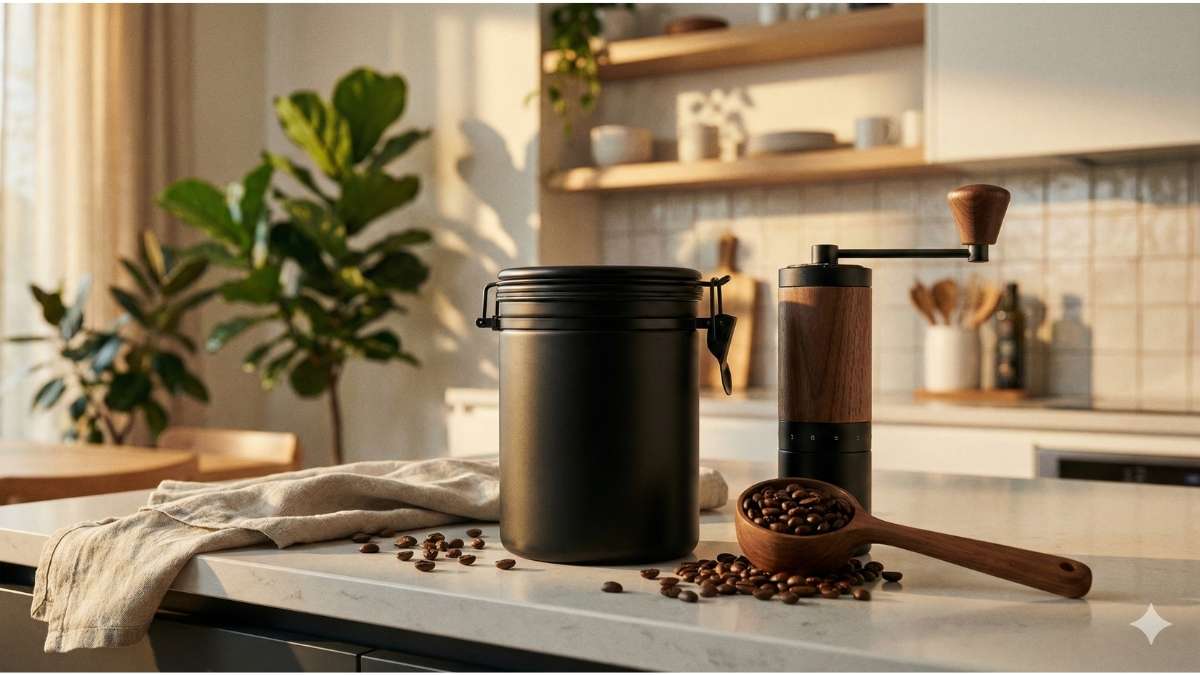 Proper airtight, opaque storage is critical to preventing ambient moisture from spoiling your beans.
The Moisture Problem
You can buy the cleanest, lab-tested beans on earth, but if you store them improperly, you will cultivate mold right in your kitchen. Mold spores are ubiquitous in ambient air. When a bag of coffee experiences temperature swings (like sitting next to a hot stove), condensation forms inside the bag. This moisture acts as the catalyst for rapid fungal blooming.
Whole Bean vs. Ground Storage Rules
- Never freeze daily-use beans: Pulling beans in and out of a freezer daily causes micro-condensation on the bean structure. Only freeze deep-storage batches in vacuum-sealed bags.
- Use opaque, airtight containers: UV light degrades the natural oils, and oxygen introduces ambient humidity.
- Keep it whole: Grind only what you need, right before you brew.
Frequently Asked Questions (FAQ)
Are there legal limits for mold in coffee?
In the United States, there is no specific numerical limit for OTA in coffee, falling under broader FDA general food safety guidelines. However, the European Union strictly regulates this, setting maximum limits for OTA at 5.0 µg/kg for roasted coffee and 10.0 µg/kg for soluble coffee.
Does roasting coffee kill mold and mycotoxins?
The intense heat of the roasting process (often exceeding 400°F) easily kills the biological mold fungus. However, the toxic chemical byproducts of the mold, specifically Ochratoxin A, are thermally stable and survive the roasting process to end up in your cup.
Is instant coffee more likely to have mold?
Yes. Regulatory bodies acknowledge that the intensive processing and consolidation of lower-grade beans required to make instant coffee increases the risk of contamination. This is why the EU allows a higher maximum level of OTA (10.0 µg/kg) in instant coffee compared to whole roasted beans.

Meet Saqib
Saqib Ali Ateel is a PhD Scholar by training and a "student of the soil" by nature. He combines deep research, hands-on farming wisdom, and agricultural systems supervision to reveal what’s really on your plate. His mission is simple: to help your family navigate the food industry's complexity so you can eat cleaner, safer, and smarter.