Organic Mold Free Coffee: A Farmer’s Guide to Safe
Sipping
Holding a warm ceramic mug while the dew is still on the grass is how I ground myself before reviewing crop reports. But that peace is hard to keep when your phone is buzzing with influencers claiming your morning brew is a "biological hazard." ☕
Finding true organic mold free coffee amidst that noise can feel like finding a needle in a haystack.
I get it. As a researcher, I read the toxicology reports and see the hype. But as a farmer, I look at the soil and see a natural world we just need to manage with care. 🌿
When you view this from the field rather than a screen, you realize it’s simply a biological challenge that we solve with clean processing methods. Fungi are everywhere in nature, but how your coffee is treated—from the tree to the roaster—makes all the difference.
Let’s pour a fresh cup and walk through the science of finding the cleanest beans for your health.
Key Takeaways: Your Safety Checklist
- 🔥 Roasting is the Hero: While raw beans often carry mold spores, the high heat of roasting (200°C+) destroys the fungus and reduces toxin levels by up to 96%.
- 💧 Wash Your Beans: Choose Wet-Processed (Washed) Arabica coffee. This method removes the sugary fruit pulp immediately, eliminating the food source that mold needs to grow.
- ☕ The "Sweet Spot" Roast: Opt for a Medium-Dark roast. It gets hot enough to break down mycotoxins and acrylamide, but preserves the rich flavor profile better than charred dark roasts.
- 🇺🇸 Mind the Gap: The US lacks the strict specific limits found in the EU. Choosing third-party tested brands like Purity or Danger Coffee bridges this safety gap.
- ⚠️ Decaf Warning: Without caffeine (a natural fungicide), decaf beans are vulnerable. Only buy decaf from high-turnover, certified organic sources to avoid re-contamination.
1. The Fungal Agents: Mold vs. The Toxin
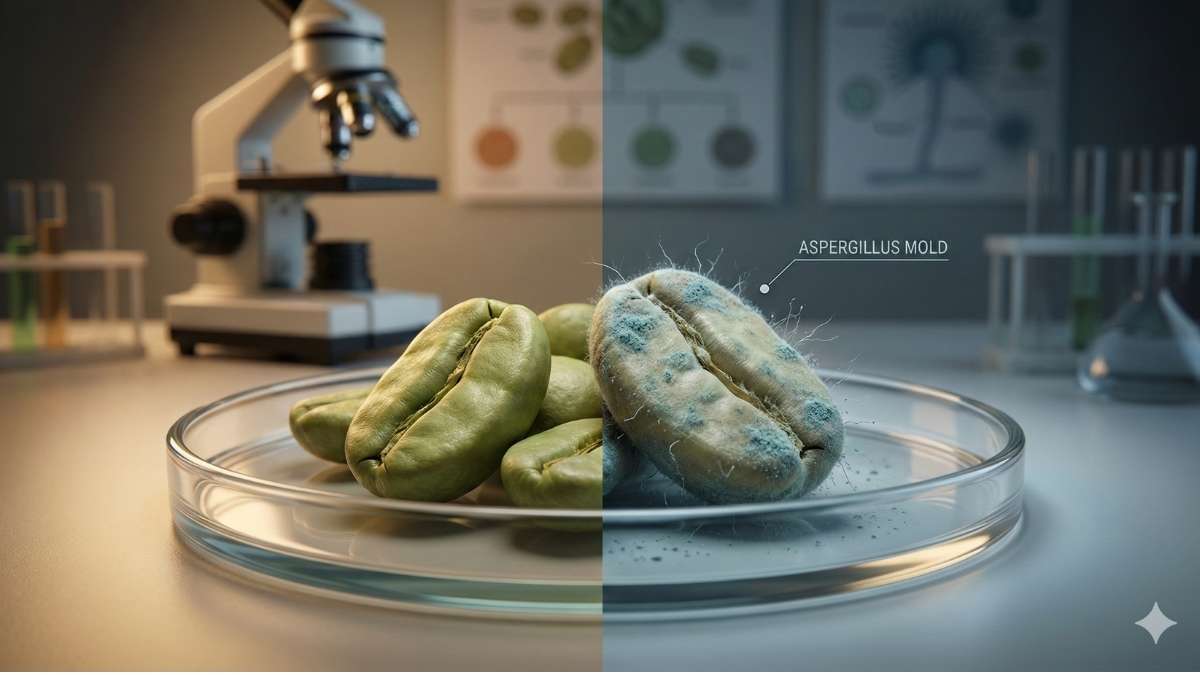
First, let's take a deep breath and clear up a big myth. We need to distinguish between the organism and the residue.
- The Mold (The Fungus): Usually Aspergillus or Penicillium. These are just natural fungi found in soil. The good news? They are killed instantly by the high heat of the coffee roaster. 🔥
- The Toxin (Mycotoxin): This is the tricky part. Specifically Ochratoxin A (OTA) and Aflatoxins. These are chemical compounds the mold leaves behind when it's stressed. They are tough cookies—they can survive heat that kills the mold itself. 🧪
The "99% Mold" Myth
You may have heard that "99% of coffee is moldy." That sounds terrifying, but it’s a bit misleading.
- The Science: Studies (like those from the NIH and JFST) show significant contamination risks, with some datasets finding up to 68% of green beans contain traces of OTA.
- The Reality: Just because it's there, doesn't mean it's toxic. Most levels are tiny—barely a blip on the radar (0.1–1.0 ppb).
A Farmer’s Note: "Think of it like wheat in a field. Just because fungi exist in nature doesn't mean the bread is poisonous. It’s all about how we handle the harvest." 🚜
2. It All Starts in the Soil (Processing)
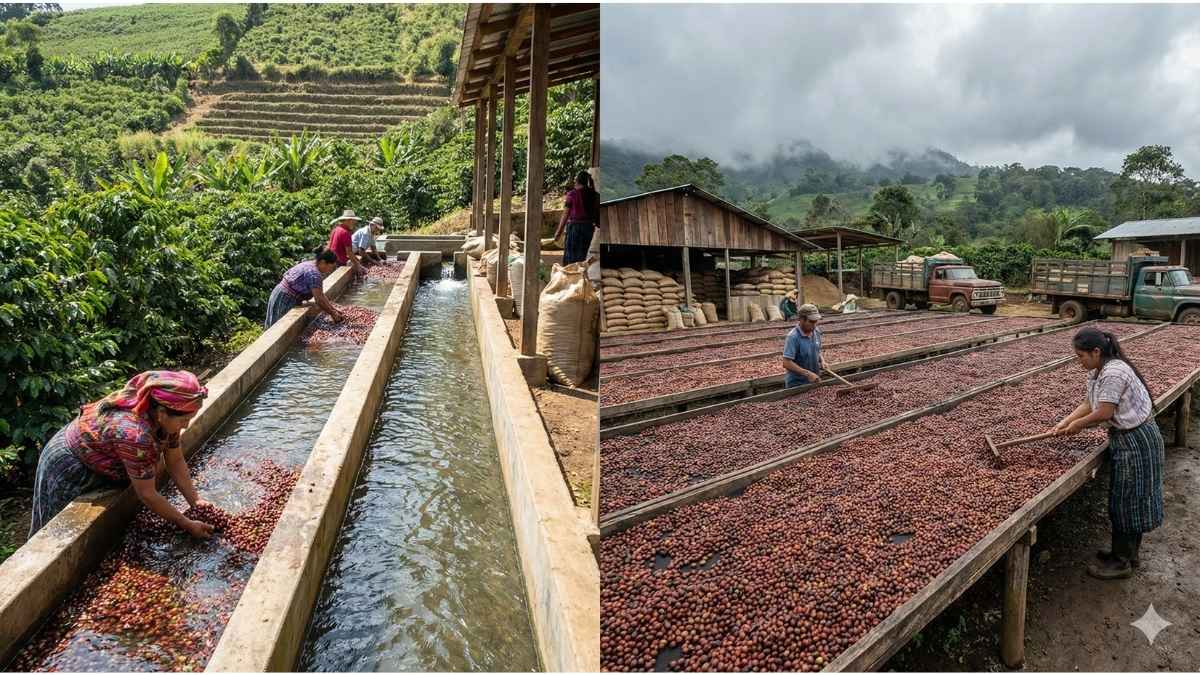
The battle for a clean cup is won or lost right here on the drying beds, long before the bag reaches your shelf.
Coffee grows in the "Coffee Belt," a place that is hot and humid. Unfortunately, mold loves that weather too. 🌧️ How the farmer dries the bean is the most critical step.
Wet vs. Dry Processing: Washing Your Fruit
- Wet Processing (The Safer Choice): Imagine washing an apple before you eat it. In this method, the fruit flesh is removed immediately, and the beans are washed thoroughly. 💧
- Why we love it: It removes the sugary food source that mold loves to eat. Data shows washed beans are consistently cleaner.
- Dry/Natural Processing (The Risk): Here, the coffee cherry dries with the fruit still stuck to the seed.
- The Risk: If it rains, that sugary fruit layer becomes a playground for mold.
The "Gleaning" Problem
In mass-production farming, beans that fall into the dirt are sometimes swept up (called "gleaning").
- The Data: Beans from the dirt can have 3x higher toxin levels than beans picked from the tree. 📉
- The Fix: Good coffee is hand-picked. It never touches the ground.
3. Roasting: Heat is Your Friend
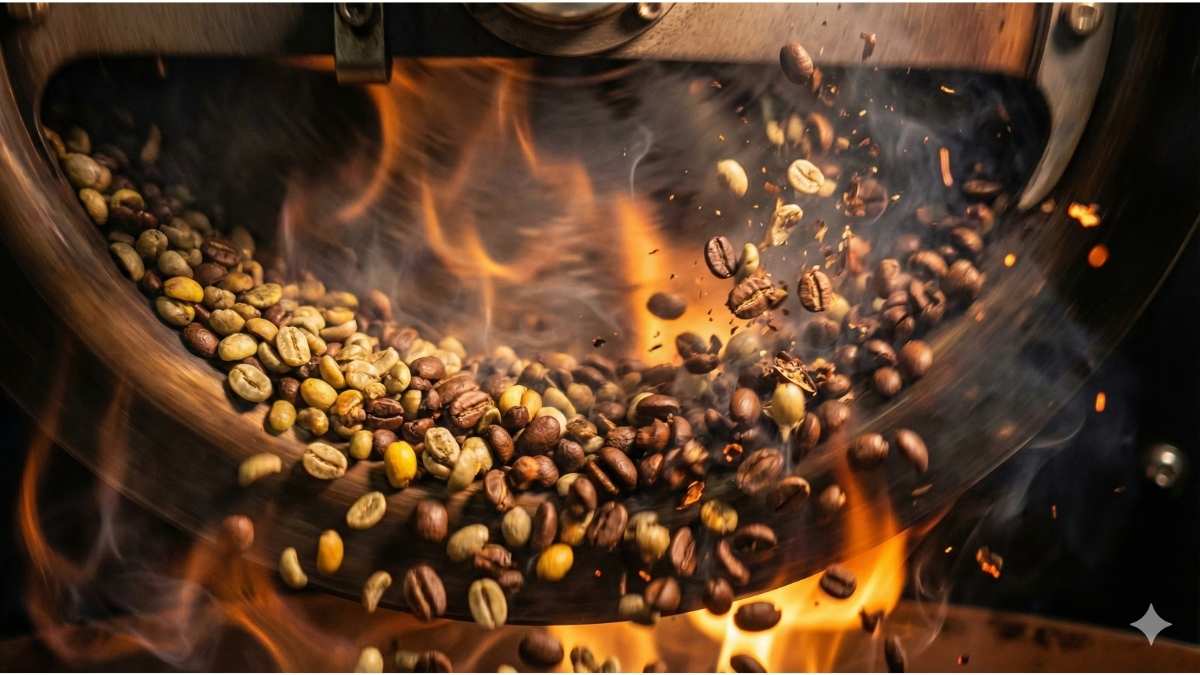
Does roasting help? Absolutely.
Roasting is a powerful cleaning event. When beans hit temperatures between 200°C and 240°C, we see a 69% to 96% reduction in Ochratoxin A. The heat breaks the toxin down into safer compounds. 🌡️
The Roasting Balancing Act
If you are trying to optimize your health, you have a choice to make. It’s a bit of a trade-off.
4. A Gentle Warning on Decaf
If you drink decaf for health reasons, I want you to be extra careful. The process of removing caffeine leaves the bean a little vulnerable. ⚠️
1. Lost Shield: Caffeine is a natural bug repellent. It actually stops fungus from growing. When we take it out, the bean loses its armor.
2. Sponge Effect: The decaf process makes the bean porous. It acts like a sponge for moisture.
The Result: Decaf beans can get re-contaminated easily in storage. If you drink decaf, make sure you buy from a top-tier brand that moves their inventory fast.
5. Why You Need to Look for Labels (The Regulatory Gap)
Why do we even need to search for organic mold free coffee? Shouldn't the government protect us? 🇺🇸
Well, here in the US, we are a little behind.
- The European Standard: The EU is very strict. They limit OTA to 3.0 ppb. If a shipment has more, they send it back.
- The US Reality: The FDA doesn't have a specific limit just for coffee. They monitor it, but it's not as strict.
The Economic Truth: Coffee that gets rejected in Europe for being "too moldy" can sometimes find its way to US shelves legally. That is why third-party testing isn't just marketing—it's peace of mind.
6. Listening to Your Body
Is safe coffee a medical necessity? It depends on your biology. 🧬
- Most People: For 95% of us, our livers are superstars. They handle the tiny traces of impurities in standard coffee without breaking a sweat.
- Sensitive Folks: If you have Chronic Inflammatory Response Syndrome (CIRS) or autoimmune issues, even "dead mold" can trigger a reaction.
If you feel jittery, foggy, or tired after coffee, don't ignore it. You might be in the sensitive group. For you, "Certified Clean" coffee is an investment in feeling good.
7. Brands You Can Trust
Compare the Top Clean Cups
| Brand | Process | Lab Testing Claims | Best For... |
|---|---|---|---|
| Purity Coffee | Washed / Nitrogen Flushed | To Non-Detectable Limits | The Health Optimizer 🧬 |
| Danger Coffee | Remineralized | Third-Party Verified | Detox Support ⚡ |
| Kicking Horse | Wet / Organic | Internal Monitoring | Budget & Availability 🐴 |
*Scientific Note: "Non-Detectable" typically means below 0.1 ppb, far stricter than EU standards.
The Science Leader: Purity Coffee
- Best For: The Health Optimizer.
- Why: They treat coffee like medicine. They test to "non-detectable" limits and use a roast profile designed to keep the antioxidants high and the toxins low. [Read our Full Purity Coffee Review].
The Biohacker: Danger Coffee
- Best For: Detox support.
- Why: This is Dave Asprey's brand. They are super transparent about their testing limits. Plus, they add minerals to help your body run smoothly.
The Grocery Store Hero: Kicking Horse
- Best For: The Budget-Conscious.
- Why: You can find this in many aisles. Their "Smart Ass" blend is organic and fair trade. Because they source from high altitudes and use wet processing, their beans are naturally cleaner than cheap industrial coffee. 🐴
8. The Farmer’s Final Thought
You don't need to fear your morning ritual; once this fruit is washed by water and purified by roasting heat, it’s simply nature, handled right. 🍎
Your Action Plan:
1. Look for "Washed" Process: It’s usually cleaner.
2. Go Medium-Dark: Let the heat do the work for you.
3. Grind at Home: Whole beans stay fresh and safe longer than ground coffee.
4. Invest where it counts: If you have health issues, the extra few dollars for organic mold free coffee like Purity is worth every penny. 💰
Enjoy your cup!
Common Questions from the Farm Gate (FAQ)
Does roasting actually kill mold in coffee?
Yes, roasting is a thermal sterilization event. When coffee beans hit temperatures above 200°C (392°F), the mold organism (fungus) is destroyed. However, the toxin (mycotoxin) is heat-stable and only reduces by about 69–96%. This is why starting with clean green beans is essential.
What is the safe limit for mold toxins?
The European Union sets the strictest safety standard at 3.0 ppb (parts per billion) for Ochratoxin A. In contrast, many "Clean Coffee" brands test to a threshold of 0.1 ppb or "Non-Detectable." We recommend aiming for brands that verify they meet or exceed the EU standard.
How do I know if my coffee has mold?
You cannot taste or smell mycotoxins at average levels. However, if your coffee tastes "musty," "earthy" (in a bad way), or lacks aroma, it may be stale or contaminated. Physical symptoms like sudden jitteriness, brain fog, or sinus congestion after drinking can also be indicators of sensitivity.
Further Reading (Trusted Sources)
- European Food Safety Authority (EFSA): Risk assessment of ochratoxin A in food.
- National Institutes of Health (PubMed): Effect of Roasting on Ochratoxin A Level in Coffee.
- World Health Organization (WHO): Mycotoxins Fact Sheet.

Meet Saqib
Saqib Ali Ateel is a PhD Scholar by training and a "student of the soil" by nature. He combines deep research, hands-on farming wisdom, and agricultural systems supervision to reveal what’s really on your plate. His mission is simple: to help your family navigate the food industry's complexity so you can eat cleaner, safer, and smarter.
- Home
- Clean Coffee Guide
- Best Organic Coffee Brands
- Organic Mold Free Coffee