The Invisible Threat: Why the Cocktail Effect of Pesticides
in Food Makes Single-Dose Safety a Myth 🧠
There is a core piece of confusion many proactive protectors, like you, face when tackling pesticides in food: If regulators say residue levels are safe, why does the worry still linger? The truth, from what I've learned in my research and seen on the farm, is that our system is looking for a single bullet when our bodies are facing a systemic chemical cocktail. We are never exposed to just one chemical. We are exposed to dozens—a cumulative load that interacts in dangerous, unpredictable ways, often amplifying harm.
This systemic exposure is what we call the "Cocktail Effect."
My goal is to share what I’ve learned: science proves this toxic risk, but also provides a powerful, measurable solution. Switching your family to an organic diet isn't just a hopeful gesture; it’s a powerful, quantified detoxification strategy. Clinical trials have shown that adopting a fully organic diet can reduce total pesticide metabolites in urine by an average of 98.6% in just two weeks.
This is the expert knowledge I want to share with you, my friend. We are going to move beyond the fear and focus on the proven power of the organic choice, giving you the absolute, data-backed confidence you need to protect your family.
The Proof You Need: Your Takeaways on Cumulative Risk 🌱
- The Cocktail Effect is Synergistic: Two chemicals can combine to create harm far greater than the sum of their individual effects (e.g., 2 + 2 » 4). This unpredictable risk is largely ignored by standard regulation.
- Regulatory Failures: U.S. and E.U. regulators rely on the Common Mechanism of Toxicity (CMT), leaving the vast majority of chemical mixtures unassessed for cumulative risk.
- The Quantitative Solution: Clinical studies show that switching to a fully organic diet reduces pesticide metabolite levels in the body by a remarkable 98.6% in just two weeks. This is your proven detox strategy.
- Targeted Protection: Learn to prioritize your organic purchases using data-backed tools like the Dirty Dozen to minimize your family’s cumulative exposure.
I. The Scientific Threat: Unmasking Synergism and
Potentiation in Pesticides in Food
This is where the PhD Scholar persona offers a critical look at the science. You meticulously avoid a single high-dose toxin. But the truth is, your body deals with a complex, chronic exposure. We need to move beyond simple math.
Beyond Simple Addition: The Regulatory Default
In toxicology, the combined effects of multiple chemicals can take one of three forms. The easiest model—and the one regulators most commonly apply—is Dose Addition.
This is the basic arithmetic assumption: Two similar chemicals are simply added together. Their combined effect equals the sum of their individual effects (e.g., $2 + 2 = 4$). This model is mathematically convenient. But it only applies to a small subset of chemicals that share the exact same mechanism of action.
The Real Danger: Synergism and Potentiation
The vast majority of the "chemical cocktail" doesn't follow simple addition.
- Synergism (from the Greek synergos meaning "working together") refers to the interaction where the combined effect is significantly greater than the sum of the individual parts. Think $2 + 2 \gg 4$. This unpredictability is the heart of the risk.
- Potentiation is even more insidious. It happens when one substance that does not normally have a toxic effect on its own is added to another chemical, making the second chemical much more toxic. This is $0 + 2 > 2$.
Researches suggests that these synergistic interactions are the primary, ignored threat to human health from dietary exposure.
The Mechanism of Potentiation: Blocking the Exit Door
How can a non-toxic chemical amplify a toxin?
The answer lies in your body's amazing, but overworked, detoxification system.
Growing up on a farm, I learned that everything is interconnected. The same principle applies inside your body. You have specialized enzymes—like cytochrome P-450—designed to break down toxins so they can be safely eliminated.
Certain combinations of pesticides, particularly common ones like organophosphates, can competitively inhibit those crucial detoxification enzymes. It's like having a traffic jam on your body’s exit ramp. The active toxin cannot be flushed out. It persists longer, builds up to higher levels, or is metabolized into more harmful byproducts, leading to massively enhanced toxicity—all without any single chemical exceeding its "safe" level.
The lesson is this: establishing a "zero effect level" for individual chemicals is useless when those chemicals are mixed. The non-toxic agents can dramatically increase the risk profile of the entire cocktail.
II. Critical Health Outcomes: Where the Cocktail Hits
Hardest
When we discuss pesticides and human health effects, we must focus on systems where low-dose, chronic exposure causes the greatest cumulative damage.
A. Endocrine Disruption: The Low-Dose Chaos
The endocrine system is your body’s master communication network, using hormones to guide everything from growth to reproduction.
A vast number of pesticides function as Endocrine Disrupting Chemicals (EDCs). They don't just poison; they strategically sabotage your hormonal communication. They can interfere in three primary ways:
1. Mimicking a natural hormone, setting off false chemical reactions.
2. Blocking hormone receptors in cells, preventing normal hormones from working.
3. Altering the synthesis and transport of hormones, throwing the entire system into disarray.
This is urgent: EDCs have the most detrimental impact during development. Exposure in the womb or childhood can alter long-term hormonal set points and gene expression. The consequences span chronic illnesses like obesity, diabetes, and cardiovascular disease. Critically, this disruption is linked to reproductive disorders like infertility and a decreased age of puberty in girls, which is associated with a greater chance of developing breast cancer later in life.
B. Neurotoxicity: The Brain's Cumulative Stress
Many common pesticide groups, such as organophosphates (OPs) and carbamates, are specifically designed to target the nervous system. Even chronic, low-level dietary exposure contributes to a constant, cumulative stress on our own nervous systems.
The scientific literature shows that chronic exposure is linked to significant neurological and neurodevelopmental disorders:
- Neurodegenerative Diseases like Alzheimer’s, Parkinson’s, and multiple sclerosis.
- Neurodevelopmental Conditions such as ADHD and autism spectrum disorders.
From an academic perspective, the science is increasingly focusing on the interplay between genetics and exposure. For instance, certain genetic predispositions can confer increased vulnerability to pesticide neurotoxicity. As your trusted friend, I share this to emphasize that for some families, minimizing this cumulative neurotoxic load is an essential proactive measure.
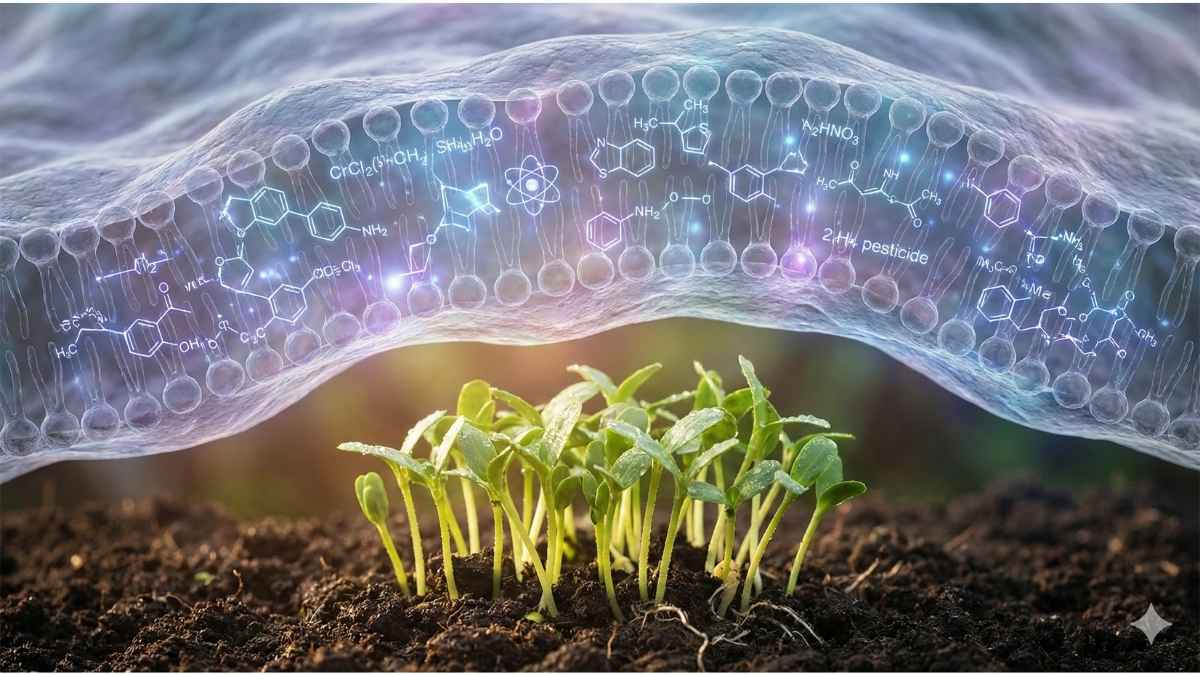 The cumulative stress of pesticide mixtures can lead to chronic endocrine and neurological health outcomes, making risk mitigation essential.
III. The Regulatory Blind Spot: Why We Must Look Beyond
EPA Assurance
If the scientific evidence is so strong, why do official bodies like the U.S. EPA and the E.U. EFSA consistently conclude that pesticide mixtures in food are "not of concern"? The reason is their methodology, which the PhD Scholar in me must critically explain.
The Constraint of the Common Mechanism
Regulators are legally bound to consider cumulative effects. The most common tool they use is the Common Mechanism of Toxicity (CMT).
The CMT is designed to efficiently group chemicals that cause a common toxic effect by the exact same sequence of major biochemical events. The EPA has performed cumulative risk assessments for only five such groups.
The failure is systemic: This framework only assesses chemicals with an identified common mechanism. It systematically excludes the vast majority of environmental and dietary chemical mixtures—the very compounds that contribute to the cocktail effect—which do not share a common pathway.
The Flaw in the Dose Addition Principle
Furthermore, for chemicals with different modes of action, the guiding conclusion is that there is "no robust evidence available" that exposure poses a health concern when individual chemicals are present at or below their established zero-effect levels. This conclusion relies on the simple dose addition principle.
But what we know about pesticides in food—especially EDCs—is that the system often responds non-monotonically. This means that the highest dose tested in a lab may not accurately predict the effects seen at the much lower, chronic doses people encounter daily. Relying on acute, high-dose tests to predict low-dose safety becomes inappropriate when systems are responding to small chemical signals.
The Policy Lag and the MAF
The scientific community is united in its criticism: current chemical regulations fail to reflect the reality of exposure to mixtures and systematically underestimate risks.
Recognizing this, policy experts in the E.U. have proposed the Mixture Allocation Factor (MAF). This factor is designed to proactively assume a level of mixture risk, forcing regulators to account for the overall "risk cup" occupied by all chemicals, rather than requiring mechanism-by-mechanism proof of harm. While the MAF is still emerging, it signifies a necessary, urgent shift toward a precautionary paradigm.
 Current regulatory frameworks often fail to account for synergistic chemical interactions, leaving the majority of pesticide mixtures unassessed.
IV. The Organic Imperative: The Quantified Detoxification
Strategy
Given the regulatory limits and the confirmed threat of the cocktail effect, your most powerful, immediate tool for risk mitigation is your shopping cart. Choosing organic food is the most effective form of personal, quantifiable public health protection.
The 98.6% Proof: Your Quantitative Reassurance 💪
Let’s focus on the number that should define your confidence. 98.6%.
This is not a theoretical benefit. This statistic comes from a randomized clinical trial where participants switched from a conventional diet to a fully organic diet. The result was a dramatic, measurable reduction in the levels of pesticide metabolites found in the participants’ urine in just two weeks. This rapid decrease in chemical body burden offers profound reassurance. It proves that the organic choice is the single most effective strategy for immediate cumulative detoxification.
The Core Difference in Organic Food Pesticides
You might ask, "Does organic food use pesticides?" This is a fair question, and the Farmer in me can give you the ground-level truth.
Yes, organic farmers use inputs to manage pests. However, there is a world of difference between organic and conventional practices:
- Conventional: Growers have access to thousands of synthetic compounds, many of which are specifically neurotoxic or are known EDCs.
- Certified Organic: Farmers are limited to a very short list of "natural" or naturally derived, minimal-risk substances, as governed by the National Organic Program.
My hands-on experience shows that organic production involves a fundamental shift in philosophy, prioritizing soil health and natural pest management over chemical dependence. Research confirms the result: an estimated 27% likely reduction in the use of products with high acute human toxicity on organically managed fields compared to conventional. By choosing organic, you decrease both the quantity and the toxicity of chemicals, thus minimizing the chance for synergistic interactions.
The Active Cellular Defense: Beyond Avoidance
The benefits of organic food go beyond passive avoidance. The diet provides active defense.
Some pesticides are genotoxic; they damage your DNA and impair your body's ability to repair itself. The same clinical trial that showed the 98.6% detox also found that the organic diet facilitated faster DNA damage repair. This active protection is thought to be due to the higher levels of antioxidant compounds characteristic of an organic diet, which actively shield DNA and support repair mechanisms.
Choosing organic food pesticides means choosing food that actively fortifies your body against chemical stress.
V. Your Action Plan: Focused Protection Against the
Cocktail
I know that buying 100% organic can be challenging. As your trusted friend, I want to give you a practical, achievable plan to focus your budget where it will have the biggest impact against the cumulative load.
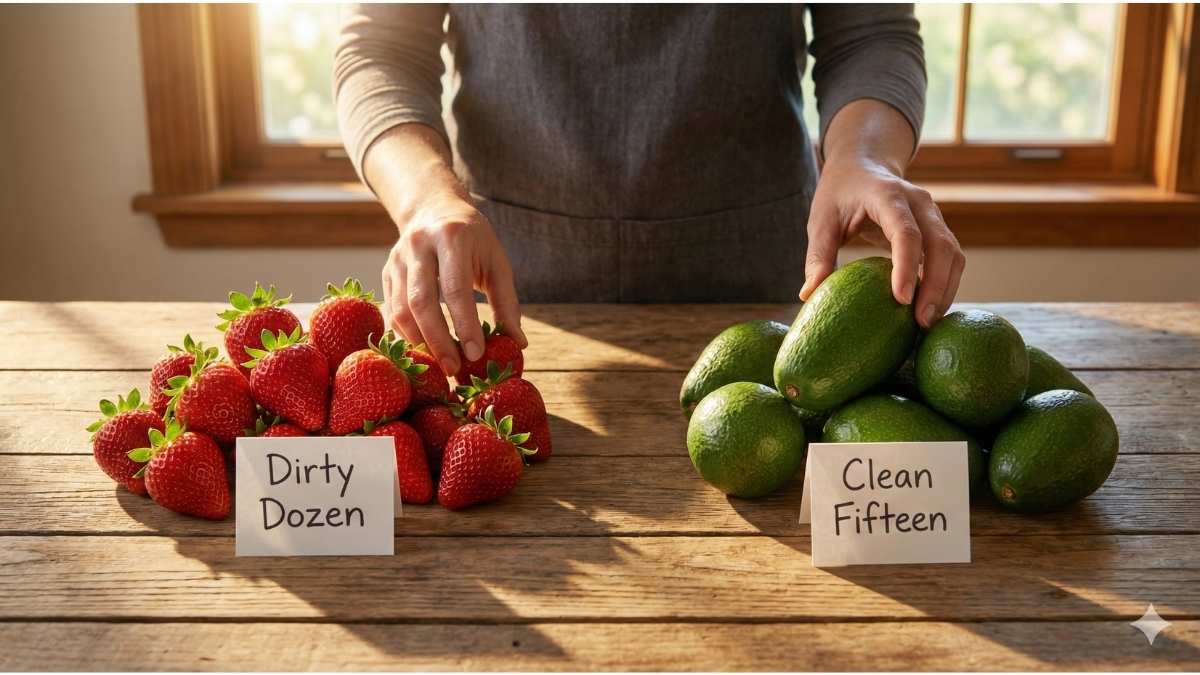
Target Your Spending: The Dirty Dozen and Clean Fifteen
Use these lists—the most powerful public health tool available to consumers—to prioritize your organic spending.
These lists help you prioritize spending to maximize your defense against the cumulative cocktail.
| Produce Category 🍎 | Actionable Strategy 💪 | Examples ✨ |
|---|---|---|
| The Dirty Dozen 🚫 | Prioritize Organic Buying: These items consistently show the highest concentration and mixture of pesticides in food, correlating with significantly elevated human pesticide biomarkers. Spend your organic budget here first. | Strawberries, Spinach, Grapes, Apples, Nectarines, Peaches, Celery, Sweet Bell Peppers |
| The Clean Fifteen ✅ | Acceptable for Conventional: These items generally have the lowest risk of contamination, making conventional purchasing a lower-risk choice if you need to prioritize. | Avocados, Sweet Corn, Pineapple, Cabbage, Onions, Mangoes, Asparagus |
Beyond Washing: A Farmer's Honesty
In my own home garden, I find that a quick rinse is usually all that’s needed. But with conventional produce, washing offers limited defense against the cocktail effect.
Why? Because many conventional pesticides in food are systemic. They are absorbed deep into the plant tissue itself as it grows. Washing under running water can help remove some surface residue and bacteria, but it is insufficient against systemic pesticides.
For high-residue items, you must choose organic. For animal products, remember this easy step: Trim fat from meat and skin from poultry and fish. Some fat-soluble pesticide residues (like organochlorines) accumulate in animal fat. This simple action can reduce your overall residue intake.
Conclusion: Empowering Your Protective Choice ❤️
The scientific and policy debate confirms the truth you instinctively felt: relying on single-chemical safety standards is a systemic risk. The pesticides in food we consume daily combine in complex, synergistic ways that current regulatory frameworks—bound by the limitations of the simple dose addition principle and the limited CMT—simply cannot anticipate.
The conclusion is urgent and empowering. You have the definitive, quantitative proof. By strategically choosing certified organic food, you are not just making a hopeful gesture; you are enacting a scientifically validated, immediate 98.6% detoxification strategy. You are moving from passively managing regulatory limits to actively guaranteeing the long-term health protection and detoxification of your family.

Meet Saqib
Saqib Ali Ateel is a PhD Scholar by training and a "student of the soil" by nature. He combines deep research, hands-on farming wisdom, and agricultural systems supervision to reveal what’s really on your plate. His mission is simple: to help your family navigate the food industry's complexity so you can eat cleaner, safer, and smarter.
- Home
- Why Toxic Foods?
- Heavy Metals in Food
- Pesticides in Food