Your Kitchen Secret: How to Easily Reduce Arsenic in Rice by Up to 73% with Simple Cooking Science🧑🍳
If you’re a parent or caregiver—what I call the "Proactive Protector"—I know your heart jumps when you read headlines about food safety. Worrying about staples is totally normal. As a PhD Student in agriculture, combined with a lifetime of farming experience, I see the headlines about heavy metal contaminants like arsenic. I feel that knot of anxiety too. We deserve answers that go beyond marketing.
The great news is that you hold the power to control a significant portion of this risk, right in your own kitchen. We are going to show you exactly how to reduce arsenic in rice using proven, measurable techniques. The ultimate strategy is not panic; it is measurable, proactive mitigation.
By the end of this guide, you will have the knowledge to measurably reduce arsenic exposure by a margin ranging from a reliable 40% to an astonishing 73%. This knowledge will transform your anxiety into confident action at dinnertime.
✨ Confident Answers to Your Biggest Rice Worries ✨
- The Kitchen Hack: Discover the simple Parboiling Method (PAB) that can cut inorganic arsenic by up to 73%.
- Brown vs. White: Get the surprising facts about why white rice often starts with less arsenic, and how to safely prepare arsenic in brown rice.
- Long-Term Protection: Learn how Strategic Grain Rotation (oats, quinoa) minimizes the frequency of exposure and reduces the lifetime cumulative dose.
- Infant Safety: Urgent advice on why you should skip arsenic in rice cereal and what to choose instead for first foods.
I. From Worry to Action: Understanding Arsenic
For my family and yours, the goal is simple. We want to reduce exposure to potential toxins consistently. To do this without stress, we rely on the core principle: The Dose Makes the Poison.
Hazard vs. Risk: Let's Frame the Problem Simply
A hazard is the potential for harm. Think of a stove. It's hot, so it’s a hazard. But if it’s off, the risk is low.
Arsenic is a heavy metal naturally present in the earth. It is in the soil from geology and past activities. This presence is an environmental hazard.
The actual risk to long-term health is determined by the dose and how frequently you consume it. Since rice is often eaten daily across a lifetime, managing that cumulative dose is our main job.
Why Rice Soaks Up Arsenic (The Farmer’s Insight) 🧠
As a PhD Student who has studied soil, the process is pretty unique to rice. Rice is usually grown in flooded, low-oxygen paddy fields. When fields are flooded, the arsenic already in the soil mobilizes. It turns into its most water-soluble, dangerous form: arsenite. The rice plant is very porous and absorbs this arsenite extremely efficiently through its roots. No other major staple grain does this as effectively. That’s why rice is the top dietary source of this specific contaminant.
Why We Need to Act on Reduction
The inorganic arsenic in rice is the one linked to serious health issues. Long-term, chronic exposure, even at low levels, is associated with increased risks for things like cancer and cardiovascular disease.
For children, the risk is elevated. Their developing organs are more susceptible. They also consume more food per pound of body weight. This means a small dose for you is a proportionally larger dose for them. Early life exposure is specifically linked to potential issues like decreased learning ability. This isn't meant to cause panic. It’s meant to empower a proactive response.
II. Quantified Reduction: The Essential Cooking Methods
The most empowering discovery is that you can dramatically lower the contaminant levels using simple, scientifically proven modifications to your cooking.
Remember, arsenic is highly water-soluble. If you cook rice until all the water is absorbed (the traditional method), the dissolved arsenic just concentrates and gets reabsorbed. That results in zero loss. The solution? Cook with lots of water and then drain it all away!
1. The Baseline: Rinsing the Raw Grain ✨
My hands-on experience on the farm taught me that rinsing is always the starting point. Always rinse raw rice thoroughly under running water. Use friction to wash away surface dust and loose particles. This simple, mechanical action removes about 10% of the arsenic content. It’s a modest reduction, but it’s a vital first step.
2. Method 1: The High-Volume "Pasta Method" (The Reliable Workhorse)
This is the reliable, actionable method I recommend for everyday cooking. You treat the rice like pasta, allowing the arsenic to leach out into the cooking water.
- The Technique: Use a ratio of 6 parts water to 1 part rice, or even up to 10:1. Boil the rice rapidly until it’s perfectly cooked.
- The Crucial Step: Immediately and thoroughly drain off all the remaining water. The dissolved arsenic goes right down the drain.
- Quantified Reduction: This high-volume method is verified to achieve an inorganic arsenic reduction of 40% to 60%.
3. Method 2: The Advanced Parboiling Method (PAB) (Maximum Protection!)
Want the absolute maximum protection? As a PhD Student, I can tell you the science is fantastic, but the method itself isn't new at all. In fact, it's a piece of wisdom passed down through generations in my own family, and it beautifully connects tradition with modern science.
I remember watching my grandmother and my mother cook, especially when preparing fragrant Basmati rice. They were focused purely on improving the texture and bringing out that beautiful, distinct fragrance. My grandmother was illiterate and didn't know the word 'arsenic' or what a 'neurotoxin' was. She and her ancestors—and then my mother—just knew, through decades of kitchen experience, that the best way to cook rice was to parboil it, sieve it with a muslin cloth, and then finish the cook.
What they did for flavor and cooking perfection, science now proves is the most effective way to reduce chemical risk. Their main ideas were about taste, but their method makes the cooked rice much healthier for us.
The Advanced Parboiling Method (PAB) steps are exactly what they practiced:
- Step 1: The Parboil & Dump: Briefly boil the rice in a medium volume of water (like 4 parts water to 1 part rice) for about five minutes.
- Step 2: Drain: Immediately and thoroughly discard this initial water. This wash, which my family used to sieve out, removes the largest concentration of contaminant.
- Step 3: The Final Cook: Add a smaller, clean volume of fresh water (e.g., 2 parts water) and cook until it is fully absorbed, which helps to finish the cook perfectly for fragrance and texture.
- Quantified Reduction: The PAB method is a scientific powerhouse, achieving reductions of 54% for brown rice and up to 73% for white rice. It’s a wonderful validation of traditional cooking techniques!
Explore Consumer Guidance on Arsenic Contamination in Rice from the Environmental Working Group (EWG)
🔬 Science Meets Tradition: Arsenic Reduction Cooking Methods 🍚
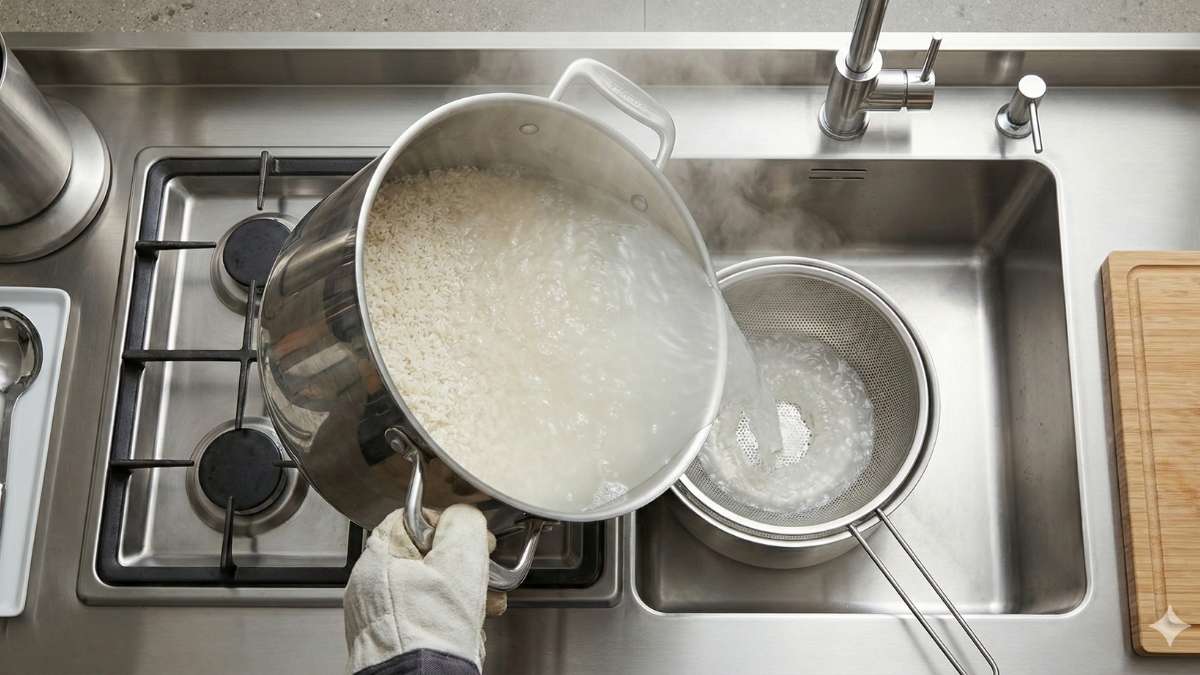 Immediately and thoroughly draining the initial parboiling water removes the largest concentration of inorganic arsenic.
The Nutrient Trade-Off: A Balanced View
I want to be a highly trustworthy partner to you. I must be transparent: high-volume cooking methods do cause some loss of water-soluble nutrients, like B vitamins.
From an academic perspective, the justification is simple: the benefit of significantly reducing exposure to a neurotoxin outweighs the loss of B vitamins. We can easily compensate for the nutrient loss through Grain Rotation (our next topic!), ensuring a diverse diet.
Read the Scientific Study Quantifying High Water-to-Rice Cooking Reduction (via NIH/PubMed)
III. Strategic Sourcing: The Brown Rice Question
Effective risk mitigation begins at the grocery shelf. Smart purchasing can significantly reduce the baseline amount of arsenic you bring home.
The Arsenic in Brown Rice Challenge
We love brown rice for its fiber. But here's the complex reality we have to face: arsenic accumulates specifically in the outer bran layer. Because white rice is made by removing this bran, it naturally contains lower concentrations of arsenic.
Studies show brown rice can harbor 72.2% to 98.3% more arsenic than white rice. If you are a heavy rice eater, switching to white rice and then using the PAB method might offer a lower total arsenic dose. If you truly love and choose arsenic in brown rice, you must be disciplined and use the maximum reduction PAB method every single time. This is exactly why my family's traditional parboiling method is so crucial, especially when cooking rice with the bran layer.
Prioritizing Low-Arsenic Regions
Arsenic levels vary wildly depending on the soil and growing history. You can be proactive by choosing rice from regions known for lower soil contamination.
- Your Priorities: Look for rice grown in California. Imported Basmati and Jasmine varieties from specific areas of Southeast Asia also tend to have lower baseline arsenic concentrations.
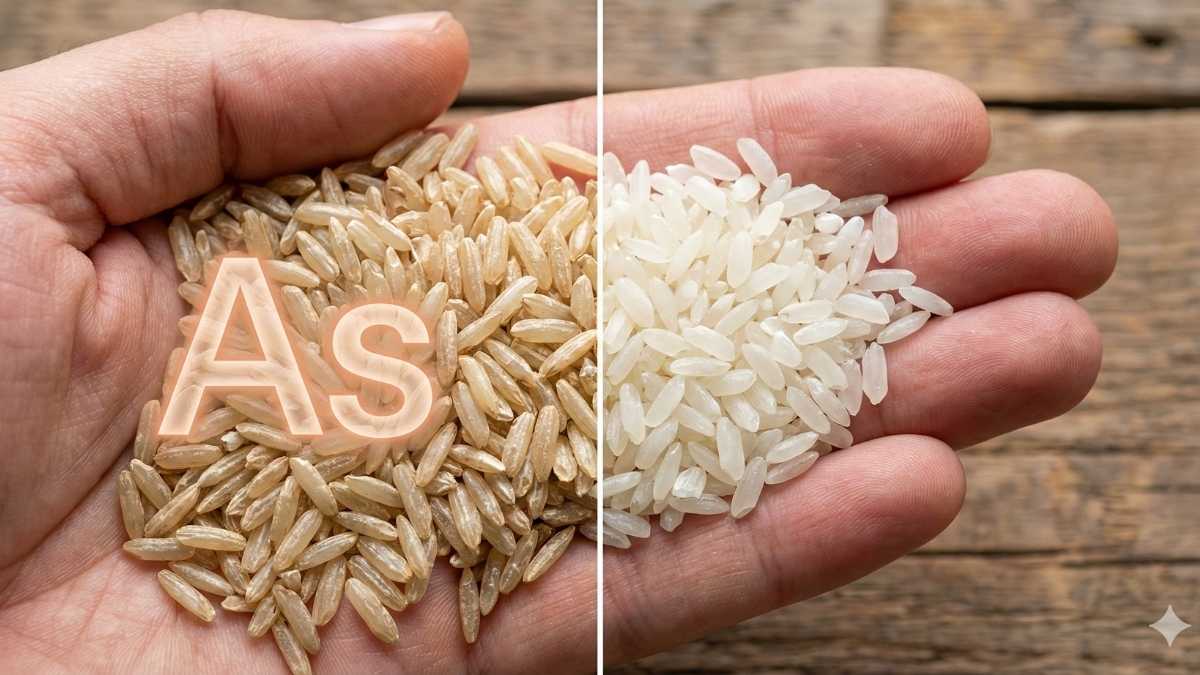 Arsenic accumulates in the outer bran layer, which is why brown rice often contains significantly higher concentrations than white rice.
IV. The Long-Term Plan: Strategic Grain Rotation Dilutes
Risk
The most empowering long-term solution is consistent Strategic Grain Rotation.
Since rice can be a daily dietary component, limiting the frequency of exposure is the cornerstone of managing chronic toxicity. Health recommendations suggest adults limit rice consumption to between one and three servings per week. As a Farmer/Gardener, I know that diversity in the field creates resilience. Rotating away from rice means diversifying the nutrients and simultaneously reducing the total toxic load.
Recommended Low-Arsenic Grain Alternatives
The best alternatives are those that are not grown under flooded conditions, so they absorb significantly less arsenite.
- Oats: Excellent for fiber and iron.
- Quinoa: A complete protein, high in iron. A superior substitute for rice.
- Barley and Millet: Great for soups and side dishes.
- Lentils and Beans: Excellent, low-arsenic options providing protein and iron.
 Diversifying your diet with low-arsenic grains like quinoa and buckwheat minimizes cumulative exposure over a lifetime.
V. Urgent Guidance for Infants and Toddlers ❤️
I want to share specific, reassuring advice for babies. They are the most vulnerable. Their small bodies and developing nervous systems mean we need to be extra cautious about neurotoxin exposure.
The Arsenic in Rice Cereal Risk
Infant rice cereal used to be the default first food, but it can be a primary source of early arsenic exposure. The FDA has set an Action Level of 100 ppb (100 parts per billion) for inorganic arsenic in infant rice cereals.
The proactive approach is simple: rice cereal is not a mandatory first food.
Safer, Low-Arsenic First Foods
Health organizations advise introducing a wide variety of nutrient-rich, non-rice foods early on. This decreases exposure to toxic heavy metals and contaminants.
- Prioritize These: Look for iron-fortified cereals made from: oatmeal, barley, buckwheat, multi-grain cereals, and quinoa cereals. These low-arsenic alternatives are often iron-fortified, ensuring nutritional needs are met.
- Lentils: Cooked red lentils, which soften to an oatmeal-like consistency, provide essential iron and protein.
Avoiding Hidden Arsenic Sources
Be educational about hidden exposure. Please avoid rice milk and processed products sweetened with brown rice syrup. Testing shows these products can contain arsenic levels often exceeding the federal drinking water standard of 10 ppb. Limit juice consumption, favoring whole fruits instead, to further reduce infants' total arsenic intake.
VI. The Organic Connection: Environmental Inheritance
Your strategy for heavy metals perfectly integrates with the core mission of preforganic.com—reducing the total dietary chemical load.
We must be scientific and transparent: organically-grown and conventional rice both contain arsenic. Organic certification governs inputs (synthetic pesticides), but it cannot remove heavy metals already naturally present in the soil. This is ‘Environmental Inheritance.’
However, organic farming is still part of the solution. Organic growers are banned from using arsenic-based drugs and pesticides. They are not adding to the total chemical load of the soil.
Your approach is a comprehensive one: you choose organic to minimize synthetic inputs, and you use kitchen science (like the PAB method my grandmother used) and rotation to manage the unavoidable environmental contaminants. This dual-action plan provides the ultimate assurance.
VII. Conclusion: A Confident, Balanced Approach
You started with a question about safety. You now have a confident, data-driven answer and a clear, proactive plan.
Your Action Plan for Confident Consumption:
1. Kitchen Science: Embrace the power of tradition! Use the Parboiling Method (PAB)—the boiling and draining method used by my ancestors—for maximum reduction, up to 73%. For regular cooking, use the High-Volume "Pasta Method" (6:1 ratio) for a reliable 40%–60% reduction.
2. Smart Shopping: Prioritize low-arsenic varieties like California, Basmati, and Jasmine rice. If you buy high-fiber brown rice, commit to the PAB method.
3. Rotation is Resilience: Implement consistent Grain Rotation. Use low-arsenic grains—oats, quinoa, and barley—for the majority of meals to minimize the frequency of exposure over a lifetime.
4. Protect the Babies: Avoid rice milk/syrup and arsenic in rice cereal entirely for infants. Choose low-arsenic first foods.
You are not sacrificing health for convenience; you are embracing actionable confidence to protect your family every day. Keep this knowledge close, and keep building your confidence, one nourishing meal at a time.

Meet Saqib
Saqib Ali Ateel is a PhD Scholar by training and a "student of the soil" by nature. He combines deep research, hands-on farming wisdom, and agricultural systems supervision to reveal what’s really on your plate. His mission is simple: to help your family navigate the food industry's complexity so you can eat cleaner, safer, and smarter.
- Home
- Why Toxic Foods?
- Heavy Metals in Food
- Reduce Arsenic in Rice