What Is Organic Coffee? The Legal Definition vs. The
Biological Reality (2026 Update)
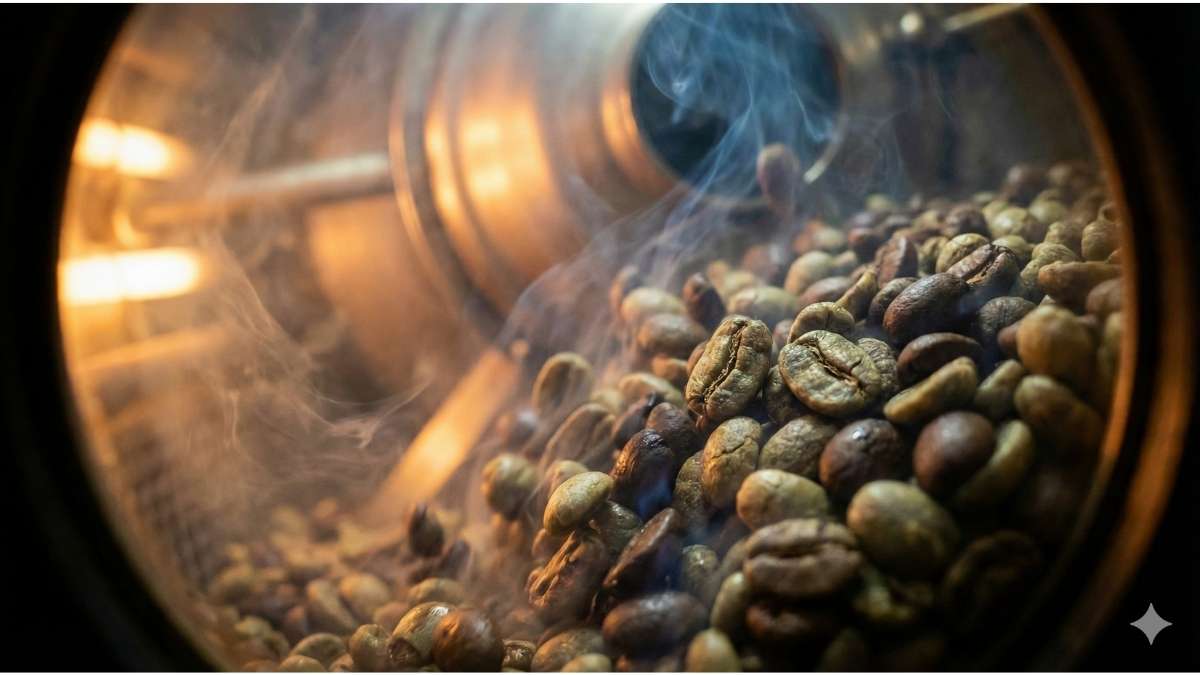
If you want to know what is organic coffee, start with the sharp scent of a roaster climbing past 200°C. Most people just smell breakfast, but I smell a second chance—the moment heat acts as a cleanup crew, burning off the invisible hitchhikers that the "Organic" label couldn't stop.
You are here because you want the truth, not the ad copy. You want to know if that higher price tag buys you actual chemical safety, or if you’re just paying for a comforting "health halo." Before we break down the toxicology reports, here is the plain-language reality.
🏛️ Section 1: The Legal
Definition (The "Paper" Reality)
To really define "organic," we have to look past the green sticker and crack open the USDA's rulebook. This is where the legal reality quietly drifts away from your expectations.
The Process Claim
Legally, organic certification is a process claim, not a product guarantee. It certifies that I, the farmer, did not intentionally apply prohibited substances like synthetic nitrogen or glyphosate. It does not certify that the wind didn't blow them onto my crop from the neighbor's farm.
The "5% Rule" Loophole
Here is the regulatory nuance most consumers miss. Under 7 CFR § 205.671, organic products can legally be sold even if they contain unintentional pesticide residues, provided those levels are less than 5% of the EPA tolerance.
- The Implication: Biologically, this means organic coffee can contain trace amounts of Atrazine or Glyphosate acquired through environmental drift and still legally hold the USDA seal.
🧪 Section 2: The
Biological Definition (The "Soil" Reality)
If the law allows for drift, what does the chemistry say? The most contentious data point in recent years comes from the Clean Label Project, which tested dozens of coffee brands.
The Herbicide Paradox
Their investigation revealed that 100% of the organic coffee samples tested contained AMPA, the persistent metabolite of glyphosate.
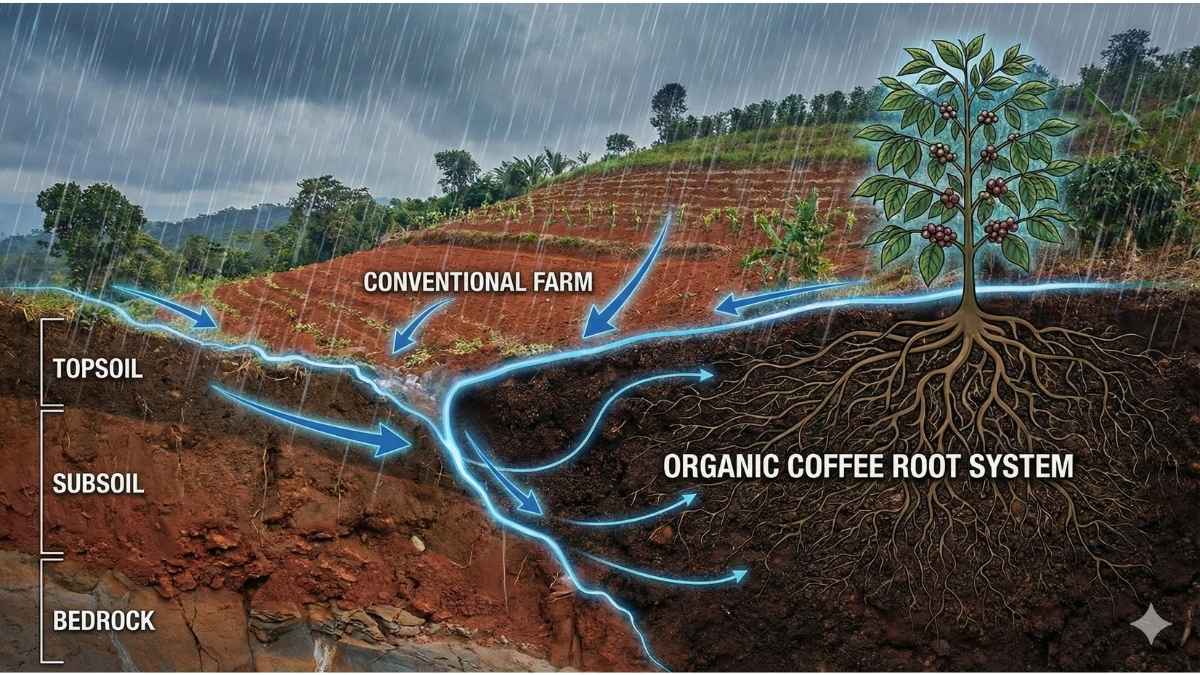
- The Mechanism: Coffee is often grown on slopes. When tropical rains hit a conventional farm uphill, water containing glyphosate binds to soil particles and washes down into the organic plots below. This is hydrogeological transport. The organic farmer did not spray it, but the roots uptook it.
The Thermal Defense
While the raw bean is compromised, the roasting drum acts as a decontamination chamber. A peer-reviewed study in Food Additives & Contaminants (2024) demonstrated that glyphosate is thermally unstable.
- The Kinetics: Roasting at temperatures >200°C destroys between 73% and 90% of glyphosate residues.
- The Outcome: While the green bean may test positive, the dark-roasted bean in your grinder is biologically significantly cleaner.
🔥 Section 3: The Thermal
Definition (Acrylamide vs. Furan)
When defining organic coffee, we cannot ignore the roasting phase. The wellness industry often promotes Light Roast Organic Coffee for its high antioxidant content. However, from a toxicological perspective, this definition of "healthy" is flawed.
Roasting creates a zero-sum game between two process contaminants: Acrylamide and Furan.
1. The Light Roast Risk: Acrylamide (a probable carcinogen) forms early in the roast when sugars react with asparagine. Light roasts retain the maximum load of acrylamide because the bean hasn't been hot enough, for long enough, to break it down.
2. The Dark Roast Trade-off: As you roast darker, acrylamide degrades (good), but Furan levels rise (bad).
My Prescription: If you define "organic" as "least toxic," a Medium-Dark roast sits in the optimal valley—low enough in acrylamide, and the furans (which are highly volatile) largely off-gas during the grinding and brewing process.
📦 Section 4: The
Packaging Vector (The "Plastic" Reality)
You might buy the cleanest, high-altitude, volcanic-soil organic coffee in the world, and then ruin it in the last 30 seconds of preparation.
The Pod Problem
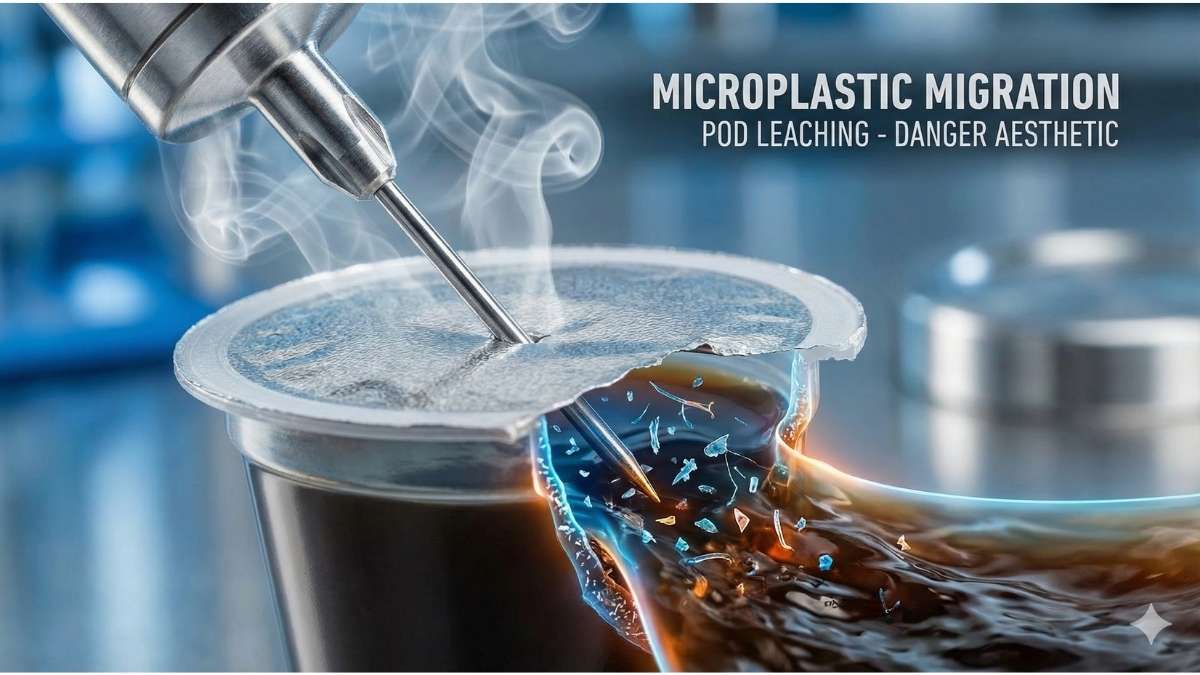
Research indicates that single-serve plastic coffee pods are a primary vector for Phthalates (like DEHP), which are known endocrine disruptors.
- The Physics: An espresso machine forces water at 90°C+ under high pressure (up to 19 bars) through a plastic cup.
- The Migration: This heat and pressure strip plasticizers out of the container and deposit them directly into the lipophilic oils of your coffee.
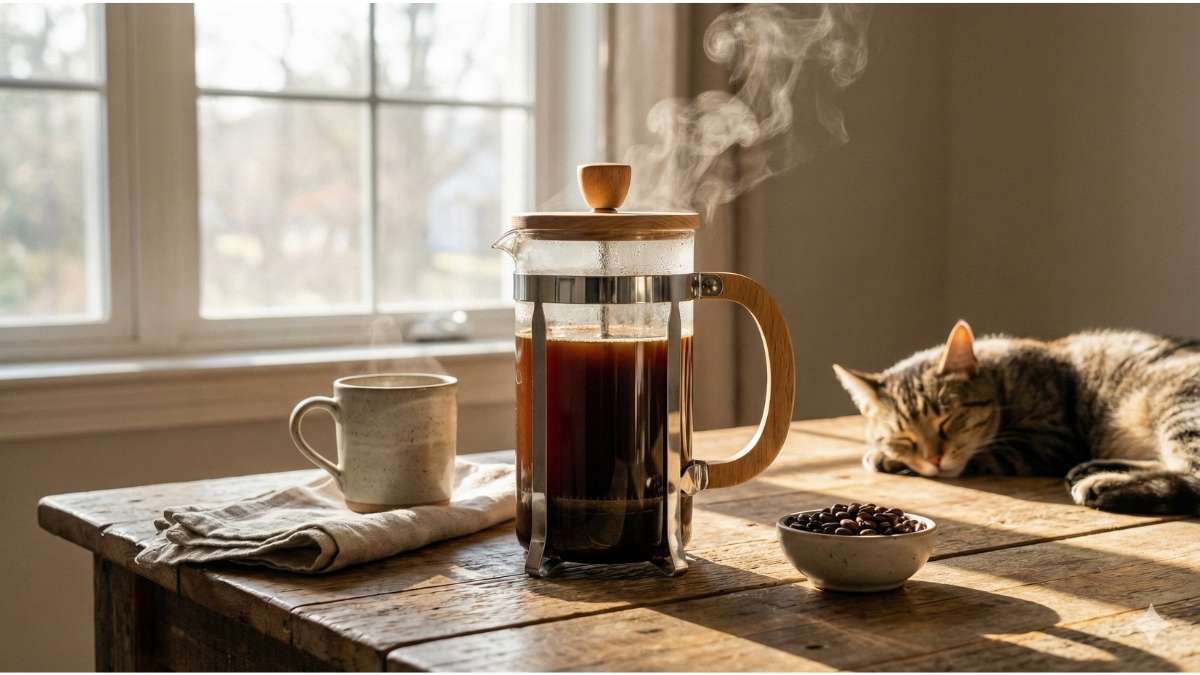
The Solution: Glass or Steel. Brewing organic coffee in a French Press or Pour-Over involves zero plastic contact, preserving the biological integrity of the bean.
🏁 The PrefOrganic Verdict
So, what is organic coffee? It is not a magical product that is hermetically sealed against the modern world. It is a crop grown with better intentions and fewer direct poisons.
However, the label is not enough. To bridge the gap between legal organic and biological purity, you must look beyond the sticker to the physics of processing.
My Final Recommendation:
Source Certified Organic beans to avoid intentional poisons. Choose a Dark Roast to thermally degrade unintentional environmental residues. Buy Whole Beans to minimize surface oxidation. And brew in Glass to ensure the only chemistry in your cup is the one nature intended.

Meet Saqib
Saqib Ali Ateel is a PhD Scholar by training and a "student of the soil" by nature. He combines deep research, hands-on farming wisdom, and agricultural systems supervision to reveal what’s really on your plate. His mission is simple: to help your family navigate the food industry's complexity so you can eat cleaner, safer, and smarter.
📚 References & Further Reading
1. USDA National Organic Program (NOP). (2025). Electronic Code of Federal Regulations, Title 7, Subtitle B, Chapter I, Subchapter M, Part 205 - National Organic Program. Official Text
- Relevance: Defines the legal standards for organic certification, including the "5% Rule" for unintentional residues.
2. Clean Label Project. (2023). 2023 Coffee Study: Pesticides, Heavy Metals, and Acrylamide in Best-Selling Coffee Brands. Study Summary
- Relevance: Source of data regarding AMPA (glyphosate metabolite) presence in organic coffee samples and phthalate levels in pods.
3. Food Additives & Contaminants: Part A. (2024). Thermal degradation of glyphosate during coffee roasting: A kinetic study.
- Relevance: Establishes the 73-90% reduction rate of glyphosate residues when subjected to temperatures >200°C.
4. Journal of Agricultural and Food Chemistry. (2024). Impact of Organic vs. Conventional Cultivation on the Polyphenol Content of Coffea arabica.
- Relevance: Supports the "Stress Response" theory, showing higher antioxidant levels in organic beans.
5. EFSA Journal (European Food Safety Authority). (2025). Risk assessment of acrylamide in food.
- Relevance: Provides the toxicological context for acrylamide formation in light roasts versus furan formation in dark roasts.
6. Toxins (Basel). (2023). Ochratoxin A in Coffee: Occurrence and Control Strategies.
- Relevance: Confirms that mycotoxin control is primarily a function of post-harvest processing (drying/grading) rather than farming method.
7. Environmental Science & Technology. (2024). Phthalate Migration from Plastic Coffee Capsules into Brewed Coffee.
- Relevance: Validates the risk of endocrine disruptors leaching from single-serve plastic pods under high heat and pressure.