5 Benefits of Organic Coffee: A 2026 Research Update on
Risks & Residues
There is nothing quite like that first inhale of steam from a fresh pour-over. But for many of us, that morning ritual is now paired with a nagging question: Is this cup waking me up, or am I sipping on chemical leftovers along with the caffeine?
To understand the real benefits of organic coffee, we have to look past the green marketing stickers and into the soil. The difference isn't just about "purity"; it is about how the coffee plant survives, fights stress, and passes those biochemical defenses on to you.
⚡ Quick Summary: The 5 Key Benefits of Organic Coffee
For those in a rush, here is the executive summary of the 2026 research.
- Reduced Toxic Load: Organic significantly lowers exposure to direct synthetic pesticides, though "drift" from neighbors is still a reality.
- Guaranteed Safe Decaf: It is the only way to ensure your decaf wasn't processed with Methylene Chloride (a paint stripper).
- Potent "Defense" Antioxidants: Organic beans are higher in Quercetin and Gallic Acid, compounds that help your body fight stress.
- Biodiversity Protection: Choosing organic supports 34% more bird and pollinator species than conventional farming.
- No Hidden GMOs: While GMO coffee is rare, organic certification guarantees non-GMO status throughout the supply chain.
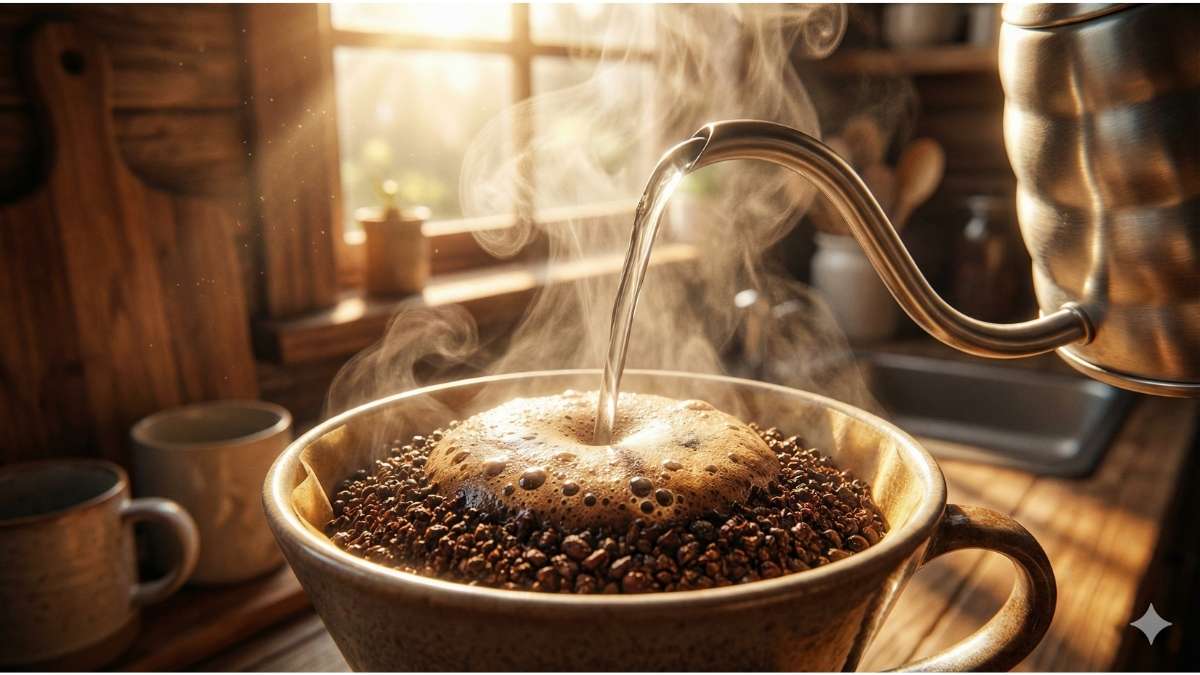 The "Bloom": That release of CO2 tells you the beans are fresh, but the aroma shouldn't carry chemical residues.
1. Toxicology: The Primary Benefits vs. Drift Risks
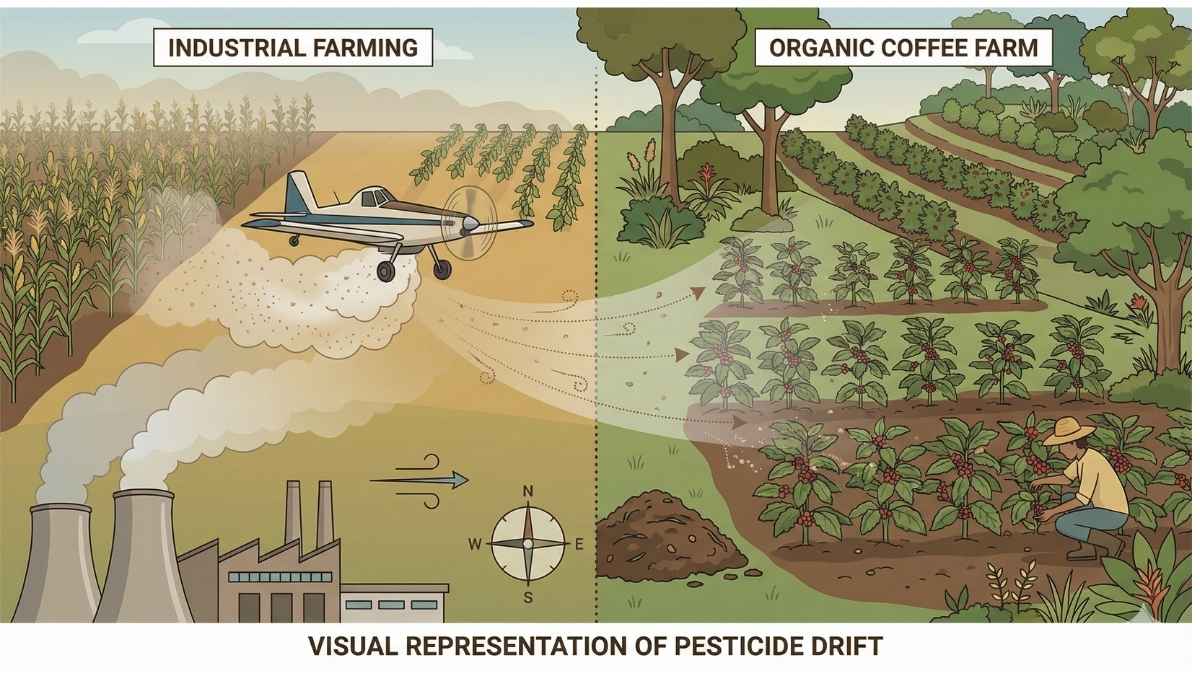 Even organic farms aren't islands. "Drift" from conventional neighbors contributes to trace contamination.
Organic means the farmer didn't spray poisons on the crop. However, because air and water move, organic farms can still catch some "drift" from conventional neighbors.
For years, the main argument regarding the benefits of organic coffee was simple: "no pesticides." However, the Clean Label Project and recent 2023–2025 studies have complicated this narrative. We need to talk about the glyphosate footprint showing up in your cup: AMPA.
AMPA (Aminomethylphosphonic acid) is what glyphosate (Roundup) turns into when it breaks down. Because conventional farming is so intense in coffee regions like Brazil and Vietnam, this chemical drifts. It moves in the rain; it moves in the dust. A recent study found AMPA in 100% of organic coffee samples tested.
Does this mean Organic is a scam?
No. It means we live on a shared planet. The levels in organic are biologically negligible compared to the direct application in conventional farming. Think of it this way: buying organic is like wearing a raincoat in a storm. You might still get a little damp from the humidity, but you aren't getting soaked to the bone.
The Methylene Chloride Danger
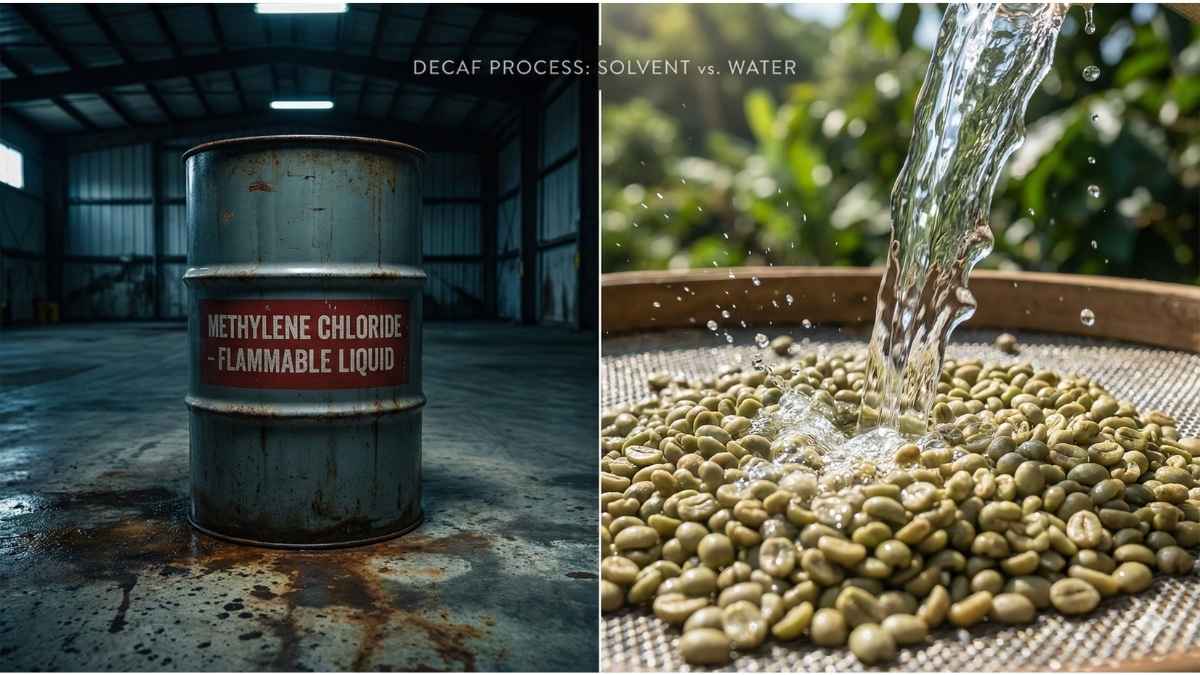
While AMPA is a "drift" issue, Methylene Chloride in decaf is a deliberate industrial choice. Used to strip caffeine, this solvent is a probable carcinogen. Conventional decaf brands frequently test positive for residues. Because organic standards strictly prohibit synthetic solvents, the organic seal is your only guarantee of a clean decaf cup.
Bottom Line: Organic drastically reduces your toxic load, but it cannot eliminate 100% of environmental pollution. For Decaf drinkers, however, organic is non-negotiable to avoid industrial solvents.
2. The Antioxidant Wars: Stressed Plants Are Healthier
Plants that have to fight their own battles (organic) get stronger. When you drink them, you get those strength-building compounds. Plants that are pampered with fertilizers (conventional) get lazy but grow faster.
Here is where the biology gets fascinating. A groundbreaking study by Ponder et al. (2025) flipped the script on coffee nutrition.
We used to think organic just had "more" nutrients. The reality is that organic plants are stressed. They don't have chemical bodyguards to kill bugs for them. To survive, the organic coffee plant produces its own chemical weapons—compounds like Quercetin and Gallic Acid.
When you drink organic coffee, you are drinking the plant's immune system. This concept is called Xenohormesis.
The Conventional Surprise
However, the same study found that conventional coffee often has higher levels of Chlorogenic Acid (CGA). Why? Synthetic nitrogen fertilizers act like steroids, pumping up the plant's rapid growth pathways where CGA is made.
Bottom Line: If you want anti-inflammatory defense compounds, go Organic. If you want maximum Chlorogenic Acid for blood sugar control, high-quality Conventional is actually a potent tool.
3. Myth-Busting: The "Moldy Organic" Fallacy
Mold doesn't care if a bean is organic or not. It only cares if the bean is wet. The idea that organic coffee is "moldier" because it lacks fungicides is a myth.
You may have heard influencers claim that "without fungicides, organic coffee is full of mold." This is a classic example of confusing farming with processing.
Recent systematic reviews (1997–2024) confirm that Ochratoxin A (OTA)—the nasty kidney-damaging mold toxin—is not more prevalent in organic beans. Mold grows when coffee is dried improperly on humid patios or stored in damp sacks. It has almost nothing to do with whether the farmer used a fungicide spray months earlier.
The real culprit is "gleaning"—the practice of scooping up over-ripe berries that fell into the dirt. High-quality organic producers don't do this. Cheap instant coffee producers do.
Bottom Line: Mold is a processing issue, not a farming issue. To avoid it, buy "Washed" coffee rather than "Natural" process if you are sensitive, regardless of the organic label.
4. The Environmental Ledger: Biodiversity & Birds
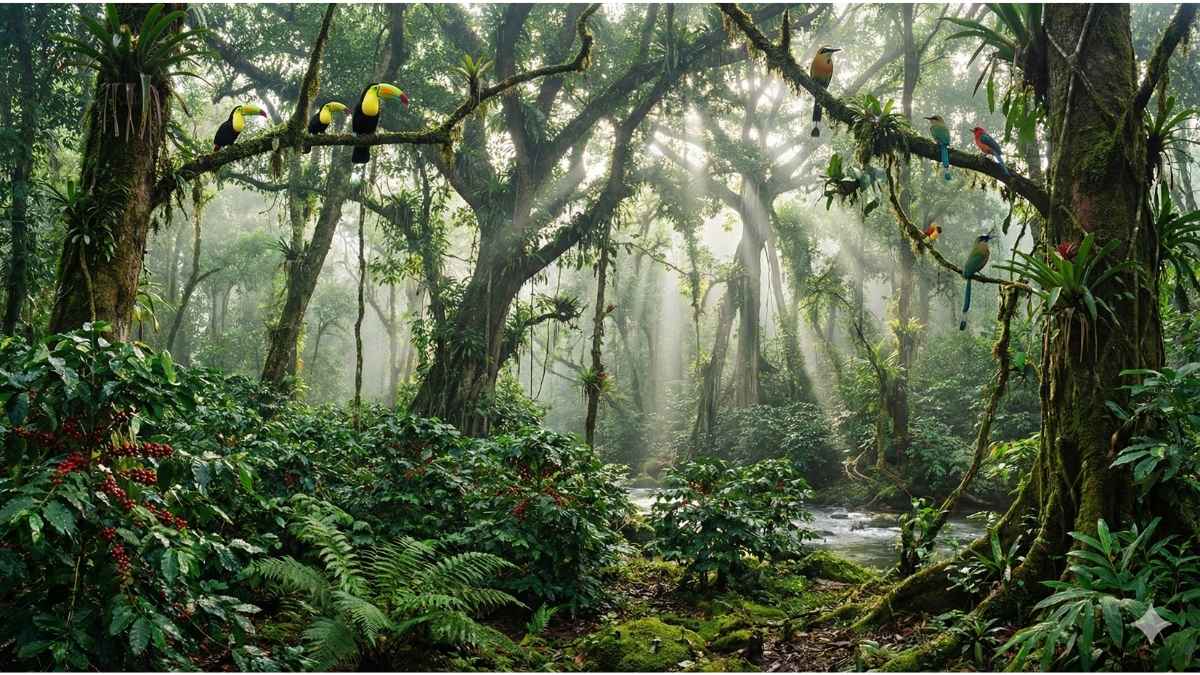
Conventional coffee farms often look like cornfields—just rows of bushes. Organic farms usually look like forests, providing homes for birds that eat the bugs naturally.
If the health differences are nuanced, the environmental differences are black and white.
Organic farms generally utilize shade trees. These aren't just for show; they provide habitat. Data from 2024 shows that organic systems support 34% higher species richness—specifically birds and pollinators—compared to sun-grown monocultures.
When you buy conventional, you are often funding "Land Sparing" agriculture, which maximizes yield but turns the farm into a biological dead zone. When you buy organic, especially shade-grown, you are funding "Land Sharing," where agriculture coexists with the jungle.
Bottom Line: Organic is the hands-down winner for protecting birds and local wildlife. Every bag of conventional coffee carries a hidden cost in habitat loss.
Real World Scenarios: What If I Can't Buy Organic?
We don't live in a perfect lab environment. Here is how to navigate the grocery aisle in the real world:
- Scenario A: The Budget Shopper.
If you can't afford organic, buy High-Altitude Arabica from regions like Ethiopia or Colombia. High altitude means fewer pests, which generally means fewer pesticides were sprayed, even if it's not certified.
- Scenario B: The Office Coffee Pot.
If you are stuck drinking cheap, conventional office coffee, don't panic. The roasting process (200°C+) destroys many heat-unstable toxins. Just drink plenty of water to help your own detox pathways.
- Scenario C: The Decaf Drinker.
Here, I have to be strict. If you cannot find organic decaf, I recommend switching to herbal tea. The risk of solvent residue in conventional decaf is simply not worth it.
PrefOrganic Recommendation List
To summarize the benefits of organic coffee based on your specific needs, here are the top picks for 2026:
FAQ: Quick Answers
Q: Does roasting kill pesticides?
A: It degrades some, but not all. Heat reduces mycotoxins significantly, but heavy metals and stable herbicides like glyphosate can survive the roast.
Q: Is "Natural Process" coffee moldier?
A: It carries a slightly higher risk because the fruit stays on the bean longer during drying. If you are sensitive to mold, stick to "Washed" organic coffees.
Q: Why is organic coffee more acidic?
A: It isn't necessarily. Acidity is determined by the roast level and altitude, not the organic certification. However, the higher Gallic Acid content in organic beans can alter the flavor profile slightly.

Meet Saqib
Saqib Ali Ateel is a PhD Scholar by training and a "student of the soil" by nature. He combines deep research, hands-on farming wisdom, and agricultural systems supervision to reveal what’s really on your plate. His mission is simple: to help your family navigate the food industry's complexity so you can eat cleaner, safer, and smarter.
References
- Clean Label Project. (2024). Study on contaminants in consumer coffee products.
- Ponder, A., et al. (2025). The Bio-Chemical Divergence of Organic versus Conventional Coffea arabica. Published in Molecules. MDPI Journal Link
- Hagos, M., et al. (2024). Ochratoxin A contamination in coffee: A systematic review. Cogent Food & Agriculture.
- Manson, J., et al. (2024). Biodiversity in Shade-Grown Coffee Systems: A Meta-Analysis.