The Science Behind the Best Organic Coffee Beans: From
Soil to Cup
The steam rising from your morning mug carries the distinct, earthy aroma of the best organic coffee beans, rich and grounding. That smell isn't just a wake-up call; it is the olfactory signal of complex chemistry at work.
When you view coffee from a screen, your news feed is likely screaming about hidden molds and toxic sludge. But when you view it from the field—where my boots are currently covered in loam—you realize that what we are managing is simply biology. 🌿
Let's leave the hysteria at the gate and look at what actually happens when fire meets bean—because the physics of the roaster is a lot more honest than your news feed.
Quick Guide: How to Choose the Best Organic Coffee Beans
- 🔬 Prioritize Specialty Grade (80+ Points): This is your primary shield against mold. High-scoring beans are rigorously sorted, meaning defects and fungal damage are already removed before you buy.
- 🚫 Demand Certified Organic: This is the only way to guarantee zero synthetic pesticides. It protects your body from chemical residues and prevents toxic runoff into the water table.
- 🔥 Aim for Medium-Dark Roast: This is the scientific sweet spot. It is hot enough to destroy acrylamide and pesticide residues, but not so dark that it creates charred carcinogens (PAHs).
- 💧 Choose Swiss Water Process for Decaf: Avoid solvents like Methylene Chloride. Water processing uses simple osmosis to remove caffeine while keeping the bean's structure and flavor intact.
- 🐦 Look for the Bird Friendly Seal: The "Gold Standard" of sustainability. It guarantees the coffee was grown in a diverse forest ecosystem, not a monoculture desert.
💡 Just want the beans?
We've tested dozens of brands against this strict criteria.
1. Are "Mold-Free" Coffees a Scam? (The
Mycotoxin Reality)
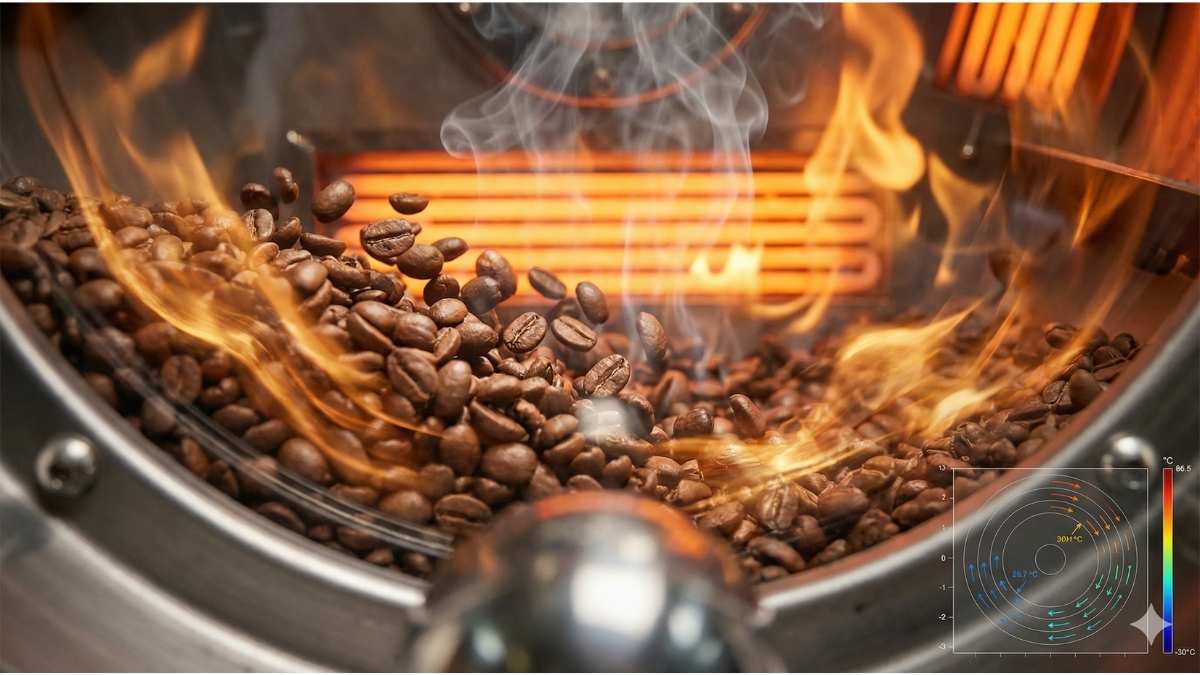
If you leave bread on the counter, it molds. Coffee is a fruit seed; nature wants to compost it. The fear-mongers sell "Mold-Free" coffee at a premium, implying everyone else is selling you fungus.
Here is the reality on the ground: Fungal spores (like Aspergillus) are everywhere in the soil and air. However, spores are living organisms, and they cannot survive the inferno of a coffee roaster. 🌡️
The Science of Thermal Degradation
The real concern isn't the fuzzy mold itself, but the mycotoxins (like Ochratoxin A or OTA) it leaves behind. This is where the physics of roasting provides our first layer of safety.
Ochratoxin A is heat-stable, but it isn't invincible. When we roast coffee at temperatures exceeding 200°C, OTA levels drop drastically—often by 69% to 96%. The intense heat causes the toxin molecules to break down and physically isomerize into less toxic compounds.
Why "Specialty Grade" is the Real Shield?
You don't need a "Mold-Free" sticker; you need "Specialty Grade" beans. Commercial coffee (the cheap stuff) often sits on the ground, absorbing moisture and breeding fungus.
Specialty Grade coffee is strictly graded. If we see severe fungal damage, that lot is rejected. By buying 80+ point coffee, you are effectively filtering out the mold risk before the roasting even begins. 🔬
✅ The Verdict:
Don't pay extra just for a "Mold-Free" label.
Do buy Specialty Grade coffee. The grading process + the heat of the roaster = safe coffee.
2. Does "Organic" Actually Mean Toxin-Free?
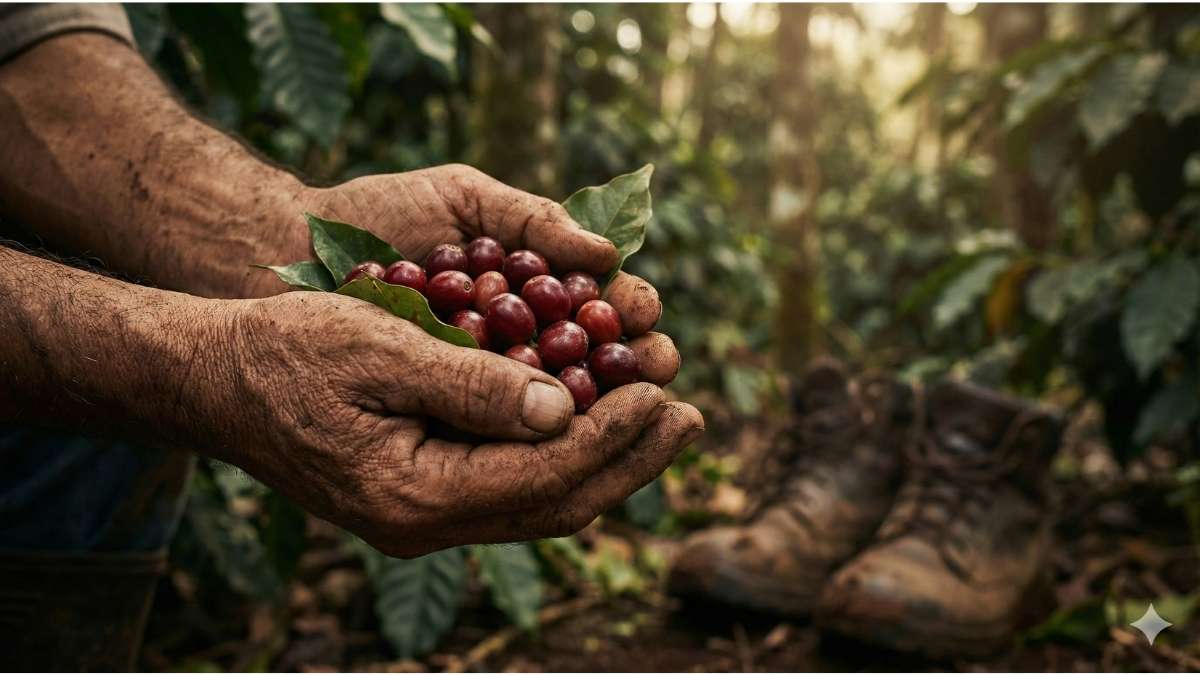
Coffee is traditionally one of the most chemically treated crops on earth. The debate here is whether the "organic" upgrade is worth the price.
The Fate of Pesticides
Common herbicides like Glyphosate are thermally unstable. When green beans are roasted, the heat degrades glyphosate residues by over 90%, breaking them down into amines and carbon dioxide.
The heat burns off the worst offenders, so that standard cup isn't poison—you don't need to treat your morning brew like a hazmat situation. However, relying on the roaster to burn off chemicals is a risky game.
The Heavy Metal Reality
While heat destroys pesticides, it cannot destroy elements. Heavy metals like Lead and Cadmium do not burn off. 🏗️
This is why best organic coffee beans are superior. By prohibiting synthetic inputs, organic farming protects the soil microbiome and prevents chemical runoff. It is not just about a cleaner bean; it is about not poisoning the water table where the coffee grows.
✅ The Verdict:
Best for Purity: Certified Organic.
While the roaster kills pesticides, only Organic certification prevents heavy metal accumulation from synthetic fertilizers.
3. Which Roast Is Cleanest for Daily Drinking?
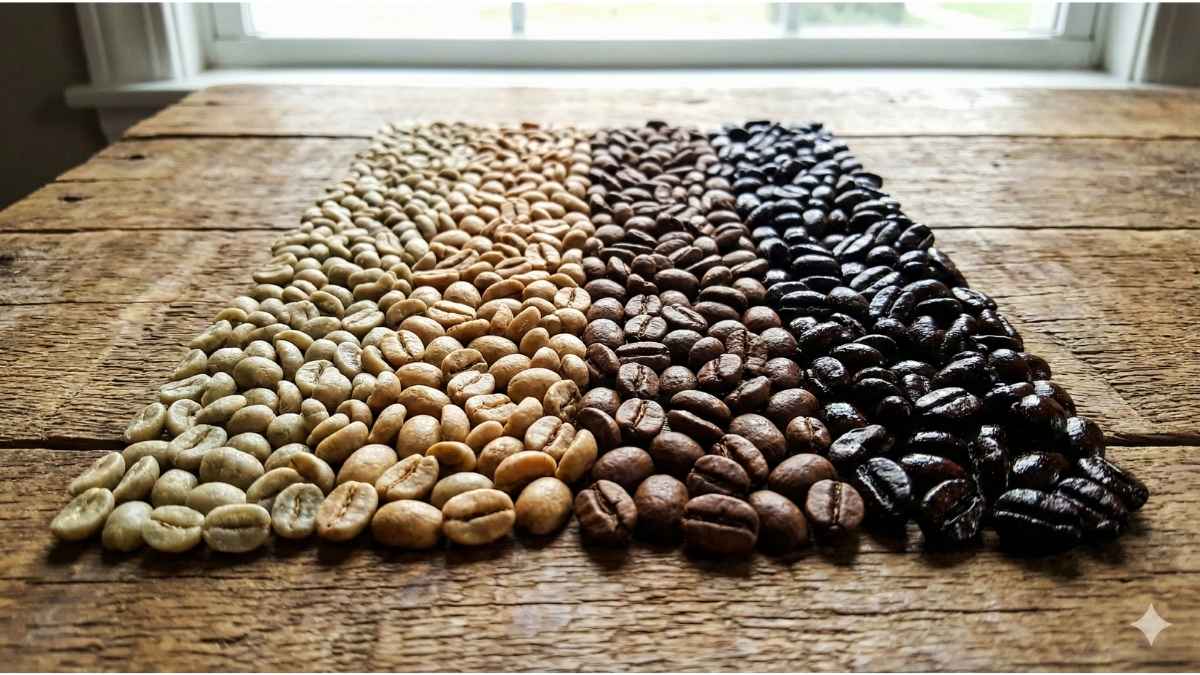 The Roast Spectrum: Medium-Dark offers the best balance between destroying acrylamide and avoiding char.
You naturally assume the Light Roast is the "cleaner" choice—less heat, right?—but inside the drum, it’s the fire that actually scrubs the toxins away.
The Maillard Paradox
Acrylamide is a byproduct of the browning process (the Maillard reaction). Counter-intuitively, Light Roasts have significantly higher levels of acrylamide because the bean hasn't roasted long enough to break it down.
Dark Roasts burn off the acrylamide, but if you go too dark (charred), you risk creating Polycyclic Aromatic Hydrocarbons (PAHs).
The "Clean" Sweet Spot
If you want the science-backed sweet spot, aim for a Medium-Dark Roast.
- It is hot enough to degrade the acrylamide and pesticide residues.
- It preserves enough antioxidants (Chlorogenic Acids) to offer health benefits.
- It stops short of the carbonization that creates PAHs.
✅ The Verdict:
Best for Low Toxin Load: Medium-Dark Roast.
Best for Antioxidants: Light Roast (but contains higher acrylamide).
4. Is Decaf Safe? (Solvents vs. Water Process)
If you drink decaf, you have likely heard that it is "washed in paint thinner." This refers to Methylene Chloride, a solvent used in the European Method.
Fear vs. Physics
Methylene Chloride is highly volatile, boiling at just 39.6°C. Since coffee is roasted at over 200°C and brewed at 93°C, the solvent physically evaporates. Residues are usually non-detectable or present at levels 100 times lower than safety limits.
Why Water is Better
Even though the solvent evaporates, I prefer the Swiss Water Process. This method uses osmosis and Green Coffee Extract to remove caffeine without synthetic chemicals. It removes the "mental friction" of worrying about solvents, providing a psychologically and environmentally cleaner cup. 💧
✅ The Verdict:
Best for Peace of Mind: Swiss Water Process (or Mountain Water Process).
5. Why "Bird Friendly" is the True Gold
Standard?
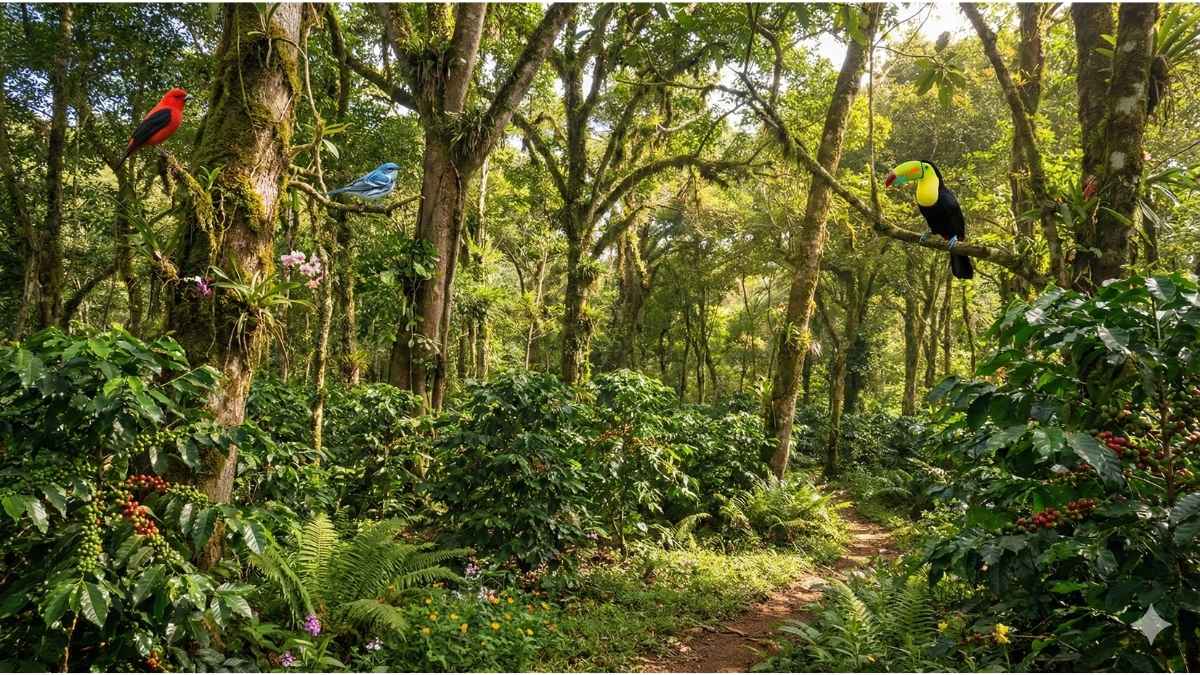
Finally, we must look at the farm itself. "Organic" just means no chemicals; it doesn't mean the farm isn't a monoculture desert.
Sun-grown organic coffee strips the land of trees. Smithsonian Bird Friendly certification is the gold standard. It requires strict organic practices plus a minimum of 40% shade cover and diverse native trees.
This preserves the habitat for migratory songbirds. When I walk a Bird Friendly farm, the air is alive with sound. A silent farm is a dying farm. 🐦
✅ The Verdict:
Best for the Planet: Smithsonian Bird Friendly.
If you see this seal, you know the coffee is also Organic and Shade-Grown.
Conclusion
The search for the best organic coffee beans isn't about fear; it's about understanding the process. The heat of the roaster is a powerful sanitizer, destroying fungi and degrading pesticides.
Finding the best organic beans isn't about fear-scrolling; it’s about knowing that the shade protects the farm, and the fire cleans the cup.
It all comes back to that morning ritual. When you take that first sip, you aren't just tasting a beverage. You are tasting a crop that was grown with respect for the soil and processed with respect for science.

Meet Saqib
Saqib Ali Ateel is a PhD Scholar by training and a "student of the soil" by nature. He combines deep research, hands-on farming wisdom, and agricultural systems supervision to reveal what’s really on your plate. His mission is simple: to help your family navigate the food industry's complexity so you can eat cleaner, safer, and smarter.
Further Reading
1. European Food Safety Authority (EFSA): Risk assessment on Ochratoxin A in food (https://www.efsa.europa.eu)
2. Smithsonian National Zoo & Conservation Biology Institute: Bird Friendly Coffee Certification Standards (https://nationalzoo.si.edu)
3. National Center for Biotechnology Information (NCBI/PubMed): Acrylamide formation and reduction in coffee (https://pubmed.ncbi.nlm.nih.gov)
- Home
- Clean Coffee Guide
- Best Organic Coffee Brands
- Organic Mold Free Coffee
- Best Organic Coffee Beans