Does Organic Coffee Have Mold? Science vs. The
"Brain Fog" Hype
The steam rising from my morning mug smells like dark chocolate and wet earth, but as I watch the swirl of cream, a nagging question hits: Does organic coffee have mold, or are we just being sold a new brand of anxiety? ☕
As someone who has spent a lot of time with my boots in the mud, I know that nature isn't sterile. In the field, fungi are as common as the air we breathe. But there is a massive difference between a stray spore in the wind and a toxic coffee cup. If you’ve been scrolling through "wellness" feeds claiming your daily ritual is a neurotoxic nightmare, it’s time to step out of the newsfeed and into the biology of the farm. 🚜
🛒 The "Clean Coffee" Buyer’s Checklist
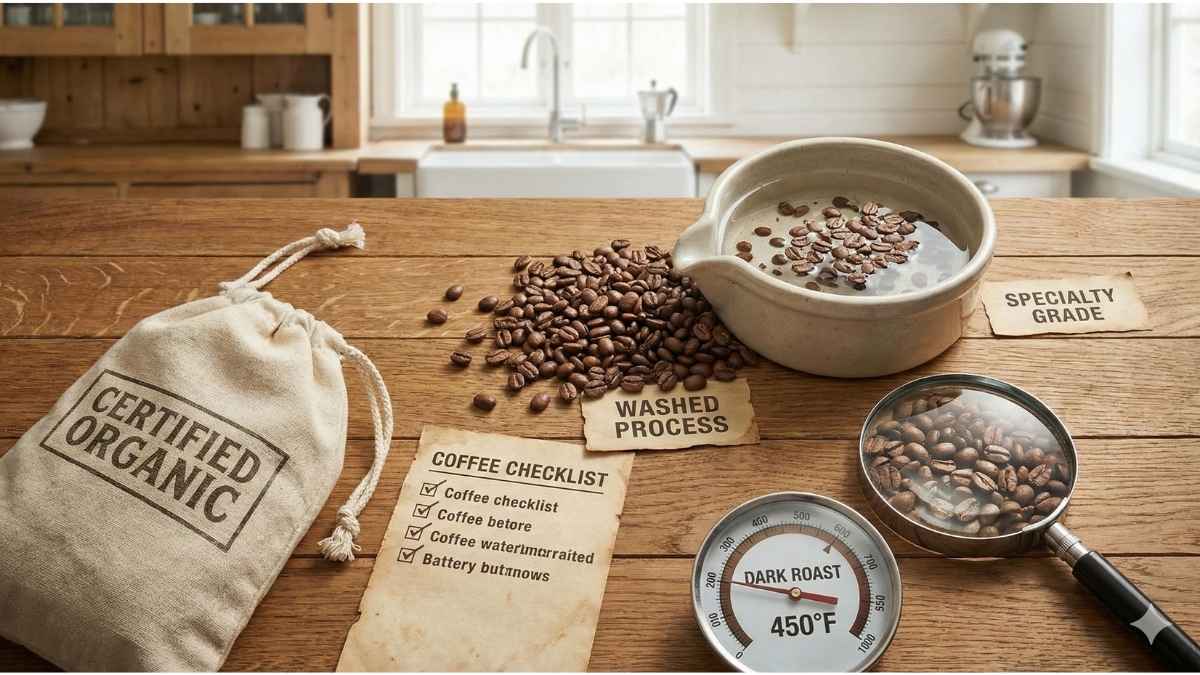
You shouldn't have to brew a side of worry with your beans—just check the label for these five "safety filters" to keep your morning ritual clean:
- ✅ Certified Organic: Ensures no synthetic pesticide residues.
- 🧼 "Washed" or "Wet Processed": Mechanically removes the mold’s food source (the fruit).
- 🏔️ High-Altitude (SHB): Colder mountain air naturally inhibits fungal growth.
- 🔥 Medium-Dark to Dark Roast: The heat does the heavy lifting, incinerating toxins.
- ⭐ Specialty Grade: Sorted to remove "defect" beans where mold actually hides.
Are "Mold-Free" Coffees a Marketing Scam?
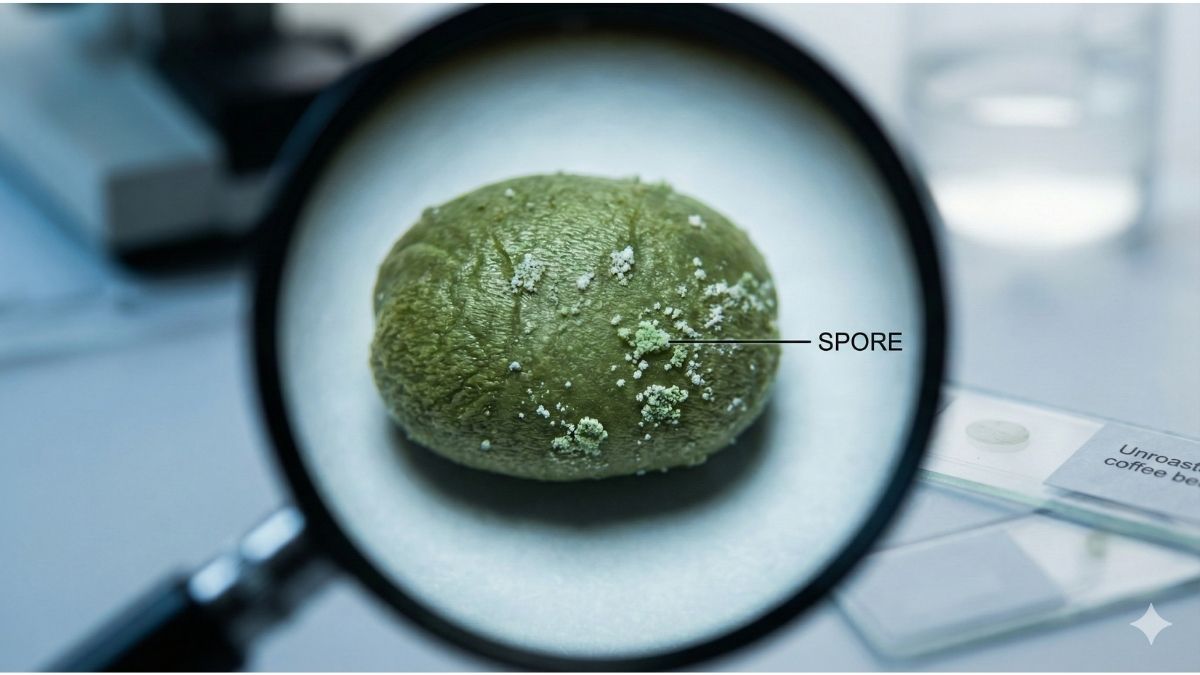
When you stand in a coffee grove, you realize the world is covered in fungi. Recent research in 2025-26 confirms that the genus Aspergillus—the group famous for producing mold toxins—is present in 100% of green coffee samples, regardless of how they were grown.
But here is the "PhD Farmer" reality check: the presence of mold spores is not the same as the presence of toxins. Think of it like a garden; just because you have seeds (spores) doesn't mean you’ll have a harvest of weeds (toxins).
Only about 27.8% of the fungi found on coffee actually have the genetic machinery to produce mycotoxins like Ochratoxin A (OTA). In fact, current studies show that toxin levels in high-quality beans are often so low they are measured in parts per trillion—well below any safety limit. 📉
✅ The Verdict: Don't pay a massive premium for "Mold-Free" labels. Instead, look for Specialty Grade beans. These are manually or mechanically sorted to remove damaged beans, which are the primary reservoirs for mold.
Does Organic Mean Toxin-Free? (The "Organic
Paradox")
There is a common fear that because organic farmers don't spray synthetic fungicides, their crops must be overrun with mold. It sounds logical, but the muddy boots reality is different.
Synthetic fungicides used in conventional farming are designed to fight leaf diseases on the living plant. They don't stick around to protect the beans while they sit in a warehouse. Storage mold is a different beast entirely. 🪲
The real hero in the organic field isn't a chemical spray; it’s soil health and pest control. The Coffee Berry Borer beetle is like a tiny delivery truck for mold, carrying spores deep into the bean. Organic farmers who manage these pests with biological traps often produce beans just as "clean" as conventional ones, without the chemical residue.
✅ The Verdict: Organic coffee is just as safe as conventional coffee regarding mold, but it's significantly safer regarding synthetic pesticide exposure.
The "Washing Machine" Effect: Why Processing
Matters
Keeping toxins out of your morning mug starts with how we peel that sweet, sticky cherry off the seed back at the farm. 🍒
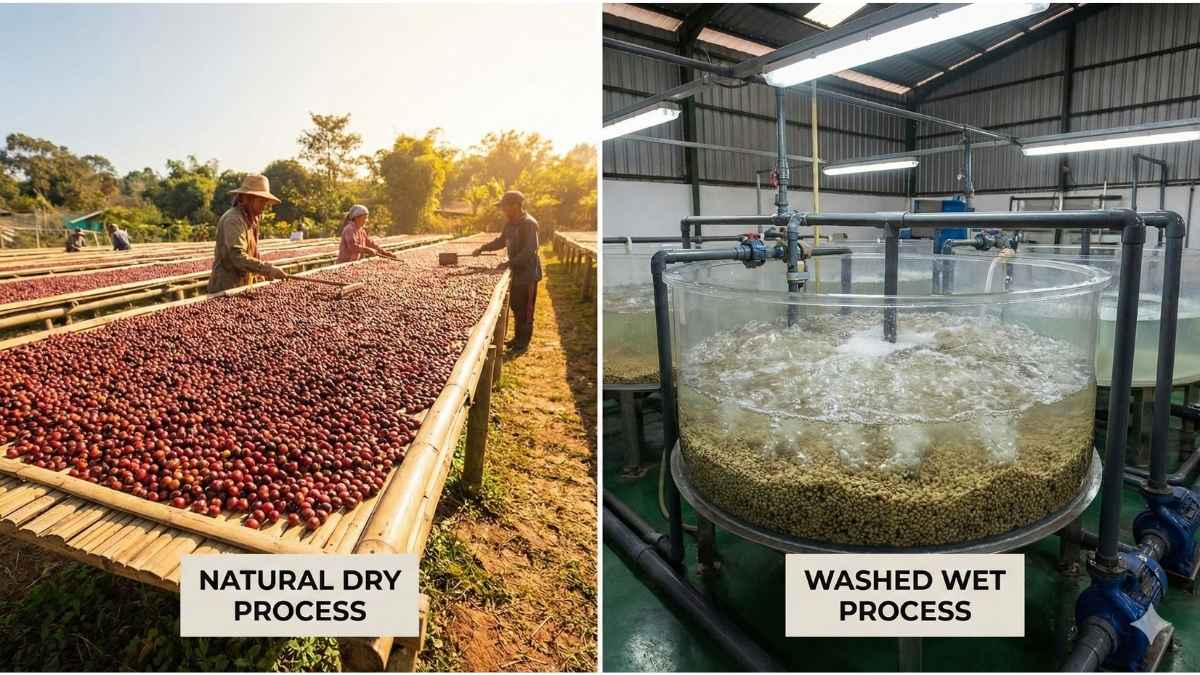
In "Natural" (Dry) processing, the whole cherry sits in the sun for weeks. If it rains, the sugary fruit becomes a buffet for mold. In "Washed" (Wet) processing, the fruit is stripped away immediately in water tanks. 🛁
Washing the coffee is like putting your beans through a high-speed rinse cycle. It removes the sticky "mucilage" that mold loves to eat. Data shows that washed coffees consistently have lower levels of Ochratoxin A compared to natural-process coffees (1.2 ppb vs 2.05 ppb).
✅ The Verdict: If you are sensitive to mold or mycotoxins, always choose "Washed" or "Wet Processed" coffee. It’s the scientifically superior choice for purity.
The Roaster’s Fire: Why Heat is Your Best Friend
A common misconception is that "cooking" mold kills the poison. While it’s true that mycotoxins are tough, they aren't invincible. The fire in the roaster—reaching temperatures up to 240°C—acts as a massive safety filter. 🔥
Studies show that roasting can destroy between 69% and 96% of Ochratoxin A.
- Light Roasts: Retain more antioxidants but also more of the original mold risk.
- Dark Roasts: Higher temperatures lead to the greatest toxin destruction.
Note on Decaf: Caffeine is a natural antifungal. Decaf beans lack this defense, so they must be stored in climate-controlled environments post-processing to stay clean.
✅ The Verdict: Worried about toxins? Skip the "blonde" roasts and go for a Medium-Dark or Dark Roast. The heat does the heavy lifting for you.
Is Coffee Really Giving You "Brain Fog"?
We’ve all seen the headlines claiming your coffee is a neurotoxic nightmare. In most cases, this isn't mycotoxin poisoning. True mold poisoning from food is a slow, chronic issue that affects the kidneys over decades, not a sudden "fog" thirty minutes after breakfast. 🌫️
If your coffee makes you feel jittery, anxious, or foggy, it’s likely one of three things:
1. Caffeine Sensitivity: Your liver might process caffeine slowly.
2. Rancid Oils: Old, stale coffee oils oxidize and can cause inflammation.
3. Histamine Reaction: Some people react to the fermentation in the coffee process.
✅ The Verdict: Modern medical consensus suggests that coffee is a minor contributor (9–15%) to your total mold exposure—cereals, bread, and dried fruits actually carry a much higher load (50–70%).
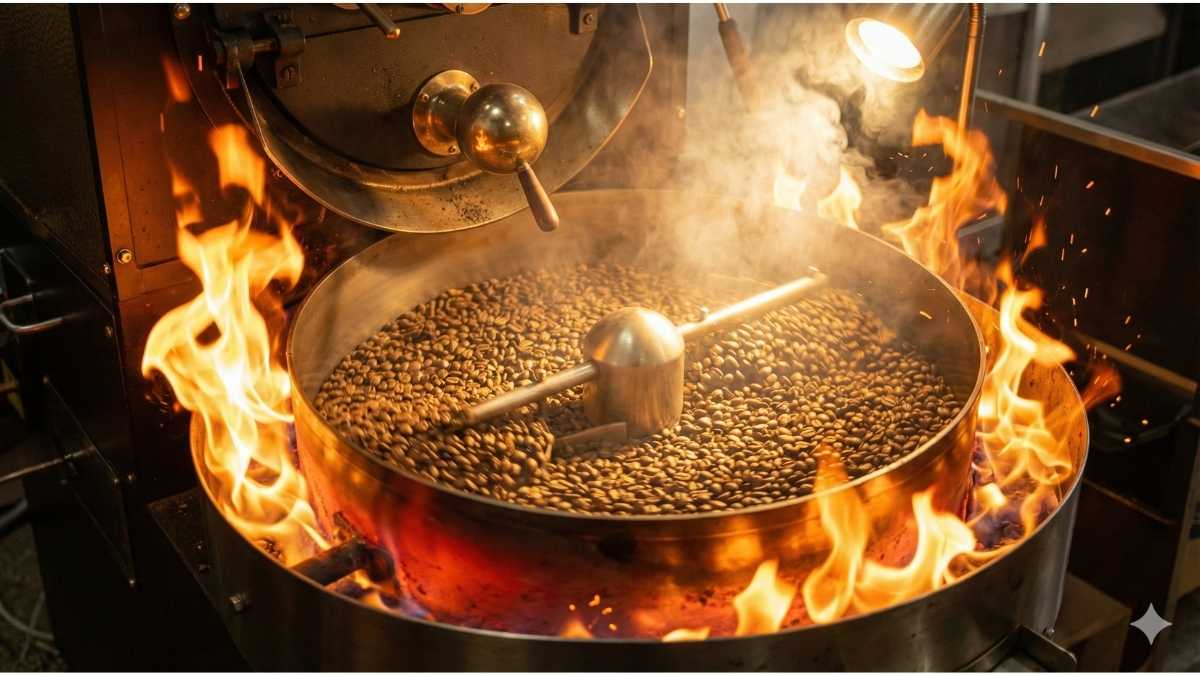 The ultimate mold-killer! 🔥 See how roasting your coffee destroys toxins and protects your brew. #coffeeroasting #roast #coffee
Organic Coffees That Publish Their Lab Results
I’ve already tracked down the organic brands that actually share their lab results so you can skip the guesswork. Some brands voluntarily adhere to strict European safety standards (3.0 µg/kg), which are far tougher than US guidelines:
1. Brand A (Purity Focus): Tests every batch for 40+ mycotoxins.
2. Brand B (High-Altitude Organic): Specialty grade, wet-processed beans from high-elevation volcanic soil.
3. Brand C (Dark Roast Specialist): Uses professional-grade roasting to maximize toxin reduction.
⚡ The Bottom Line on Mold in
Coffee
Nature is never 100% "pure," but your coffee doesn't have to be a source of stress. Stick to organic, washed, high-altitude beans with a darker roast—it’s the simplest way to quiet the mold anxiety and finally just enjoy the steam rising from your mug. 🌿☕
Before purchasing a coffee bag, you must ask:
- Does it have mold? Almost all green coffee has fungal spores, but only about 27% of those fungi actually produce toxins.
- Is Organic safer? Yes, because it avoids synthetic pesticides, and organic farmers use "Safety Filters" like high-altitude growing to keep mold at bay.
- The "Kill Step": Roasting destroys up to 96% of the most common coffee toxin (Ochratoxin A).
Common Questions (FAQ)
Does roasting kill mold in coffee?
Yes, the heat kills 100% of the live fungus. It also breaks down 69–96% of the toxic chemical byproducts (mycotoxins) left behind.
Is decaf coffee higher in mold?
Theoretically, yes, because it lacks antifungal caffeine. However, the decaffeination process (like Swiss Water) acts as a washing step that removes surface toxins.
Does "mold-free" coffee exist?
Scientifically, "zero" is impossible in agriculture. "Mold-free" usually means "Below the Limit of Detection" in a lab.
High-Authority Sources
- European Food Safety Authority (EFSA): Ochratoxin A in Food Safety Report
- National Institutes of Health (NIH): Comprehensive Analysis of Mycotoxins in Coffee

Meet Saqib
Saqib Ali Ateel is a PhD Scholar by training and a "student of the soil" by nature. He combines deep research, hands-on farming wisdom, and agricultural systems supervision to reveal what’s really on your plate. His mission is simple: to help your family navigate the food industry's complexity so you can eat cleaner, safer, and smarter.
- Home
- Clean Coffee Guide
- Best Organic Coffee Brands
- Organic Mold Free Coffee
- Does Organic Coffee Have Mold