Is Organic Coffee Better? The Muddy Truth About Chemicals
& Flavor (2026)
The smell of a fresh dark roast hitting the grinder is usually enough to wake you up. But lately, that morning ritual comes with a side of anxiety. You stare at the label and wonder: is organic coffee better for my body, or am I just paying extra for a fancy sticker?
Let's be real. You shouldn't have to brew a cup of worry with your beans.
As a farmer who has spent years studying the soil, and a scholar who reads the toxicology reports so you don't have to, I can tell you that the answer isn't black and white. It is a story of soil biology, chemical drift, and the fire of the roaster.
🧪 The Chemical Reality:
It’s Not a Force Field
We often think of the "Certified Organic" seal as a force field from Star Trek that deflects all toxins. The 2025 data paints a muddier picture.
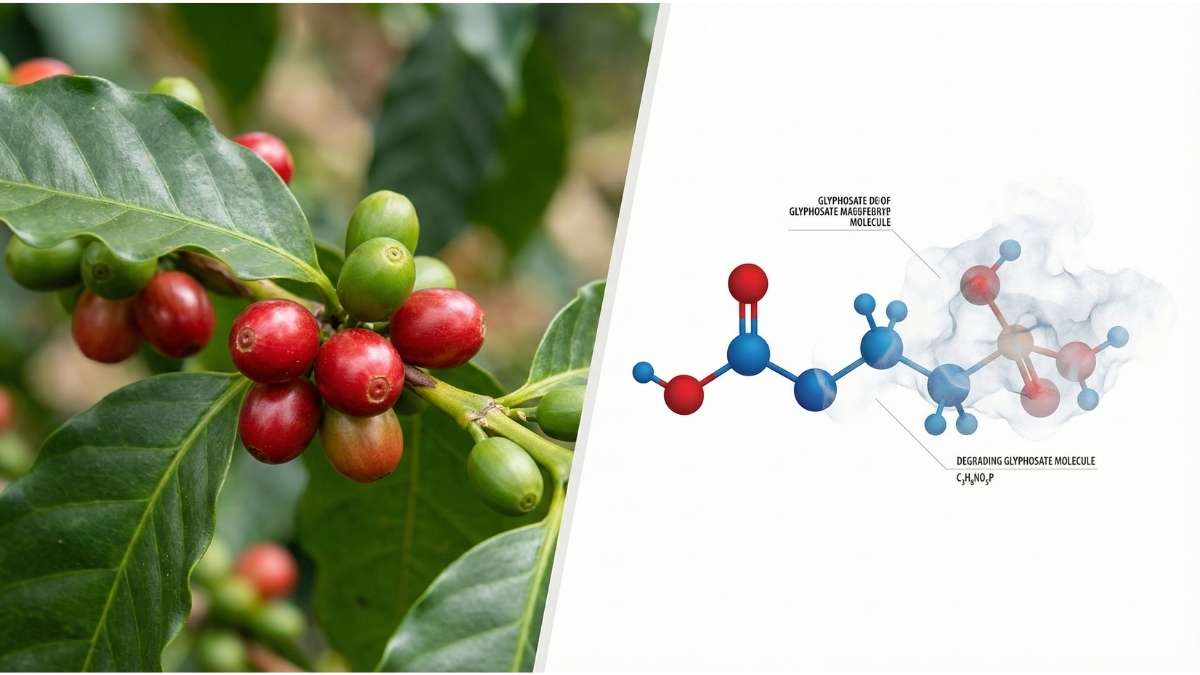
The Glyphosate Problem (The "Drift") A pivotal report by the Clean Label Project found something unsettling: the herbicide metabolite AMPA was found in 100% of organic samples tested. How? Drift. Your organic farm might be pristine, but if the neighbor sprays Roundup, the wind and rain don't respect property lines.
However, context is king. While traces exist in organic, conventional coffee is intentionally treated with systemic fungicides and insecticides.
✅ The Verdict: Organic isn't perfect, but it is the difference between accidental secondhand smoke and smoking the cigarette yourself.
- Deep Dive: Pesticides & Glyphosate in Coffee – What the Lab Tests Say
- How to Read Coffee Labels: Decoding "Certified Organic" vs. "Natural"
🛡️ The "Gym
Logic" of Nutrition
Why does organic coffee taste different? It comes down to stress.
In conventional farming, we pamper the plants with synthetic nitrogen fertilizers. They grow fast and lazy. In organic farming, the coffee plant has to fight. It fights off bugs and competes for nutrients.
To survive, the plant builds its own chemical defense system: Polyphenols. Think of these as the plant's muscles. When you drink that coffee, those "muscles" become antioxidants in your body. Research published in Food Chemistry confirms that organic beans possess a 27% higher polyphenol content compared to their conventional cousins.
Metaphor time: Conventional coffee is a bodybuilder on steroids (puffy, but weak). Organic coffee is a farmhand (lean, dense, and strong)
🔥 The Stomach Myth: It's
Not the Acid
"I can't drink coffee; the acid kills my stomach." I hear this every day. Here is the scientific truth: Coffee is less acidic than orange juice. The burning sensation usually comes from waxes on the bean surface (C5HT) or caffeine stimulation.
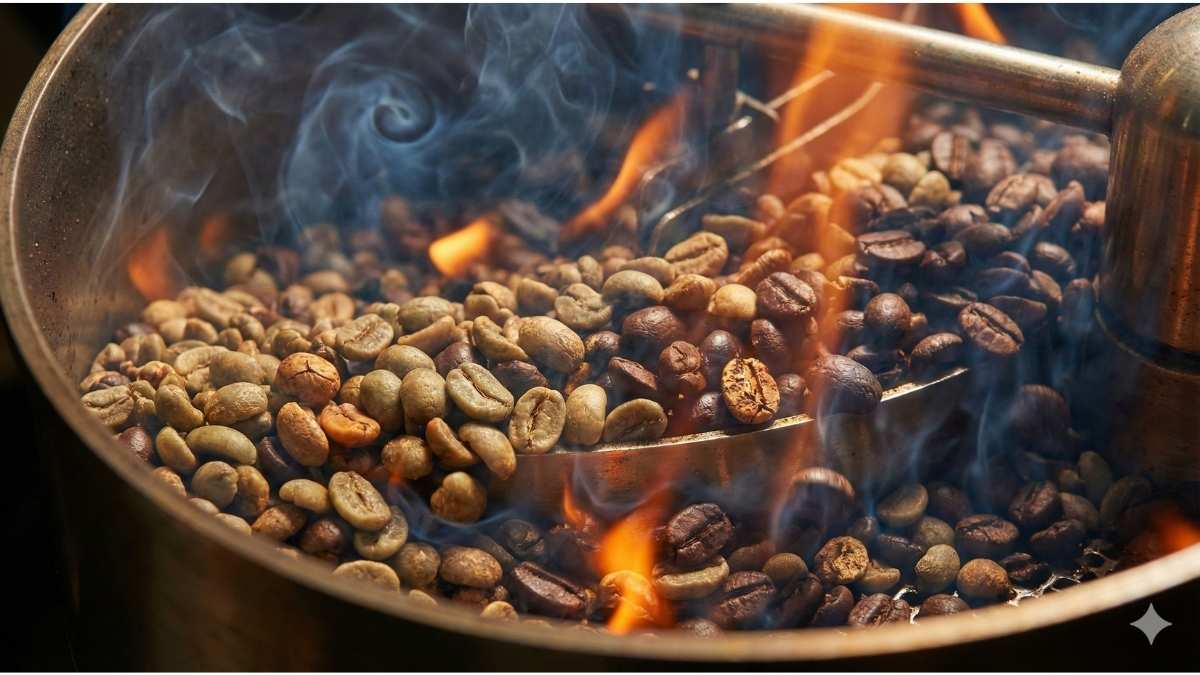
If you have a sensitive stomach, don't just look for "Organic." Look for Heat. Think of the roast as a deep clean for the bean. The heat strips away the waxy coating that often triggers heartburn and creates N-MP, a compound that can help settle acid production.
✅ The Verdict: If you have GERD, buy Organic Dark Roast. The heat creates a gentler beverage.
🌍 Real World Scenarios:
What If I Can’t Buy Perfect?
We don't all live in a world where $25 bags of single-origin beans are an option. Here is how to hack the system based on your situation.
Scenario A: "I’m on a tight budget and can only buy Conventional."
- The Fix: Buy Dark Roast (French or Italian). The high heat (240°C) destroys up to 96% of fungal toxins (mycotoxins) and degrades many pesticide residues. It acts as a practical safety filter that fits any budget.
Scenario B: "I use K-Cups or Pods for convenience."
- The Fix: Swap the plastic for stainless steel. The pods themselves are often the real source of chemical leaching, rather than the beans inside.
Scenario C: "I live in a humid area (Mold Anxiety)."
- The Fix: Avoid "Natural Process" coffees where the fruit dries on the bean (mold loves this). Stick to "Washed Process" beans, which are scrubbed clean before drying.
- Mold & Mycotoxins in Coffee: How to Avoid Them
🏭 The Environmental Cost

If you care about the ground beneath your feet, this is the dealbreaker. Conventional coffee relies on synthetic nitrogen, which releases Nitrous Oxide—a greenhouse gas 300 times more potent than CO2.
Organic, shade-grown systems are different. They are essentially forests. Data from the Smithsonian Migratory Bird Center shows these systems store up to 118 tonnes of carbon per hectare, while sun-grown monocultures store a measly 31 tonnes.
✅ The Verdict: Drinking shade-grown coffee is one of the most effective acts of climate activism you can do before 8:00 AM.
🏆 Brands That Put Their
Money Where Their Mouth Is
Based on the 2025/2026 data, here are three brands that align with the "PhD Farmer" checklist (Organic, Tested, Transparent).
FAQ: The Muddy Details
Q: Does roasting kill all the pesticides?
A: Not all, but it helps significantly. Roasting destroys thermal-sensitive chemicals and mycotoxins (mold), but heavy metals (like lead) survive the heat. This is why soil quality matters.
Q: Is "Bird Friendly" just marketing fluff?
A: No, it is actually the strictest certification. It guarantees the coffee is organic and grown under a dense forest canopy, which ensures the carbon-sequestering benefits we discussed.
Q: Can I just wash the beans?
A: No. Green coffee beans are porous sponges. If chemicals were sprayed during growth, they are inside the cellular structure of the bean. You cannot wash them out.

Meet Saqib
Saqib Ali Ateel is a PhD Scholar by training and a "student of the soil" by nature. He combines deep research, hands-on farming wisdom, and agricultural systems supervision to reveal what’s really on your plate. His mission is simple: to help your family navigate the food industry's complexity so you can eat cleaner, safer, and smarter.
References
- Clean Label Project (2025). Toxicological Analysis of Coffee Products.
- Journal of Food Chemistry (2024). Polyphenol Density in Organic vs. Conventional Agriculture.
- European Food Safety Authority (2023). Mycotoxin Reduction via Thermal Processing.
- Smithsonian Migratory Bird Center. Shade Coffee and Biodiversity Metrics.