Organic Mycotoxin Free Coffee: The Science of Mold, Acid
& Purity
The smell of the "first crack" in a coffee roaster is distinct—it’s the scent of chemistry happening in real-time. Standing next to that spinning drum, feeling the heat radiate at 400°F, you realize that farming is just the prologue; the roasting is where the safety is forged. But for you, standing in the grocery aisle, that heat feels far away.
You shouldn't have to brew a side of worry with your beans. You simply need to know: Is organic mycotoxin free coffee the real deal, or just a pricey label?
It’s hard to savor your morning ritual when your feed is buzzing with claims that "99% of coffee is moldy." But while the internet trades in panic, I rely on soil science—and the muddy truth is far less dramatic.
As a farmer with mud on my boots and a researcher with toxicology reports on my desk, I can tell you that the reality is complex, but manageable. You don't need to panic; you need the muddy truth about what actually survives the fire.
🛑 The Blunt Answer: Does "Certified Organic" Coffee Guarantee Purity?
Not automatically, but the risk is vastly overstated. While raw green coffee beans often contain fungal spores, industrial roasting acts as a powerful sterilization event, incinerating up to 96% of toxins. To ensure the absolute lowest risk, buy Certified Organic, Washed Process, and Dark Roast beans.
⚡ The "Buy It Now" Bottom Line
If you are in a rush and just want the safest cup, here is the cheat sheet:
- 🏆 Best for Maximum Purity: Choose Purity Coffee (Verified <0.1 ppb toxins).
- 🛡️ Best for Stomach Issues (GERD): Choose a Dark Roast (High in NMP, low in acid-pump triggers).
- 💰 Best Budget "Hack": Buy Kicking Horse (Washed Process/Organic) at the grocery store.
- 🔑 The Golden Rule: Always buy Whole Bean and grind fresh to prevent storage mold.
As an Amazon Associate, I earn from qualifying purchases.
⚡ The "Clean Coffee" Buyer’s Checklist
- ✅ Certified Organic: Ensures no synthetic pesticide residues.
- 🧼 "Washed" or "Wet Processed": Mechanically removes the mold’s food source (the fruit).
- 🏔️ High-Altitude (SHB): Colder mountain air naturally inhibits fungal growth.
- 🔥 Medium-Dark to Dark Roast: The heat does the heavy lifting, incinerating toxins.
- ⭐ Specialty Grade: Sorted to remove "defect" beans where mold actually hides.
The "Mold-Free" Myth vs. The Roaster's Fire
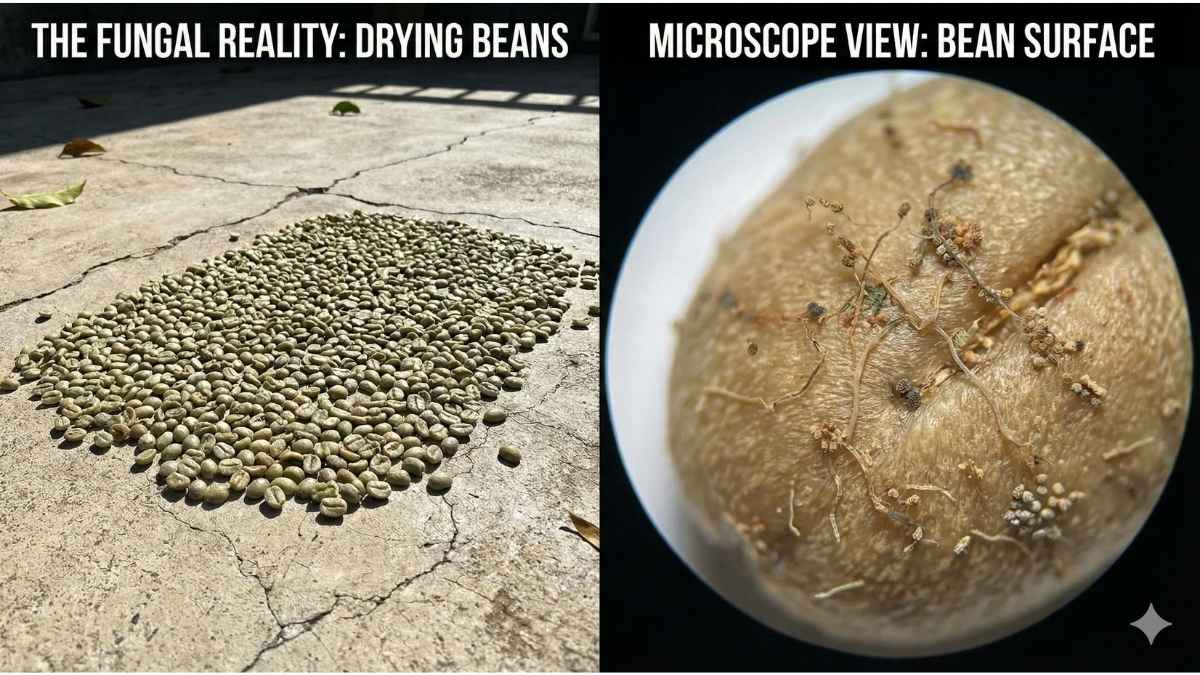
Here is the thing about fungi: they are everywhere. In the soil, on the wind, and yes, on crops. But there is a massive difference between a spore (the seed of the mold) and a mycotoxin (the poison it produces).
Marketing campaigns love to scare you with the statistic that "91.7% of coffee has mold". What they don't tell you is that study looked at raw, green beans. You aren't chewing on raw beans.
Can Roasting Kill Hidden Toxins?
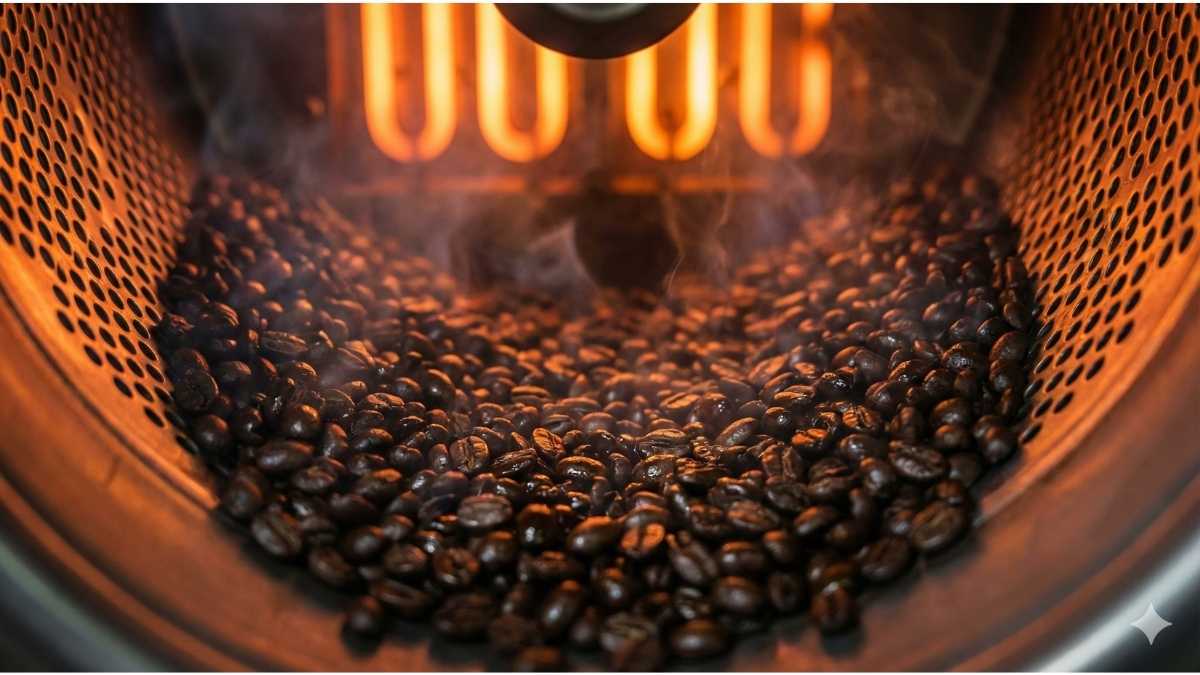
The roaster is not just an oven; it is a high-stakes negotiation between flavor and safety. When beans hit the drum, they face temperatures exceeding 200°C (392°F). This is the "Kill Step".
Scientific data confirms that this intense heat acts like a molecular sledgehammer, effectively shattering the chemical structure of the toxins. Studies show that roasting reduces Ochratoxin A (OTA) by 69% to 96%. The darker the roast, the deeper the clean.
✅ The Verdict: Don't pay extra for "Mold-Free" stickers; just pay for a darker roast. The fire does the work for free.
The Pesticide Controversy: Glyphosate & AMPA
If you buy organic, you expect it to be free of weedkillers. However, a recent report by the Clean Label Project sent shockwaves through the industry, claiming that 100% of organic coffees tested positive for AMPA, a breakdown product of glyphosate.
This sounds damning, but let’s look at what actually happens to those chemicals when they face the heat. A peer-reviewed study by Delatour et al. (2024) utilized isotopic tracing and proved two critical facts:
1. Roasting destroys over 73% of glyphosate residues.
2. Roasting does not create AMPA.
This suggests the AMPA found in consumer reports is likely due to environmental drift—wind blowing dust from conventional farms—rather than organic farmers cheating.
✅ The Verdict: Organic certification is still your best shield against synthetic pesticides, even if our shared environment isn't perfect.
The "Low Acid" Lie: It’s Not About pH
If coffee gives you heartburn, you’ve probably hunted for "Low Acid" beans. Here is the biochemical plot twist: It is not the acid burning you; it is the irritants.
Coffee has a pH similar to a banana. It is not chemically acidic enough to burn your stomach lining. The burn comes from waxy compounds called C5HTs and Chlorogenic Acids that trick your stomach into over-producing its own acid.
The Hero Compound: N-methylpyridinium (NMP)
Nature provides an antidote, but you have to roast it into existence. N-methylpyridinium (NMP) is a compound created only during roasting. It actively blocks your stomach cells from pumping acid.
- Light Roasts: High in irritants, low in the protective NMP.
- Dark Roasts: Irritants are burned off, and protective NMP levels are high (over 60 mg/L).
- Steam-Treated "Low Acid" Coffee: Removes the irritants, but also fails to generate the protective NMP.
✅ The Verdict: For a sensitive stomach, a standard Dark Roast is scientifically superior to expensive "Low Acid" treatments.
Brands That Put Their Money Where Their Mouth Is
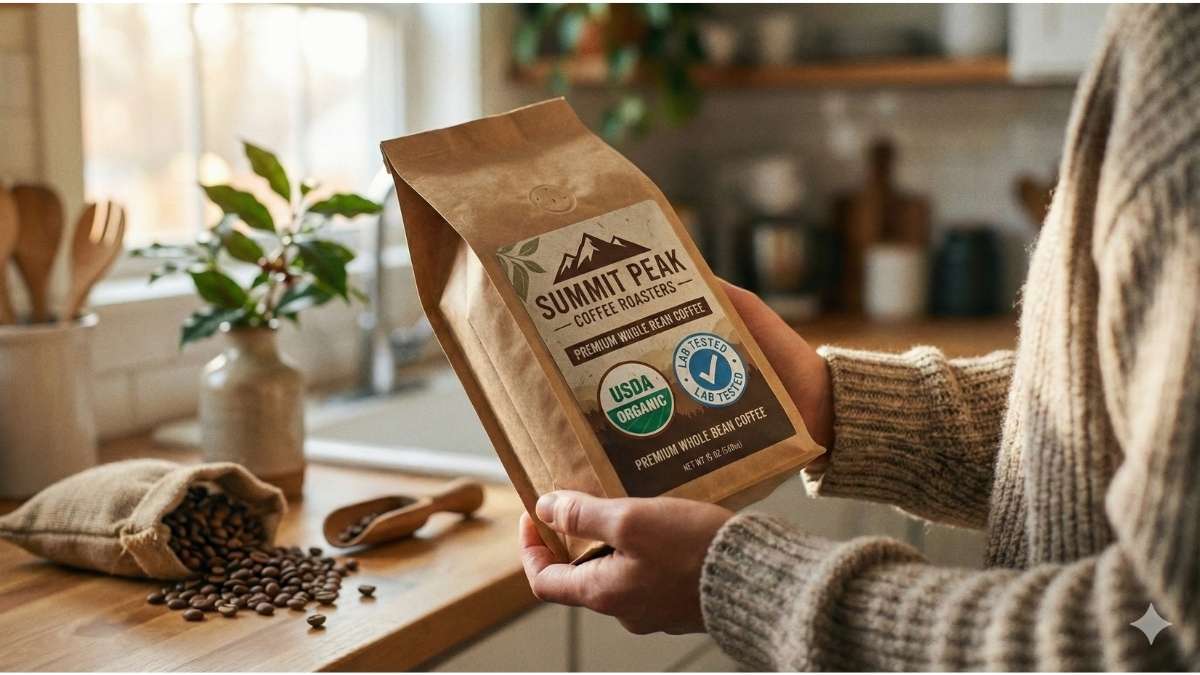
We analyzed leading brands against our "Safety Checklist" to see who is actually testing their beans versus who is just using good marketing.
🛒 Check Current Prices & Availability:
As an Amazon Associate, I earn from qualifying purchases.
Practical Guide: Storage & Brewing
You bought the clean beans. Now, don't ruin them on your counter.
Whole Bean vs. Ground
Once you grind coffee, you increase its surface area exponentially. This invites oxygen and moisture. While roasted coffee is too dry (water activity of 0.2–0.3) for mold to grow, ground coffee can absorb kitchen humidity like a sponge.
The Golden Rule: Keep them whole. Store them in an opaque, air-tight canister. Grind seconds before you brew.
✅ The Verdict: The "sterile" state of the bean ends the moment you crack it open. Keep it sealed.
Frequently Asked Questions
Can I see mold on my coffee beans?
Almost never on roasted beans. Mycotoxins are invisible chemical residues. If you see fuzzy white mold, that bean is wet and should be discarded immediately.
Does decaf have less mold?
Often, yes. The Swiss Water Process involves soaking and washing the beans, which can physically rinse away fungal spores before roasting. However, decaf beans lack caffeine (a natural fungicide), so storage is critical.
Is single-origin safer?
Not necessarily. "Single-origin" is a flavor term, not a safety term. Supply chain hygiene and storage matter far more than the country of origin.
What To Do Next?
You have the science, now build the ritual.
- Step 1: Browse our Top Rated Organic Coffee Reviews to find a specific roast that matches your taste.
- Step 2: Learn the right way to store your beans in our Coffee Beans Storage Guide.
- Step 3: Check out our Sourdough & Gut Health section to pair your clean coffee with a stomach-friendly breakfast.

Meet Saqib
Saqib Ali Ateel is a PhD Scholar by training and a "student of the soil" by nature. He combines deep research, hands-on farming wisdom, and agricultural systems supervision to reveal what’s really on your plate. His mission is simple: to help your family navigate the food industry's complexity so you can eat cleaner, safer, and smarter.