Organic Baking with Stevia: Mastering Structural
Substitutions & Flavor Masking
You followed the recipe perfectly, but mastering organic baking with stevia requires more than just swapping ingredients; it often feels like a high-stakes chemistry experiment. You bought the expensive supplies and watched the oven like a hawk, yet your first attempt at organic baking with stevia likely ended in a flat, bitter disappointment. It is a moment of pure frustration that almost every health-conscious baker faces. I know that feeling of staring at a "healthy" disaster and wondering if the organic lifestyle is worth the culinary sacrifice.
But here is the good news: It wasn’t a cooking error; it was a chemistry problem. Sugar does so much more than sweeten—it provides structure, moisture, and browning. When you remove it, you aren't just cutting calories; you are removing the architectural backbone of your baked goods. As a PhD student studying agricultural science, and someone who has spent years growing stevia in my own family garden, I’ve learned that fixing this requires a shift in mindset. We don’t just swap ingredients; we engineer solutions. Let's turn that frustration into mastery. 🧠
Your Essential Guide to Organic Baking Success
- 🧪 Architectural Engineering: Learn how to replace sugar's physical mass using organic bulking agents like erythritol and inulin to provide the moisture and structure stevia lacks.
- 👅 Flavor Masking Secrets: Master the use of "antagonists" like Pink Himalayan salt and aromatic spices to distract taste receptors and neutralize bitter or metallic aftertastes.
- 📊 Precision Conversion Protocols: Take the guesswork out of your recipes with exact ratios for pure powders and liquid drops, ensuring consistent sweetness in every batch.
- 🍞 Category-Specific Fixes: Unlock professional secrets for crispy cookies and airy cakes, including manual dough flattening and using egg white "scaffolding" for the perfect rise.
- 🛠️ Forensic Troubleshooting: Diagnose exactly why a bake failed—from gummy textures to pale crusts—and apply immediate organic solutions to master the chemistry of your kitchen.
The Chemistry of Organic Sweetness: Why Substitution Is
Structural
To understand organic baking with stevia, we have to look at the molecule itself. Sucrose (sugar) is hygroscopic—it loves water. It grabs onto moisture in your batter and holds it there, keeping cakes tender. It also caramelizes at high heat, giving you that golden-brown crust.
Stevia, derived from the Stevia rebaudiana plant, is composed of steviol glycosides. These compounds are intensely sweet—up to 400 times sweeter than sugar—but they offer zero bulk. If a recipe calls for a cup of sugar (which is a huge amount of physical mass), replacing it with a teaspoon of stevia powder leaves a massive "hole" in your mixing bowl.
This is where "Chemical Mastery" comes in. We need to fill that void with organic bulking agents that mimic the physical properties of sugar without spiking your blood sugar or compromising your commitment to non-GMO ingredients.
The "Clean" Bulking Pharmacopeia
Many commercial "baking blends" use maltodextrin, a cheap filler often derived from GMO corn. We avoid those. Here are the organic structural substitutes I rely on:
1. Organic Erythritol: A sugar alcohol found in fruits. It provides the crystalline "crunch" needed for cookies. It is about 70% as sweet as sugar and heat stable.
2. Organic Inulin: A soluble fiber usually from chicory root or agave. It adds viscosity and moisture, preventing your cakes from drying out.
3. Fruit Purees (Apple Sauce/Banana): These provide pectin (a binder) and moisture, though they will make the final product denser.
What Does Stevia Taste Like? (And How to Fix It)
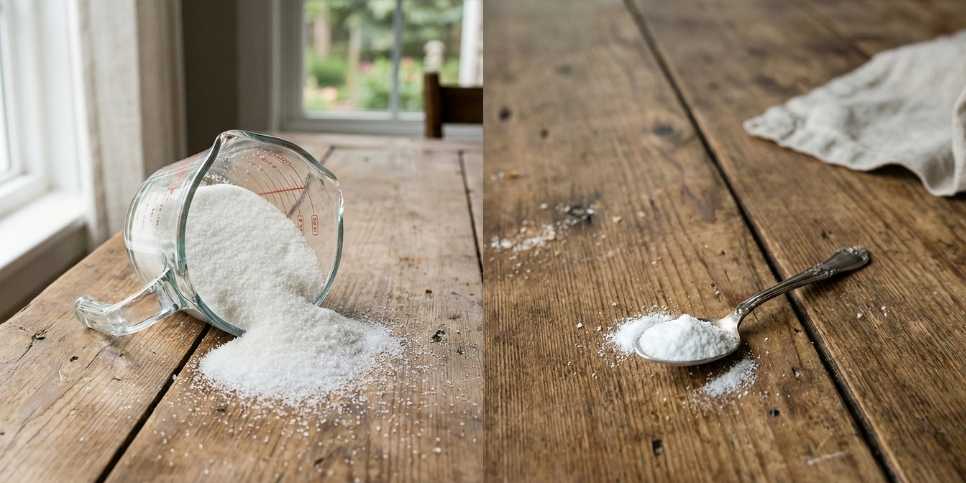
This is the elephant in the room. If you taste raw stevia leaf, you’ll notice a delay in sweetness followed by a lingering taste often described as licorice-like, metallic, or slightly bitter.
What does stevia taste like to your taste buds? It depends on your genetics, but scientifically, this happens because steviol glycosides activate not just the sweet receptors on your tongue, but also the bitter receptors (hTAS2R family).
The Science of Flavor Masking
To achieve world-class flavor, we use "antagonists" to distract these receptors.
- The Salt Trick: Sodium ions suppress bitter signals to the brain. Increasing the salt in your organic recipe by just a pinch (use Pink Himalayan salt for better mineral content) can mask the metallic note.
- Acid Balancing: Acids cut through the lingering sweetness. Adding a splash of organic lemon juice, apple cider vinegar, or using buttermilk activates baking soda and brightens the flavor profile.
- Aromatic Distraction: Strong spices like cinnamon, nutmeg, and vanilla occupy the brain's flavor processing center, making the stevia aftertaste less noticeable. This is why a cinnamon swirl bread often tastes better with stevia than a plain vanilla sponge.
The Master Stevia Conversion Chart 📉
One of the biggest sources of confusion is that not all stevia is created equal. A "teaspoon" of one brand might equal a "cup" of sugar, while another requires a tablespoon.
Below are conversion protocols based on the most common organic forms. Always check your specific package, but use this as your baseline guide.
"Measure-for-Measure" Organic Blends
If you want to skip the math, you can make your own organic baking blend. This mimics the bulk of sugar.
- The Formula: Mix 1 cup of Organic Erythritol with 1/2 teaspoon of Pure Stevia Powder.
- Usage: Use this blend 1:1, exactly as you would sugar.
Category-Specific Protocols: The Architecture of Baking 🏗️
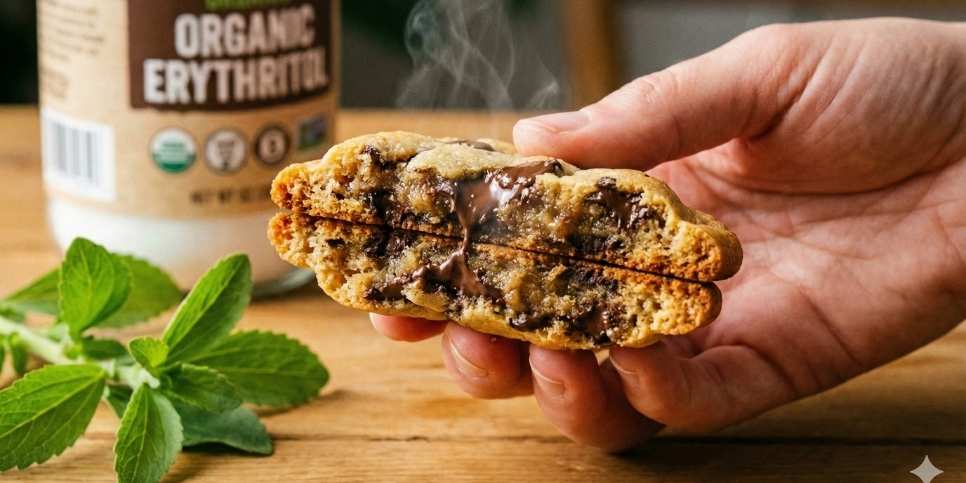 The Secret to the Crunch: Using an erythritol-based blend ensures your organic stevia cookies spread and crisp perfectly
🍪 Cookies: The Crusade for Crispness
The Failure: Cookies don't spread; they come out as puffy, cakey mounds. The Fix: Sugar melts and spreads; stevia does not.
- Manual Press: You must flatten the dough balls with a fork or the bottom of a glass before baking. They will stay in whatever shape you put them in the oven.
- The Crunch Factor: You must use an erythritol-based blend here. Liquid stevia will result in soft, sponge-like cookies because it lacks the crystalline structure to crisp up.
🍰 Cakes: Engineering the Lift
The Failure: The cake is dense, rubbery, and doesn't rise. The Fix: Sugar creates air pockets when creamed with butter.
- Egg White Scaffolding: Separate your eggs. Whip the whites to stiff peaks and gently fold them into the batter at the very end. This manually adds the air bubbles that the sugar usually provides.
- Acidity: Use yogurt or buttermilk to tenderize the gluten strands, keeping the crumb soft.
🍞 Yeast Breads: The Fermentation Void
The Failure: The dough sits there like a rock and refuses to rise. The Fix: Yeast is a living organism that eats sugar to create carbon dioxide. It cannot eat stevia.
- Feed the Yeast: You must use a tiny amount of real sugar (honey or maple syrup work best organically). Add 1 teaspoon of honey to the warm water and yeast mixture. The yeast will consume this sugar during fermentation, leaving virtually none in the final loaf, but it provides the fuel needed for the rise.
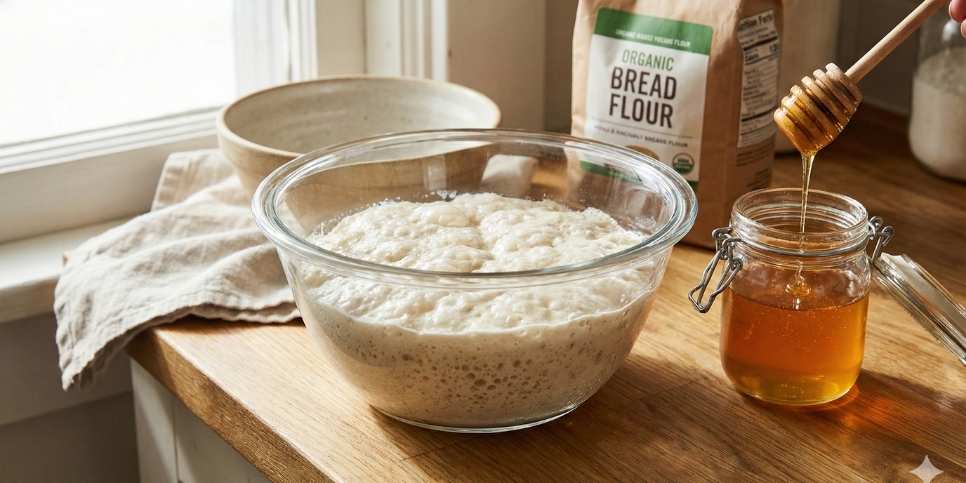 Fueling the Rise: Yeast cannot eat stevia, so adding a touch of organic honey is vital for fermentation and lift.
Quick
Analysis: Why Did My Bake Fail? 🕵️♂️
Let’s put on our lab coats. If you’ve had a disaster recently, look at this table to diagnose the pathology of the failure.
Conclusion: Lead with Patience, Bake with Science
Transitioning to organic baking with stevia is not just about changing ingredients; it's about learning a new culinary language. It is perfectly normal to have a few flops along the way—I certainly did when I first started experimenting with the harvest from our farm.
But once you understand the variables—bulking, temperature, and flavor masking—you unlock the ability to create treats that nourish your body without spiking your blood sugar. You are no longer at the mercy of a recipe; you are the master of the chemistry. So, grab that whisk, preheat the oven (remember, 25°F lower than usual!), and bake with confidence. You’ve got this! 💪

Meet Saqib
Saqib Ali Ateel is a PhD Scholar by training and a "student of the soil" by nature. He combines deep research, hands-on farming wisdom, and agricultural systems supervision to reveal what’s really on your plate. His mission is simple: to help your family navigate the food industry's complexity so you can eat cleaner, safer, and smarter.
- Home
- Stevia Dangers
- Is Stevia Safe During Pregnancy
- Organic Baking With Stevia