The Purity Protocol: Is Stevia Safe During Pregnancy? Why Organic Is the Only Choice for Your Baby and Pets
You are standing in the grocery store aisle, staring at a box of "natural" sweetener. You turn it over, scanning the ingredients list with the eyes of a detective. You aren’t just shopping for yourself anymore; you are shopping for a developing life, a growing toddler, or a beloved four-legged family member. The question burning in your mind isn't just about calories. It’s about safety.
You’ve likely heard conflicting whispers online. Some sources shout that stevia is a miracle plant; others whisper about fertility issues or "chemical processing." As a PhD student in agriculture who also spends my mornings tending to an organic garden, I understand this tension deeply. We want the sweetness of life without the toxic baggage.
The generic answer you will find on most websites is a simple "yes." But you are here because you suspect the truth is more nuanced. And you are right. When we ask, is stevia safe during pregnancy?, the answer depends entirely on how that stevia was pulled from the leaf and what invisible residues might be hitching a ride.
Welcome to The Purity Protocol. This is not just about avoiding sugar; it’s about understanding the chemistry of extraction and choosing the only form of stevia that respects the biological vulnerability of pregnancy, childhood, and our pets: Organic, Water-Extracted Stevia.
The Purity Protocol: Navigating Stevia Safety for Your Growing Family
- 🌿 The Extraction Essential: Discover why the method used to pull sweetness from the leaf is the single most important factor in protecting a developing fetus from neurotoxic solvent residues like hexane and methanol.
- ⚠️ The Whole-Leaf Warning: Learn why "natural" green stevia powder is actually discouraged during pregnancy and how to identify the specific purified Reb A extracts that meet safety standards.
- 🧒 Pediatric Dose Reality: Understand the metabolic differences in children and how to manage their Acceptable Daily Intake (ADI) to ensure their developing gut microbiome remains robust and healthy.
- 🐾 Lifesaving Pet Audit: Master the "forensic mindset" needed to spot hidden Xylitol or Birch Sugar in stevia blends that can cause catastrophic liver failure in your beloved four-legged family members.
The Truth:
"Natural" vs. "Chemically Stripped."
Let’s put on our lab coats for a moment. Stevia starts as a leaf, Stevia rebaudiana. If you were to pluck a leaf from my garden and chew it, it would taste sweet but also bitter and grassy. To turn that leaf into the white powder you put in your coffee, it has to undergo extraction.
This is where the "Purity Protocol" draws a hard line in the sand.
The Conventional Method: The Solvent Trap
In conventional industrial farming, efficiency is king. To extract the sweet compounds (steviol glycosides) quickly, manufacturers often use harsh chemical solvents. The most common are methanol (wood alcohol), ethanol, and sometimes even hexane or chloroform.
While the final product is purified, trace residues can remain. For a healthy adult male, these micro-traces might be negligible. But pregnancy changes the rules. The developing fetus lacks the fully mature liver enzymes required to detoxify certain chemicals efficiently. By choosing conventional stevia, you are introducing a product that has been bathed in industrial solvents into a delicate developmental ecosystem.
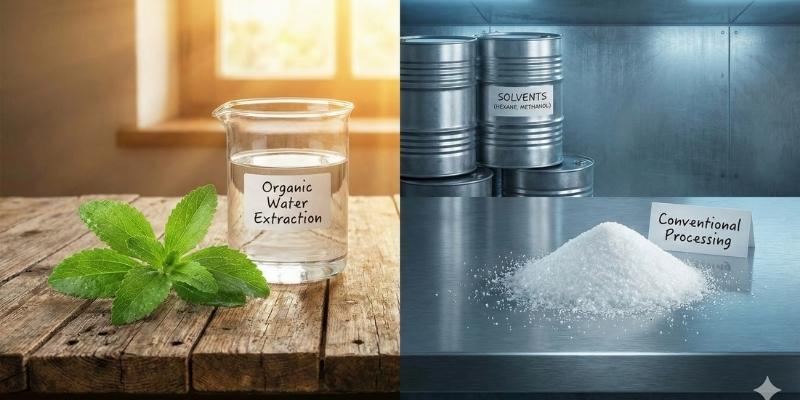 Water extraction (left) preserves purity, while conventional methods (right) often use harsh chemical solvents like hexane or methanol.
The Organic Way: Water Extraction 💧
Organic certification is not just a marketing sticker; it is a manufacturing restriction. The USDA National Organic Program (NOP) prohibits the use of volatile synthetic solvents like hexane or methanol.
Instead, organic stevia is extracted using hot water and filtration membranes. Think of it like brewing a very precise, high-tech tea. The sweet molecules are washed out with water, and then filtered to remove the bitter plant matter.
- The Result: A clean sweetener with zero risk of hydrocarbon solvent residues.
- The Benefit: Peace of mind. You aren't forcing your body to process "unknowns" while it’s busy building a baby.
🤰 Is Stevia Safe During
Pregnancy? The Biological Deep Dive
This is the primary question I hear from expectant mothers: is stevia safe during pregnancy?
The short answer, supported by the FDA and major health organizations, is yes—provided it is high-purity steviol glycosides. These compounds have been granted GRAS (Generally Recognized As Safe) status. They do not cross the placenta in significant amounts, and they do not spike blood sugar, which is a massive benefit for managing Gestational Diabetes.
However, from an academic perspective, safety is a spectrum.
The "Total Body Burden" Concept
During my research, I often look at the concept of "Total Body Burden." This refers to the cumulative load of chemicals a person is exposed to. Pregnancy is a time of heightened sensitivity. Even if a pesticide residue on a non-organic stevia leaf is "within legal limits," it adds to the total burden your body must process.
Conventional stevia crops are sprayed with synthetic fungicides and insecticides to control pests like Septoria. Research has linked prenatal pesticide exposure to neurodevelopmental delays and lower birth weights. Why take the risk? By switching to organic stevia, you are effectively closing the door on one more pathway for agricultural toxins to enter your system.
The "Crude Extract" Warning ⚠️
You might think, "I'll just use the raw, green, whole-leaf powder. That's the most natural, right?"
Stop...
In this specific instance, "natural" is not safer. The FDA has not approved whole-leaf stevia or crude extracts for use as sweeteners. Early toxicological studies raised concerns that compounds in the crude leaf (impurities that are removed in the extraction process) could impact reproductive health and cardiovascular function.
The Purity Protocol Rule #1: During pregnancy, avoid "whole leaf" or "crude" stevia. Stick to Organic Purified Stevia Extract (often labeled as Reb A). You want the isolated sweet molecule, not the medicinal baggage of the raw herb.
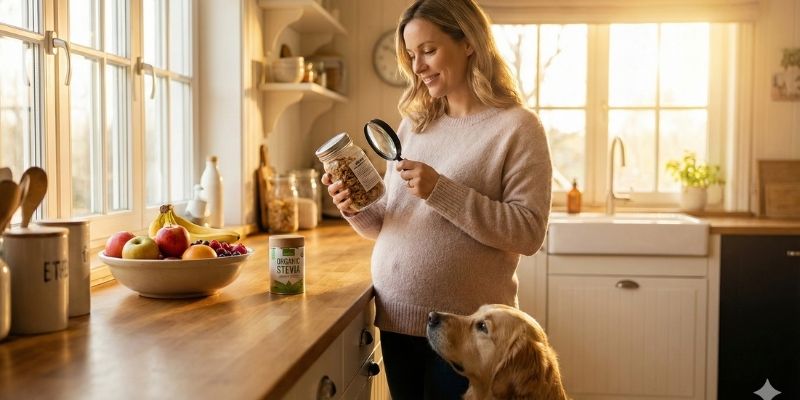 Ensuring your sweetener is USDA Certified Organic protects developing life from pesticide residues and toxic "bulking agents".
👶 The Pediatric
Perspective: Protecting Little Tummies
As parents, we are terrified of sugar. We know it feeds bad bacteria and rots teeth. But we are also skeptical of chemicals. Where does stevia fit for the kids?
The "Dosage" Reality Check
Children are not just small adults; they are metabolically distinct. Because of their lower body weight, they reach the Acceptable Daily Intake (ADI) of any substance much faster than we do. The ADI for stevia is 4 mg per kilogram of body weight.
A 40-pound child has a much lower "ceiling" for intake than you do. While it is difficult to exceed this limit with stevia because it is so incredibly sweet (approximately 200x sweeter than sugar), the risk rises when kids consume multiple "sugar-free" products a day—yogurts, drinks, and snacks.
The Gut Microbiome: A Garden in Progress 🌱
Think of your child's gut like a newly planted garden. The soil is rich, but the plants (bacteria) are still establishing their roots.
Emerging research suggests that while stevia is far better than artificial sweeteners like sucralose (which can decimate good gut bacteria), it is not biologically inert. Some studies indicate that high doses of non-nutritive sweeteners might alter the communication between gut bacteria.
For a child, we want to encourage a robust microbiome.
- My Recommendation: Use organic stevia as a tool, not a crutch. Use it to sweeten a homemade smoothie full of fiber and protein, or to replace sugar in oatmeal. Do not use it to justify giving your child unlimited processed "diet" foods. The goal is to train their palate to enjoy natural flavors, not just to replace one intense sweetness with another.
🐕 The Veterinary Point of View:
Can Dogs Eat Stevia?
If you are like me, your pet is your "family member." You share your home, your life, and sometimes your snacks with them. This leads to the critical search: can dogs eat stevia?
The Mechanism of Action: Stevia vs. Xylitol
To understand safety here, we have to look at the cellular level.
Xylitol (Birch Sugar): The Assassin. When a dog eats Xylitol, their body mistakes it for real sugar. Their pancreas releases a massive, catastrophic surge of insulin. Because Xylitol isn't sugar, there is no fuel for that insulin to process. The dog's blood sugar crashes (hypoglycemia) within minutes, leading to seizures and potentially fatal liver failure.
Stevia: The Innocent Bystander. Steviol glycosides do not trigger this insulin release in canines. If your dog gets into a bag of pure, organic stevia, they will not suffer from hypoglycemia. Stevia is non-toxic to dogs and cats.
The Hidden Danger: The "Blend" ☠️
Here is where the forensic mindset saves lives. Very few products on the shelf are 100% pure stevia because it is difficult to measure out. Manufacturers mix it with "bulking agents" to make it pour like sugar.
If that bulking agent is Erythritol, your dog will likely just have some gas or diarrhea. If that bulking agent is Xylitol, it could be lethal.
The Purity Protocol for Pets:
1. Never trust the front of the package. "Natural Sweetener" means nothing to a dog's physiology.
2. Always turn the package over. If you see the word "Xylitol" or "Birch Sugar," that product is banned from a dog-owning house.
3. Stick to Organic: Just like with humans, we want to avoid feeding our pets pesticide residues.
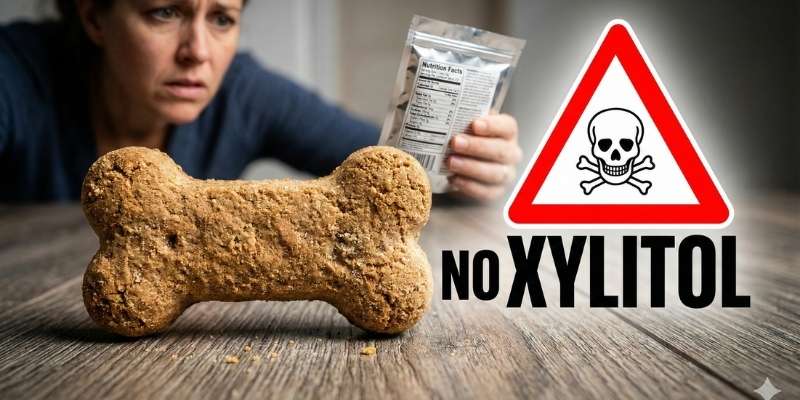 While pure stevia is non-toxic to dogs, many blends contain Xylitol (birch sugar), which can cause fatal liver failure.
🧠 Managing the Fear: An
Allergic Reaction to Stevia?
You may have been searching for "allergic reaction to stevia" after noticing a rash or feeling unwell after eating it.
Stevia belongs to the Asteraceae family.
If this sounds like Latin to you, think of its cousins: Ragweed, Chrysanthemums, and Marigolds.
If you suffer from severe seasonal allergies (hay fever) triggered by ragweed, there is a theoretical risk of cross-reactivity. However, highly purified organic stevia extracts contain almost none of the plant proteins that typically trigger these allergies. The refining process removes the pollen and plant matter.
If you are using whole leaf stevia (the green powder), the risk of an allergic reaction is higher because the plant proteins are still present. This is another reason why, for the "Vigilant Guardian," purified organic extract is the superior choice.
🚜 From the Farm to Your
Table: Why I Choose Organic
As a student of agriculture, I’ve seen what goes into conventional farming. I’ve seen the tanks of fungicides. I’ve read the safety data sheets for the solvents used in processing facilities.
When we choose Organic Stevia, we are voting for a system that forbids these inputs. We are choosing a water-based extraction that respects the chemistry of the plant and the biology of our bodies.
For the pregnant mother, it means one less worry on the list. For the growing child, it means sweetness without synthetic solvent residues. For the pet owner, it means a safe treat without the risk of hidden toxins (provided we check for Xylitol!).
Summary of Recommendations
- Pregnant? Yes, is stevia safe during pregnancy—but only if it is USDA Certified Organic and purified (Reb A). Avoid whole leaf products.
- Feeding Kids? Moderate their intake to keep them well below the ADI. Use it to enhance nutrient-dense foods, not to replace water with sweetened drinks.
- Treating Pets? Stevia is safe; Xylitol is deadly. Read the label every single time.
By adhering to this Purity Protocol, you transform a simple dietary choice into an act of protection. You are not just buying a sweetener; you are buying safety, science, and peace of mind.
🔗 Further Reading from
Trusted Sources
- FDA on Steviol Glycosides: For a deep dive into the regulatory status and GRAS designation of high-purity steviol glycosides.
- American Pregnancy Association: A reassuring look at which sweeteners are considered safe for expectant mothers.
- ASPCA Animal Poison Control: Verified data on the toxicity of Xylitol versus the safety of Stevia for pets.

Meet Saqib
Saqib Ali Ateel is a PhD Scholar by training and a "student of the soil" by nature. He combines deep research, hands-on farming wisdom, and agricultural systems supervision to reveal what’s really on your plate. His mission is simple: to help your family navigate the food industry's complexity so you can eat cleaner, safer, and smarter.
- Home
- Stevia Dangers
- Is Stevia Safe During Pregnancy