Pesticides in Strawberries: Real Risks, New Science &
How to Wash Them
The truth about pesticides in strawberries often gets lost between scary headlines and dense scientific jargon. You simply want to feed your family healthy food, not potential toxins. Yet, conflicting reports leave many consumers unsure if they should buy organic, wash rigorously, or avoid these berries altogether.
Who is telling the truth? 🤷♂️
As a researcher and a farmer, I can tell you the answer isn't black and white. While contamination is frequent, acute toxicity is generally low—unless we look at emerging research on gut health and "cocktail effects."
I’ve dug into the 2024-2025 data so you don't have to. Let’s uncover when organic is worth the splurge, the science of soaking your berries, and the real risks hiding in your carton.
🍓 Actionable Safety Tips & Takeaways
- 📉 Frequency ≠ Toxicity: While 95% of strawberries have residues, 99% are below safety limits. The main chemicals are fungicides, not heavy neurotoxins.
- 🧪 The Real Risk: Acute poisoning is rare. The science points to long-term gut health issues from the "cocktail effect" of mixing chemicals.
- 🥣 The Best Wash Method: Skip the vinegar. A 10-minute soak in water + baking soda removes up to 90% of surface pesticides.
- 🤰 When to Buy Organic: Prioritize organic for pregnant women, toddlers, and daily eaters. Frozen conventional berries are a safe, budget-friendly alternative.
The Dirty Dozen: Are Pesticides in Strawberries Toxic?
The confusion comes from a simple mismatch. Headlines scream about presence ("We found it!"), while science measures potency ("Is the dose high enough to matter?").
Frequency vs. Toxicity (The Critical Distinction)
Organizations like the EWG often rank pesticides in strawberries as the "worst" offenders. This is because they have the highest number of different residues per sample.
However, a strawberry with 5 non-toxic residues ranks "worse" on these lists than a pepper with 1 highly toxic residue. This is a flaw in the ranking system that can mislead you. 📉
- The Hard Data: According to the USDA Pesticide Data Program (PDP) 2024, while >95% of strawberry samples contained pesticide residues, 99% of those levels were below the EPA's Maximum Residue Limit (MRL).
- Scientific Nuance: We must look at the Hazard Quotient (HQ). Surprisingly, strawberries often have a lower HQ than crops like spinach or kale, despite having a higher "count" of detected chemicals.
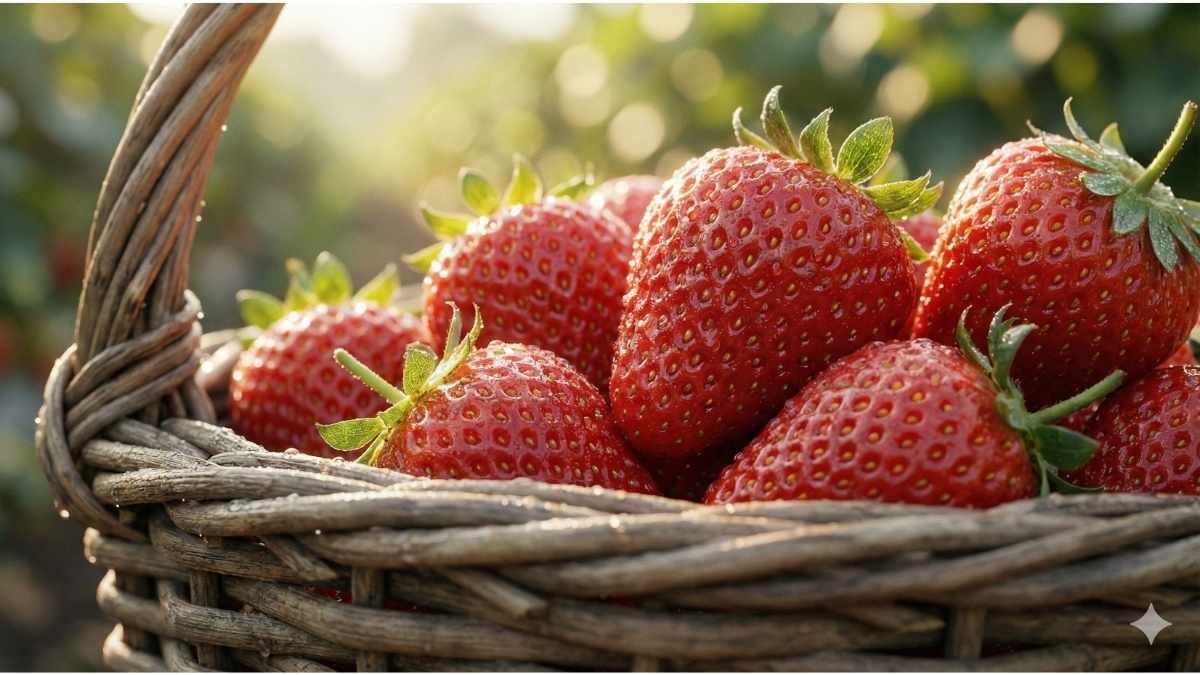
What Chemicals Are Actually On Your Fruit?
From a farmer's perspective, strawberries are incredibly fragile. They grow close to the soil. This makes them prone to mold and rot. 🍄
- The Reality: Most residues found are fungicides (used to prevent rotting during transport), not neurotoxic insecticides.
- Common Detections: Two of the most frequent finds are Captan and Fludioxonil. While less toxic than older organophosphates, they are still synthetic compounds designed to kill fungal cells.
In Plain English:
Just because a residue is present doesn't mean it is poisonous. Think of it like detecting a speck of dust versus a pile of dirt. Most residues found on strawberries are mild fungicides used to stop mold, not heavy-duty bug killers.
The New Science (2023-2025): Where the Risks Are Real
We cannot simply dismiss the "Dirty Dozen" as fear-mongering. While acute poisoning is rare, new studies suggest we should be looking at how these chemicals interact inside us. 🧪
The "Cocktail Effect" (Synergy)
Regulators typically test chemicals one by one. But when you eat a strawberry, you might be eating three or four different residues at once.
- The Concern: This is known as the "Cocktail Effect."
- The Study: Hernández et al. (2023) found that mixtures of 5 common strawberry pesticides—even when each was at a "safe" level—showed cytotoxicity (cell damage) in human cell models. The mixture was more potent than the individual parts.
Strawberries and Your Gut Microbiome
A common question we hear is, "Is this destroying my gut?" The science is beginning to say "possibly." 🦠
- The Study: Li et al. (2024) utilized animal models to show that mixtures of the fungicides Boscalid and Pyraclostrobin can induce gut dysbiosis (imbalance) and mild liver inflammation.
- Scientific Nuance: The risk isn't that you will get sick immediately after eating a berry. The risk is a subtle, long-term disruption of your gut flora, which controls your immunity and metabolism.
You won't get sick immediately from eating a bowl of conventional berries. The real risk is subtle and long-term. Eating a "cocktail" of small chemical amounts over many years might slowly irritate your gut health.
Does Origin Matter? (USA vs. EU vs. Imports)
In farming, distance equals chemistry. The further a berry has to travel, the more help it needs to arrive looking fresh. ✈️
Understanding the Labels
- The Data: EU regulations are generally stricter on neonicotinoids (bee-killing pesticides) than US regulations.
- The Risk: Imported strawberries, often sold during winter months, tend to have higher violation rates.
- The Study: El-Saeid et al. (2024) found an 18.5% MRL violation rate in specific import batches. This is significantly higher than domestic crops.
The Farmer’s Advice: Check the Country of Origin label. "In-season and local" is almost always cleaner than "Organic but shipped 3,000 miles." 🚜
Organic vs. Conventional: Is the Price Worth It?
If you are on a budget, you need to know if the extra cost actually buys you safety. 💰
Are Organic Strawberries Pesticide-Free?
No.
This is a major myth. Organic farmers use biopesticides like Spinosad, copper, and sulfur to fight pests and mold.
- The Difference: Organic pesticides generally break down faster in the environment. They also have lower human toxicity profiles.
- Why It Matters: According to Stanford reviews, choosing organic significantly reduces your exposure to antibiotic-resistant bacteria and synthetic organophosphates. You are trading persistent synthetic chemicals for biodegradable natural ones.
Organic doesn't mean "zero sprays," but it means "softer sprays" derived from nature that break down quickly. It is a cleaner choice for the environment and reduces your exposure to synthetic chemicals.
Read more on Organic strawberries vs. Conventional
Scientific Guide to Washing Strawberries (That Actually
Works)

Rinsing under the tap is fine for dust. But if you want to remove pesticides, you need chemistry on your side. 💧
The Comparison: Which Method Wins?
| 🧼 Method | 📊 Effectiveness | 🏆 Best For... | ⚠️ The Downside |
|---|---|---|---|
| 🥣 Baking Soda Soak | 66% – 90% Removal |
The Gold Standard. Best for thorough cleaning & peace of mind. |
Requires a 10-15 min soak time. |
| 🚰 Running Water | 40% – 60% Removal | Quick snacking and removing physical dirt/dust. | Leaves behind significant chemical residue. |
| 🏺 Vinegar Soak | 50% – 70% Removal | Killing bacteria & mold spores. | Can leave berries tasting sour or mushy. |
| 🔊 Ultrasonic Cleaner | >91% Removal | Gadget lovers who want maximum purity. | Requires buying specialized equipment ($$$). |
The "Baking Soda Soak" Protocol
I’ve reviewed the latest research, and the lab results confirm: this simple soak is the most effective way to strip surface pesticides.
- The Method: Dissolve 1 teaspoon of Baking Soda ($NaHCO_3$) per 2 cups of water. Soak the berries for 10-15 minutes, then rinse thoroughly.
- The Data: Zhang et al. (2023) demonstrated that this alkaline solution chemically degrades surface pesticides.
What You Can't Wash Off (Systemic Pesticides)
We must be honest: washing only cleans the surface. Systemic fungicides are absorbed into the pulp of the fruit to protect it from the inside out. You cannot wash these off. This is why buying in-season (less need for fungicides) or buying organic is the only way to avoid them completely.
Decision Matrix: Who Should Buy Organic?
We know food prices are high. You don't need to buy organic 100% of the time. Use this table to decide when to splurge and when to save. ✅
| 👤 Who You Are | ✅ Verdict | 🎓 The "PhD & Farmer" Why |
|---|---|---|
| 🤰 Pregnant Women | Buy Organic | Developing fetuses are highly sensitive to even tiny doses of endocrine disruptors. |
| 👶 Toddlers / Kids | Buy Organic | Their small body mass means they get a much higher "dose" per strawberry than adults. |
| 🥣 Daily Eater | Buy Organic | If you eat berries daily, your "cumulative exposure" is high. Reduce the load here. |
| 📅 Occasional Eater | Conventional OK | Your body can easily detoxify trace residues from a weekly treat. |
| 🍳 Cooking / Jamming | Conventional OK | Heat processing helps break down many heat-sensitive residues. |
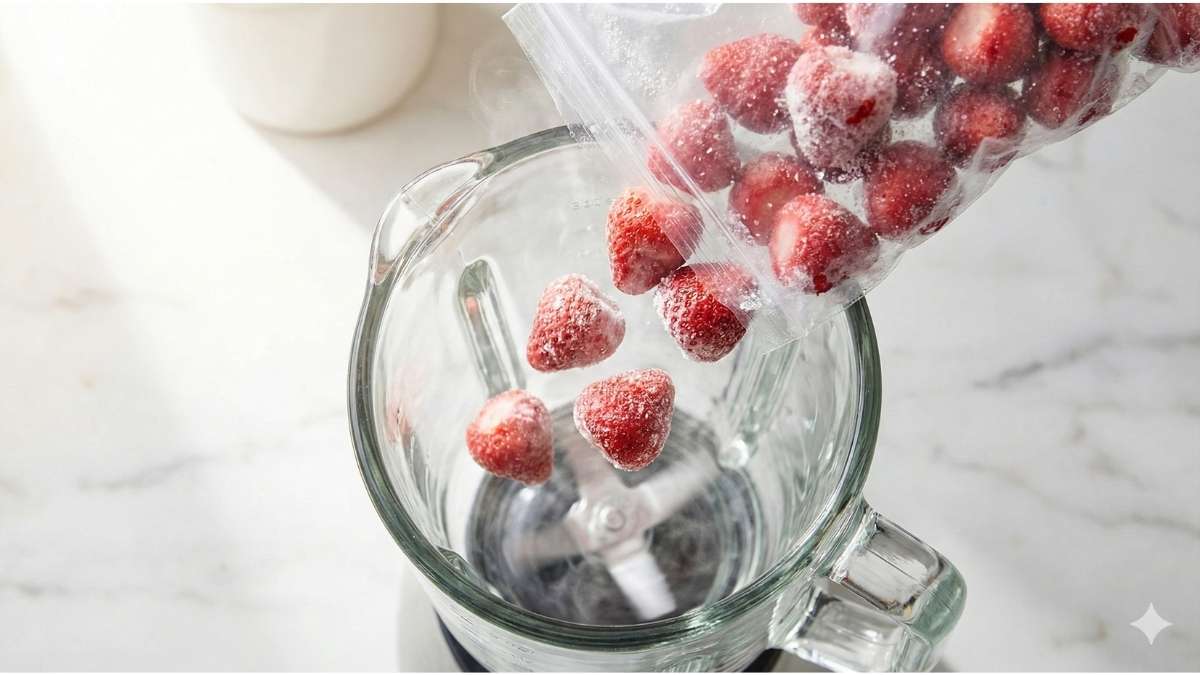
| ❄️ Buying Frozen | Conventional OK | Industrial washing and blanching removes ~30% of residues before freezing. |
Quick FAQs (You May Like to Ask)
Are frozen strawberries cleaner than fresh? ❄️
Yes, usually. Frozen berries get a thorough industrial wash—and often a quick blanch—that cuts residues by 20–30% before they ever reach the bag.
Does vinegar remove pesticides from strawberries? 🏺
Yes, but Baking Soda is better. Vinegar is acidic and can affect the taste. Baking soda degrades pesticides chemically without altering the flavor.
What is the white stuff on my strawberries? 🍓
This is usually "bloom" (a natural wax) or harmless mold. It is rarely visible pesticide residue, which is typically invisible to the naked eye.
Further Readings
- USDA Agricultural Marketing Service: Pesticide Data Program (PDP)
- National Pesticide Information Center (Oregon State University): Minimizing Pesticide Residues in Food
- U.S. Food and Drug Administration (FDA): Pesticide Residue Monitoring Questions & Answers

Meet Saqib
Saqib Ali Ateel is a PhD Scholar by training and a "student of the soil" by nature. He combines deep research, hands-on farming wisdom, and agricultural systems supervision to reveal what’s really on your plate. His mission is simple: to help your family navigate the food industry's complexity so you can eat cleaner, safer, and smarter.
- Home
- Why Toxic Foods?
- Heavy Metals in Food
- Pesticides in Strawberries