A2 Grass-Fed Milk and Digestion: What It Helps—and What
It Doesn’t?
While calibrating a mass spectrometer to test a fresh batch of A2 Grass-Fed Milk, with the sharp smell of alfalfa still clinging to my jacket, I realized why this premium dairy is either a digestive relief—or an expensive placebo.
The 2026 data is blunt: A2 milk improves digestion only if your bloating is triggered by the A1 protein, releasing the inflammatory BCM-7 peptide; it will not cure true lactose intolerance.
Skip the hype and go straight to the At-A-Glance Value Matrix below to pinpoint your trigger and buy the right milk based on verifiable genetics and feeding logs.
| 🗂️ Category | 🏆 The Winner | 📊 Key Metric | 👨🌾 The PhD Farmer Verdict |
|---|---|---|---|
| 🧬 Best for Protein Sensitivity | 🥇 Certified 100% A2 Milk | 🧪 BCM-7 Peptide Load | Solves specific A1 beta-casein cleavage issues. Essential if you react to regular milk but test negative for lactose intolerance. |
| 🥛 Best for Lactose Intolerance | 🧀 Lactose-Free Milk / Hard Cheeses | ⚙️ Lactase Enzyme Addition | A2 genetics will not help you here. You need the carbohydrate broken down mechanically before consumption. |
| 🫀 Best for Lipid/Metabolic Health | 🌿 100% Grass-Fed Milk | ⚖️ Omega-6:Omega-3 Ratio | Enhances the fatty acid profile and carotenoids, but does nothing to change the fundamental digestibility of the proteins. |
| 🛡️ The Tier 2 Safe Alternative | 🥣 Standard Organic Cultured Yogurt | 🦠 Fermentation Factor | Harm reduction logic: Fermentation lowers lactose and predigests some proteins. Cheaper than pure A2 grass-fed milk. |
🛑 The Blunt Answer: How to Buy
- ✅ If you get bloated/gassy but tested negative for lactose intolerance: Buy Certified A2 Milk. The A1 protein is likely your trigger.
- ✅ If you lack the lactase enzyme (Lactose Intolerant): Buy Lactose-Free milk. A2 milk still contains roughly 5g of lactose per 100g. It will still cause colonic fermentation.
- ✅ If you want the best fatty acid profile for metabolic health: Buy 100% Grass-Fed.
- ✅ If you want both optimal lipids and protein digestibility: Buy Grass-Fed A2 Milk, but be prepared to pay a premium for dual-verification (CSN2 genotyping + pasture logs).
The Kitchen-Table Translation: What Exactly Are A1 and A2
Milks?
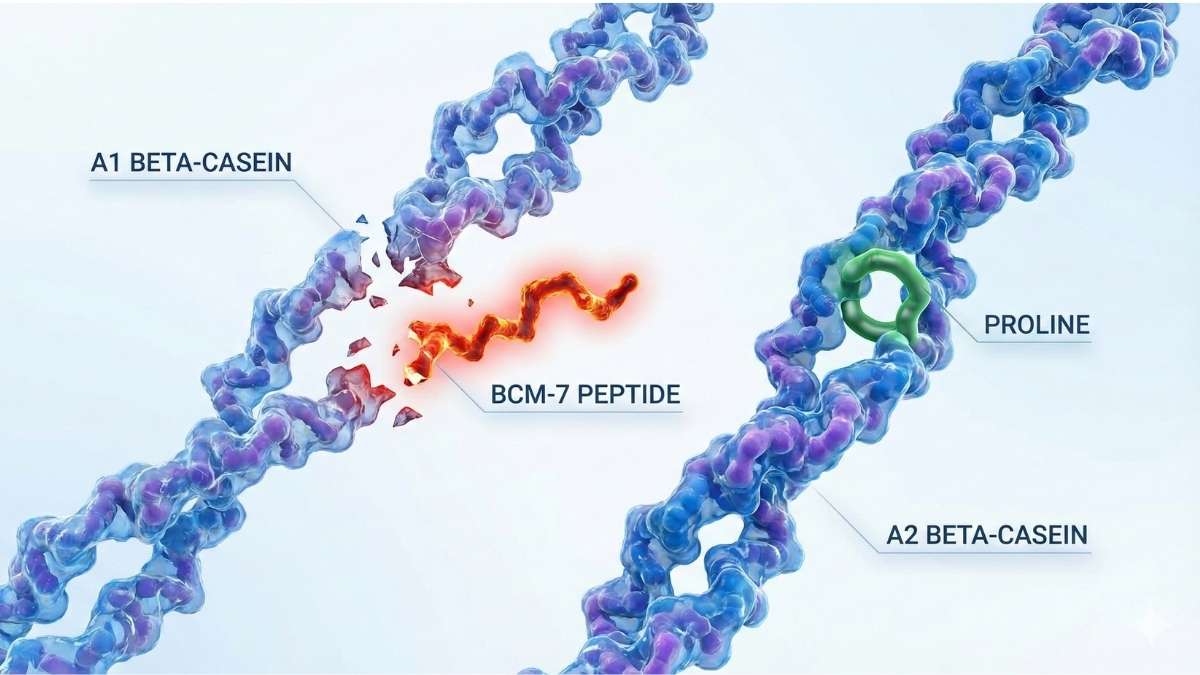 The A1 beta-casein "zipper" breaks to release the BCM-7 peptide, while the A2 proline structure remains stable during digestion.
Let’s step out of the lab for a minute. When you pour a standard glass of milk from the grocery store, you are drinking a biological cocktail of water, fats, milk sugar (lactose), and proteins. The dominant protein in cow's milk is called beta-casein.
Historically, all cows produced milk with a specific, highly stable beta-casein structure—what we now call the A2 protein. However, thousands of years ago, a genetic mutation occurred in European dairy herds (like the high-producing Holsteins), creating the A1 protein variant. Today, your standard gallon of commercial milk is a blended mix of both A1 and A2 cows.
The difference between these two milks is microscopically small but biologically massive. It comes down to a single amino acid link.
Imagine the beta-casein protein as a chain of Lego blocks.
- In A1 milk, one of those blocks is fragile. When your stomach enzymes hit it, the chain snaps open, releasing a rogue peptide fragment called BCM-7. For many people, BCM-7 acts like a gut irritant, triggering bloating, sluggishness, and motility issues.
- In A2 milk, that specific Lego block is naturally reinforced. The chain stays completely intact during digestion. Because it doesn't snap, zero BCM-7 is released into your gut.
How does this compare to the rest of the dairy aisle?
- Lactose-Free Milk: This is just standard A1/A2 milk where the sugar (lactose) has been pre-digested by an added enzyme. The A1 protein "snapping" problem is still there.
- Goat and Sheep Milk: These animals never went through that European genetic mutation. Their milk naturally contains mostly A2-type proteins, which is the actual reason your grandmother probably told you goat milk is "easier on the stomach."
- Plant Milks (Oat, Almond): These contain zero lactose and zero bovine proteins, but they completely lack the fatty-acid profile of grass-fed dairy and often rely on industrial gums or seed oils to mimic the texture of real milk.
The Clinical Evidence: What the Trials Actually Show
Now that you understand the mechanics of the A2 protein structure, we need to look at the verification. We don't rely on marketing claims; we rely on clinical trials.
According to the EFSA scientific report, the release of the BCM-7 peptide from A1 milk is a documented trigger for gastrointestinal motility issues in protein-sensitive individuals. But does removing it actually help in the real world?
The 2026 data suggests it does. A randomized, double-blind, crossover trial published in the Nutrition Journal compared A2-only milk to conventional milk (which mixes A1/A2) in adults with self-reported milk intolerance. The study tracked gastrointestinal symptoms and inflammatory biomarkers. The results indicated that completely removing the A1 protein visibly improved stool characteristics and significantly reduced digestive distress for those with specific protein sensitivities.
Which Bucket Are You In? Understanding Your Sensitivity
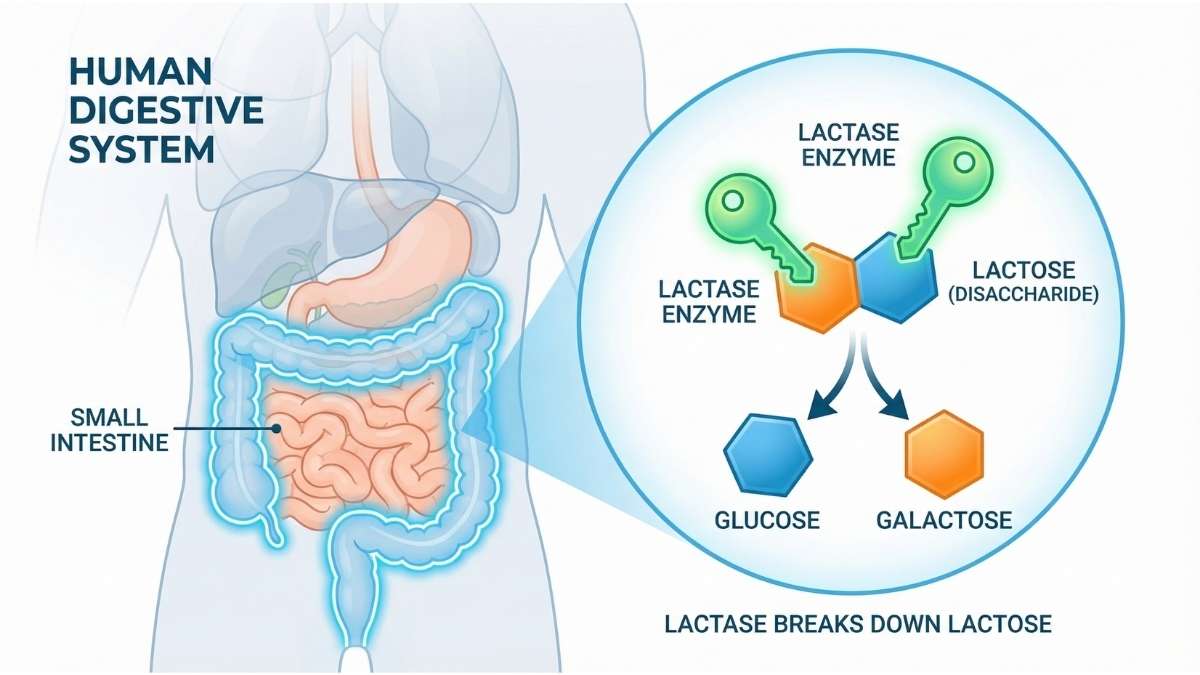 Lactase enzymes hydrolyze lactose into absorbable monosaccharides; without them, the intact sugar causes colonic fermentation.
Before spending a premium on specialized dairy, you must identify your biological bottleneck. You are likely falling into one of two buckets:
Bucket 1: Lactose Intolerance
Lactose is a disaccharide sugar (glucose + galactose). If you lack the intestinal lactase enzyme to break it down, the intact sugar moves into your colon, where bacteria ferment it. This causes severe osmotic effects (bloating and gas), as detailed by the National Institute of Diabetes and Digestive and Kidney Diseases.
Bucket 2: Milk-Protein Sensitivity
Protein intolerance is entirely different. It is a reaction to the physical structure of the beta-casein (the BCM-7 peptide fragment we discussed above), not the milk sugar.
The Hard Truth: Is A2 Milk Lactose-Free?
No. My calculation of USDA food data shows that standard whole milk contains roughly 5g of lactose per 100g. A2 milk changes the protein structure, but the carbohydrate remains identical. If you are strictly lactose intolerant, A2 milk will not solve your problem, and you will still experience colonic fermentation.
The "Grass-Fed" Factor: Does It Change
Digestion?
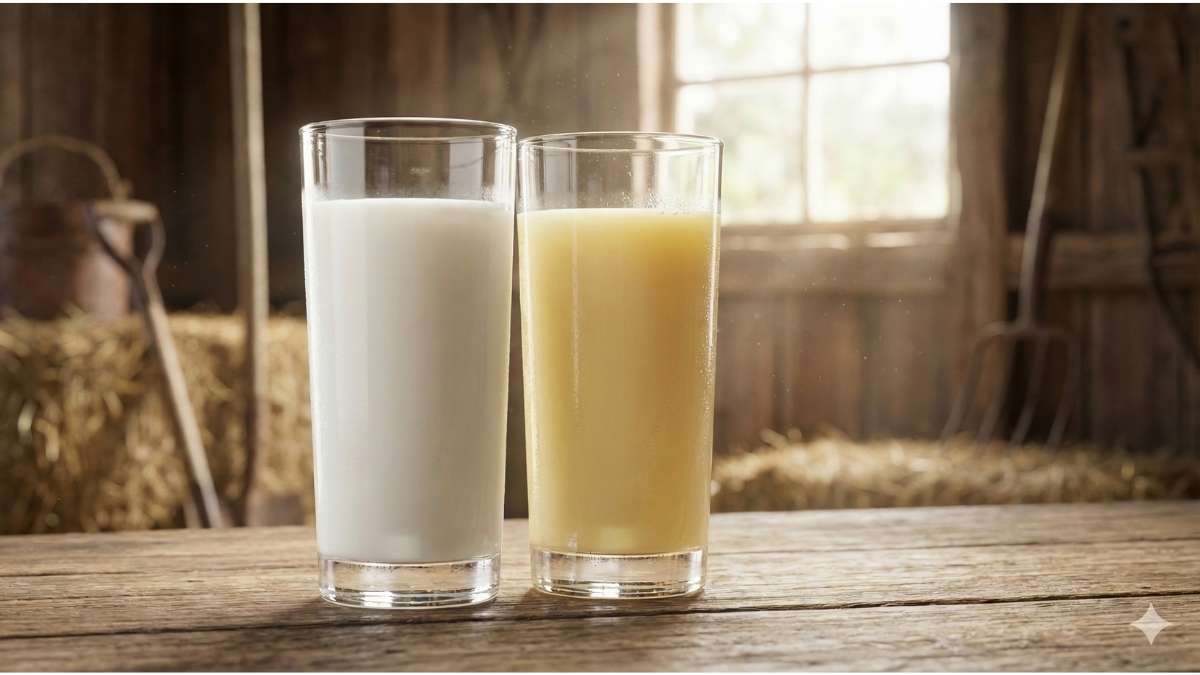 Grass-fed milk often exhibits a golden tint due to elevated beta-carotene levels extracted from fresh pasture forage.
Nutritional Profile vs. Digestibility
A cow's diet (grass-fed vs. grain-fed) dictates its lipid profile, but it does not alter its DNA. A cow with A1 genetics eating 100% pasture will still produce A1 milk. Grass-fed milk does not automatically mean A2 milk.
Omega-3s, CLA, and Milk Composition
What grass-fed farming actually does is alter the metabolic load and fat profile. A PLOS ONE peer-reviewed analysis reported that retail milk associated with heavy pasture intake possesses significantly higher omega-3 fatty acids, a much lower omega-6 to omega-3 ratio, and elevated conjugated linoleic acid (CLA).
The fresh forage also increases carotenoids (like beta-carotene), which visually shifts the milk to a more golden color. While this is excellent for systemic inflammation, it does not directly change how your stomach breaks down the milk proteins.
⚖️ The Truth Table (Fact vs. Myth)
Deep Dive Mini-Reviews: The Commercial Landscape
1. Pure A2 Milk Categories
- Pros: Verified CSN2 genotyping eliminates the BCM-7 peptide. Excellent for A1-sensitive individuals.
- The Catch: Frequently comes from grain-fed cows unless specifically marked otherwise, meaning the omega-6 ratio may be higher.
- Smart Buy: Look for the registered "a2 Milk" trademark if you prioritize strict genetic testing over pasture logs.
2. 100% Grass-Fed Milk (e.g., Organic Valley, Maple Hill)
- Pros: High CLA, optimal omega-3 ratios, verified via USDA AMS Forage standards.
- The Catch: Often contains a mix of A1 and A2 genetics.
- Smart Buy: Ideal for those with cast-iron stomachs optimizing for lipid health and regenerative agriculture support.
3. Dual-Claim: Grass-Fed A2 Milk
- Pros: The gold standard. Combines superior lipid profiles with BCM-7 elimination.
- The Catch: High premium price per ounce; supply chain traceability is difficult to audit.
- Smart Buy: Utilize this if you have the budget and strictly want both metabolic and digestive optimization.
The 14-Day Self-Test Protocol for A2 Milk
If you want to run an empirical test on your own digestion, use this 14-day elimination protocol.
Note: Milk is a major food allergen recognized by the FDA. This protocol is strictly for non-allergic protein sensitivities, not IgE-mediated dairy allergies.
1. Baseline Clearing (Days 1-5): Remove all dairy from your diet. Log baseline bloating, motility, and gas.
2. The Carbohydrate Test (Days 6-8): Introduce a strict, conventional Lactose-Free milk. If symptoms return, your issue is likely the A1 protein, not the lactose.
3. The Protein Test (Days 9-14): Switch to Certified A2 Milk. Ramp up from 4oz to 8oz daily. Track symptom regression. If you remain symptom-free, you have isolated an A1 beta-casein sensitivity.
Buyer's Guide: Reading "Grass-Fed A2" Labels
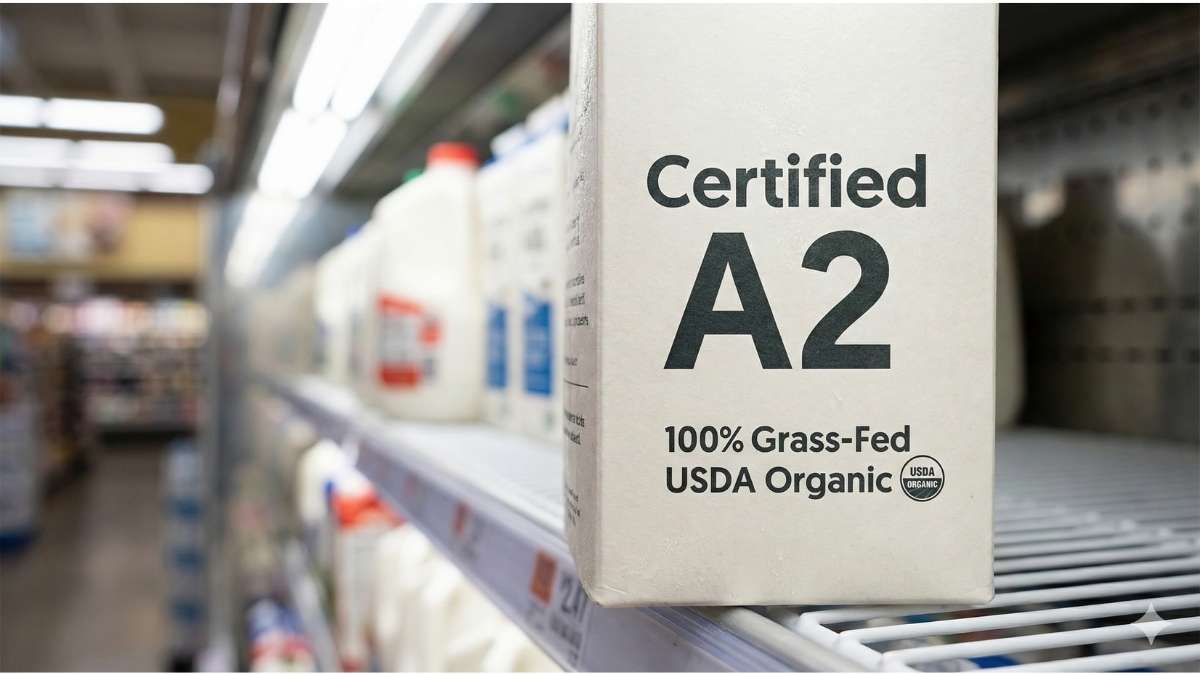 True grass-fed A2 milk requires dual-verification: CSN2 genotyping for the protein and USDA AMS standards for the forage.
Decoding FDA and USDA Claims
Under 21 CFR 131.110, the FDA holds a strict standard of identity for "milk." Notably, "A2" is not a separate FDA standard-of-identity category. Brands must use the term carefully to avoid "false or misleading" misbranding under 21 USC 343(a)(1). For a brand to claim "Grass-Fed," they usually adhere to the USDA AMS "Grass (Forage) Fed Marketing Claim Standard," meaning the animals were fed 100% forage after weaning.
How Farms and Brands Verify A2 Status
Real traceability requires biological auditing. Farms determine A1/A2 status via CSN2 genotyping (taking DNA from the cows). Downstream, supply chains verify this using LC–MS/MS analytical workflows. These mass spectrometry tests identify the variant-specific peptide fingerprints, ensuring no A1 milk slipped into the vat.
Frequently Asked Questions
Is A2 milk easier to digest than regular milk?
Only if your digestive distress is caused by the A1 beta-casein protein and the subsequent release of the BCM-7 peptide.
Does A2 milk help lactose intolerance?
No. A2 milk contains standard amounts of lactose. You will still experience osmotic discomfort and colonic fermentation.
What is the difference between A1 and A2 beta-casein?
They are genetic variants of a milk protein that differ by a single amino acid at position 67 (A1 has histidine; A2 has proline).
Does grass-fed milk change digestion, or is it just nutrition?
Grass-fed milk primarily alters the nutritional lipid profile (Omega-3s, CLA). It does not change the genetic protein structure or lactose content, so it will not independently resolve A1 or lactose intolerances.

Meet Saqib
Saqib Ali Ateel is a PhD Scholar by training and a "student of the soil" by nature. He combines deep research, hands-on farming wisdom, and agricultural systems supervision to reveal what’s really on your plate. His mission is simple: to help your family navigate the food industry's complexity so you can eat cleaner, safer, and smarter.
- Home
- Meat & Dairy
- 100% Grass-fed Beef
- A2 Grass-Fed Milk