🧊 The Science of
Coffee Beans Storage: Best Containers, Methods & Myths
You can buy fresh roasts, but a bad coffee beans storage habit will turn your cup into cardboard overnight. The smell of a freshly opened bag is a violent, beautiful chemical event. That sharp, sweet hiss of gas escaping isn’t just sound engineering—it’s the song of volatile sulfur compounds hitting the air.
But have you noticed how quickly that song fades? Within days, the bright fruit notes turn into flat cardboard, and that rich chocolate base starts smelling like old pennies.
If you are like me, you have probably stood in your kitchen, paralyzed by conflicting advice. Do I put this in the freezer? Is the fridge okay? Should I buy that fancy vacuum canister?
You shouldn't have to brew a side of worry with your morning cup. Let's get your boots muddy in the chemistry of keeping your beans alive so you can stop wasting money on dead coffee.
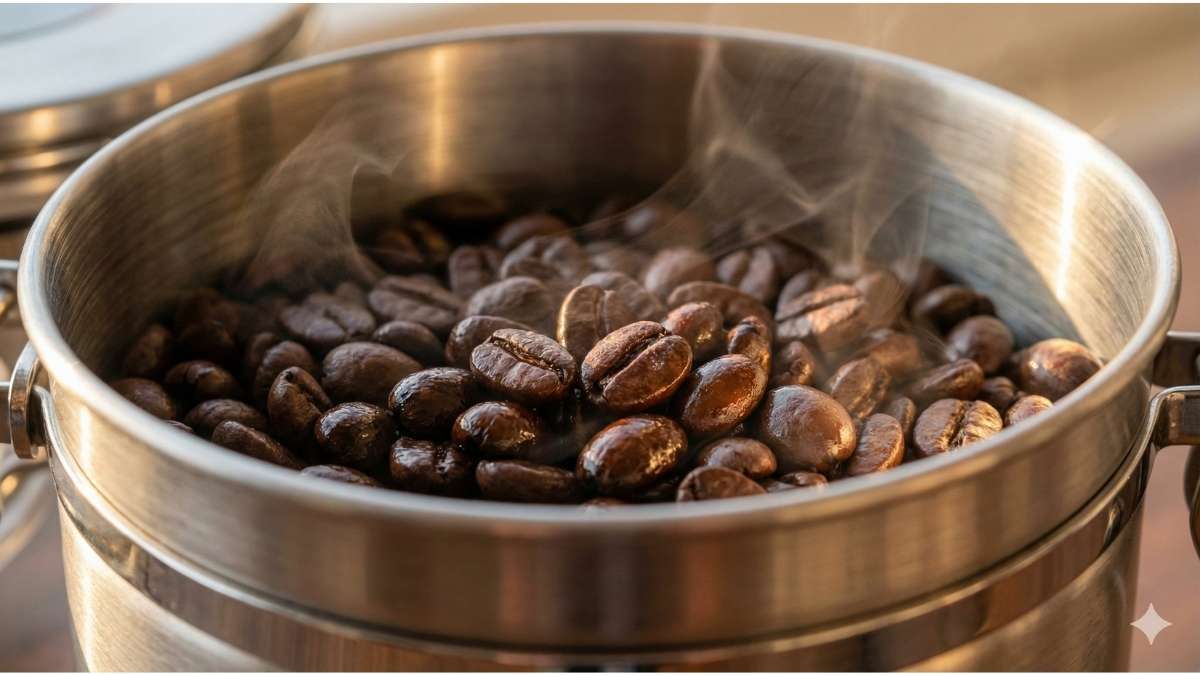
⚡ At-A-Glance: Storage Method Showdown
If you need a quick answer, here is how the three most common methods compare based on 2026 preservation standards.
🦠 The 4 Enemies
of Freshness (The Science)
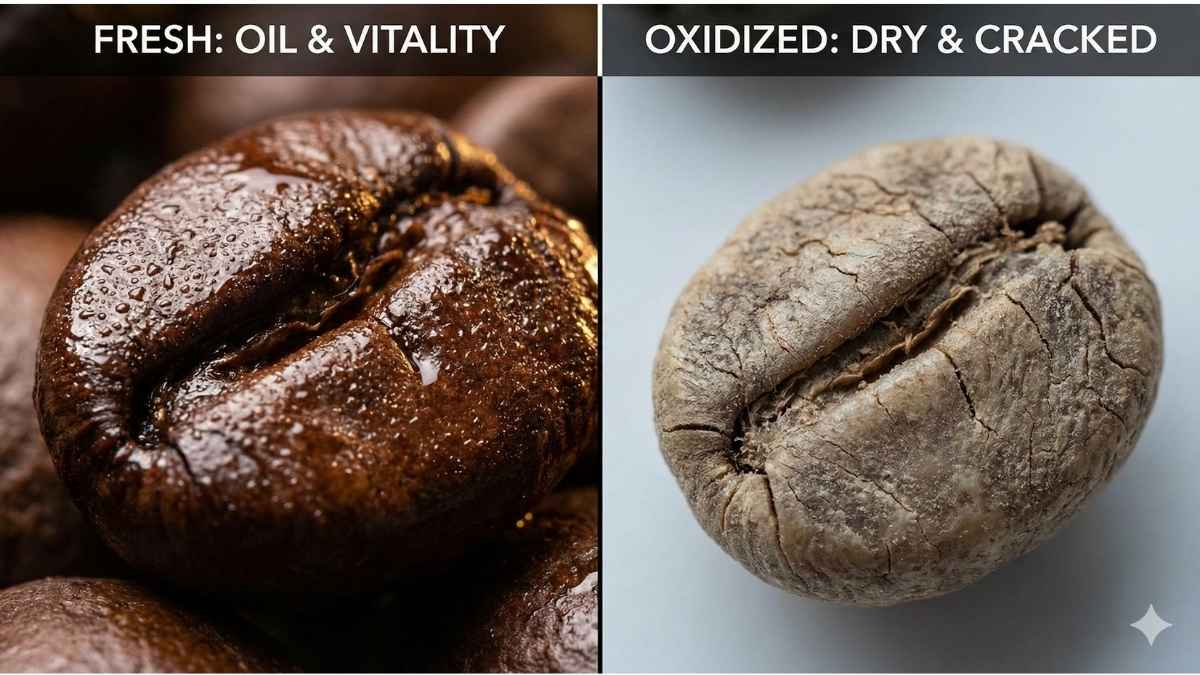
Let's be real: "Freshness" isn't a feeling; it is a battle against thermodynamics. The roasted coffee bean is a volatile matrix that begins to die the moment it leaves the roaster. Here is exactly what is killing your coffee.
1. Oxidation: The Rancidity Clock
Coffee beans contain 10–16% lipids (oils). When these oils meet oxygen, they spoil just like butter left on the counter. This is a "free-radical chain reaction" that turns fresh fats into rancid-smelling aldehydes.
Think of heat as a gas pedal for decay. Every 10°C rise makes your beans go stale twice as fast, thanks to a pesky rule chemists call the Arrhenius Equation.
✅ The Verdict: Storing coffee in a hot pantry (25°C) rots it 4x faster than a refrigerator (4°C), and infinitely faster than a freezer.
2. Photodegradation: Why Glass Jars Fail
We all love the look of beans in a clear mason jar on the counter. It looks great, but that clear glass forces your beans to sunbathe their flavor away. The most critical aroma compound in coffee, methanethiol, is destroyed by light.
In fact, research published in Food Chemistry found that the "roasty" smell of coffee (2-furfurylthiol) drops by 84% in just 60 minutes under light exposure.
✅ The Verdict: If you can see your beans, your beans are dying. Use opaque ceramic or steel containers.
3. The "Vacuum" Myth (Stripping the Aroma)
This is the most common debate in the industry. Should you vacuum seal?
Here is the conflict: Fresh beans release CO₂ (degassing). If you vacuum seal them immediately after roasting, the bag will explode. If you wait 5–7 days for them to degas, industry data suggests you have already lost 50–60% of the aroma to the air.
Vacuum sealers are great tools, but they often arrive too late to the party. They preserve what is left, not what was lost.
❄️ The Fridge vs. Freezer Verdict
This is where the anecdotal "kitchen wisdom" usually gets it wrong.
Why the Fridge is a Trap
A refrigerator typically sits at 4°C with varying humidity. This temperature is not cold enough to stop the chemical aging process, but the environment is wet enough to introduce moisture. Moisture lowers the glass transition temperature of the bean, turning its structure from a protective glass into a rubbery state where oxygen can move freely.
Plus, unless your seal is perfect, your coffee will absorb the odors of last night’s lasagna.
The Freezer Wins on Flavor—But Only in Airtight Portions
The deep freezer (-20°C) is the only place where kinetics effectively stop.
In a comprehensive study by Royal Coffee, beans stored frozen for 6 months lost only 0.4 points on the official quality scale. The same coffee stored at room temperature lost 3.3 points, dropping from "Specialty" grade to near-commercial grade.
Bonus: The "Frozen Grinding" Hack
Freezing does more than preserve; it improves the brew. Frozen beans are brittle. When you grind them, they shatter more cleanly, creating fewer "fines" (dust) and "boulders" (chunks). This uniformity leads to a sweeter cup.
✅ The Verdict: Never put coffee in the fridge. Always put it in the freezer—but only in airtight, single-dose portions to avoid condensation.
🛠️ Real World
Scenarios: What If You Can't Freeze?
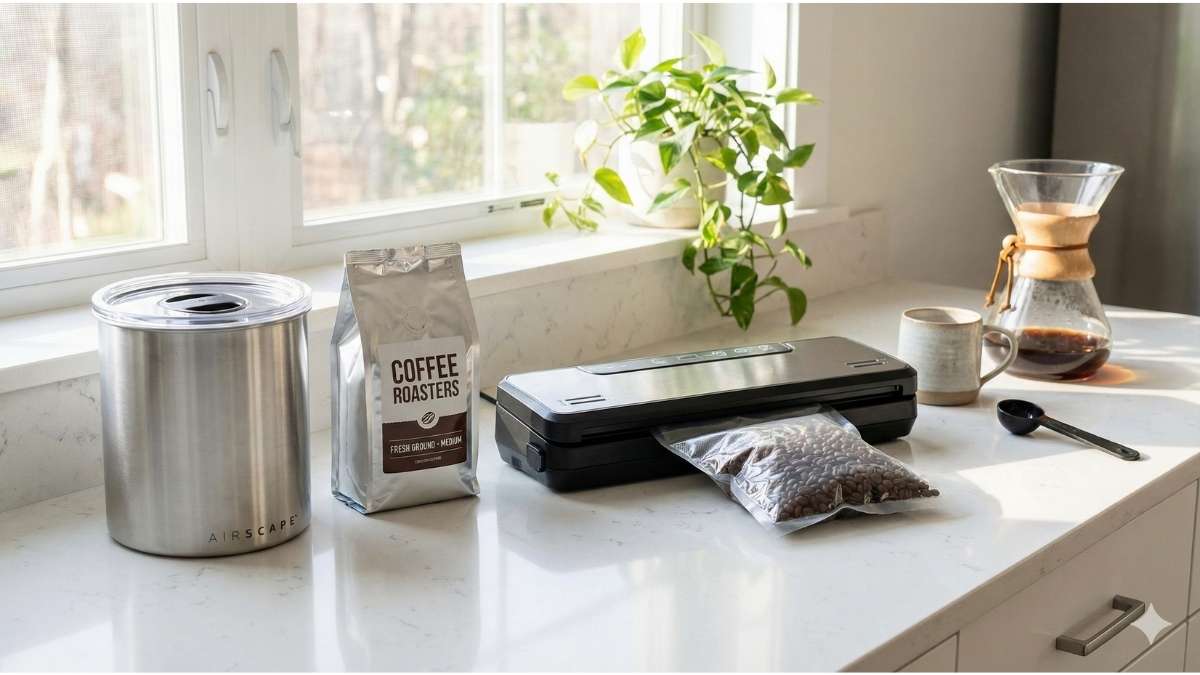
Not everyone has a chest freezer or wants to single-dose beans like a scientist. Here is how to handle imperfect situations.
Scenario A: "I Buy Pre-Ground Coffee"
Once coffee is ground, the surface area explodes, and oxidation happens in minutes, not days.
- The Fix: You cannot stop the decay, only slow it. Keep it in the original bag, squeeze all air out, and place that bag inside an opaque airtight container (double seal). Store in the coolest, darkest part of your pantry.
- The Rule: Buy small amounts (weekly supply) only.
Scenario B: "I Only Have a Pantry Shelf"
If you must store at room temperature, oxygen displacement is your only weapon.
- The Fix: Use an "Air Displacement" canister (like the Airscape) where you physically push a plunger down to the bean level. This is better than a standard jar where the "headspace" is full of air.
- The Rule: Keep it away from the stove, oven, or sunny windows.
Scenario C: "I Live in a Humid Climate"
Humidity is the silent killer. It turns beans "rubbery" and stale.
- The Fix: Use a Vacuum Canister (like Fellow Atmos). While I criticized vacuuming fresh beans earlier, in a humid climate, the vacuum seal is necessary to pull moisture out of the headspace.
🛡️ Best Materials
for Coffee Beans Storage
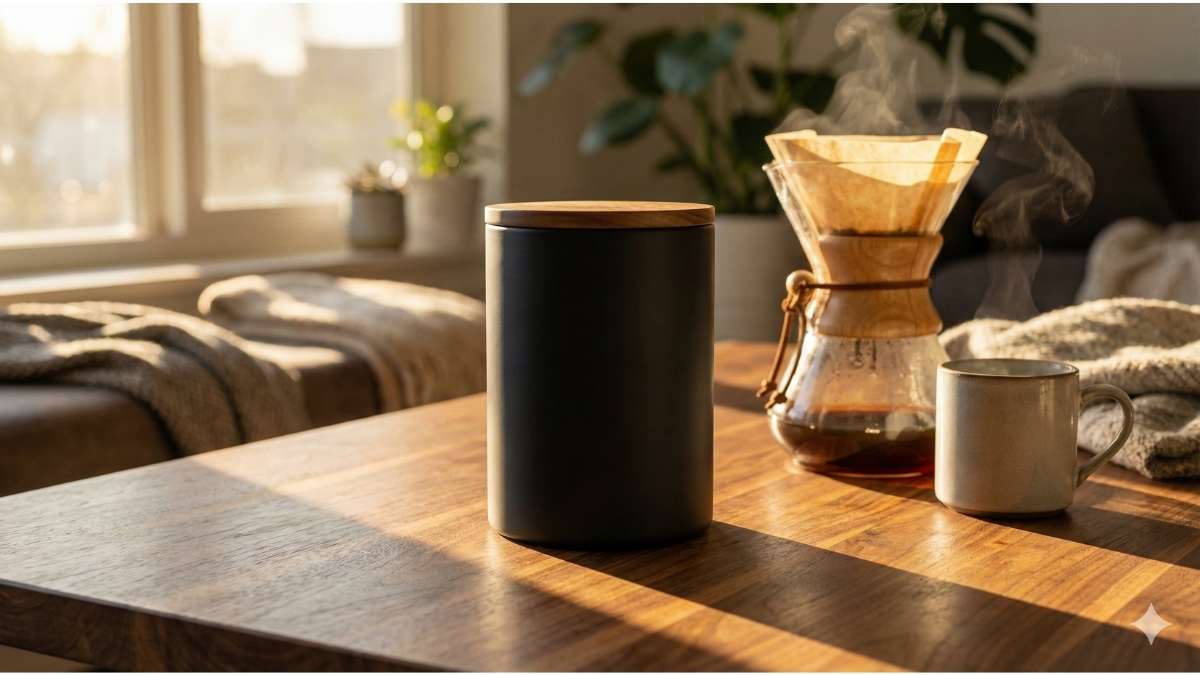
As a researcher, I worry about what touches my food. Coffee is both acidic and fatty—a combination that loves to leech chemicals out of plastic.
Studies in the Journal of Food Engineering warn that antioxidants used in plastic manufacturing (like Irgafos 168) can migrate from polypropylene bags into coffee oils. While currently legal, the medical consensus is shifting toward minimizing exposure to these compounds.
Brands That Put Their Money Where Their Mouth Is
If you are looking for the safest gear, here is how the top options stack up against the Preforganic Safety Filters.
| ⚙️ Gear Type | 🏆 Top Pick | 🔧 Mechanism | 🎯 Best For... |
|---|---|---|---|
| ☕ Countertop | Fellow Atmos | Active Vacuum (Twist) | Daily Drinkers who need quick access. |
| 🫙 Pantry | Airscape | Air Displacement (Plunger) | Bulk storage where you physically push air out. |
| 🧊 Freezer | Mylar Bags | Heat Seal / Zipper | Long-term archival of expensive beans. |
| 🛡️ Safety | Glass/Steel | Inert Material | Avoiding plasticizer/BPA migration. |
❓ FAQ & Freshness Timeline
The Freshness Timeline (Room Temp)
- Days 0–5: Degassing Phase (Too gassy to brew well).
- Days 6–21: The "Sweet Spot" (Peak Flavor).
- Day 22+: Staling begins (Acidity fades, bitterness rises).
Q: Can I re-freeze coffee after taking it out?
A: No. Thawing and refreezing creates moisture condensation on the beans, which destroys the cell structure and accelerates staling. Once it's out, it stays out.
Q: Does the "One-Way Valve" let air in?
A: No. It is a one-way street designed to let CO₂ out (so the bag doesn't burst) while preventing oxygen from entering. It is essential for freshness.
Q: Is a Mason Jar okay?
A: Only if you keep it in a dark cupboard. If it sits on the counter, light will destroy the flavor in hours.
References
- Molecules (2020): Characterization of the lipid oxidation process.
- Food Chemistry (2019): Aroma stability of fresh coffee brew.
- Journal of Food Engineering (2019): Antioxidant migration from polypropylene.
- Royal Coffee (2024): Freezing Green Coffee: An Evaluation of Sensory Quality.
- Nature (Scientific Reports, 2016): The effect of bean origin and temperature on grinding roasted coffee.

Meet Saqib
Saqib Ali Ateel is a PhD Scholar by training and a "student of the soil" by nature. He combines deep research, hands-on farming wisdom, and agricultural systems supervision to reveal what’s really on your plate. His mission is simple: to help your family navigate the food industry's complexity so you can eat cleaner, safer, and smarter.
- Home
- Clean Coffee Guide
- Best Organic Coffee Brands
- Organic Mold Free Coffee
- Coffee Beans’ Storage