The PhD Farmer's Advice to Organic Black Coffee: Spotting‘ Dirty’ Beans & Waking Up Your Metabolism
The sharp, volatile snap of a coffee bean fracturing in a burr grinder releases over 800 aromatic compounds before water even touches the grounds. Standing in the humidity of a drying patio, breathing in that blend of earth and fermentation, you realize organic black coffee isn't just a caffeine delivery system. It is a complex pharmacological suspension.
But lately, it's hard to just enjoy the aroma when you’re secretly wondering what else is hiding in your brew. Is your morning ritual a metabolic super-tool, or is it a cocktail of mold toxins and herbicide runoff?
As a researcher and a grower, I don't rely on the "USDA Organic" sticker alone. I rely on mass spectrometry and soil chemistry. Let's look past the fancy labels to see what’s actually in your cup, how it fuels your metabolism, and how to brew it without losing the benefits.
🛑 The Blunt Answer: Is It Worth the Cost?
The Decision Logic:
- ✔ For Fat Loss: YES. Black coffee is zero-calorie and boosts metabolic rate (thermogenesis), but only if you avoid milk proteins which can blunt polyphenol absorption.
- ⚠ For Safety: YES, BUT... "Organic" isn't a magic shield. You must look for "Washed Process" (to avoid mold) and "Valved Bags" (to avoid plastic chemicals).
- ℹ For Budget: MAYBE. If you can't afford top-tier organic, buy conventional beans from high-altitude African origins (naturally lower pests/pesticides) rather than low-altitude blends.
🧪 The Organic Coffee Verdict
| Variable | Scientific Reality | Action |
|---|---|---|
| Toxins (Herbicides) | Organic reduces load but isn't 100% immune to drift. | Buy Organic to avoid direct neurotoxins. |
| Metabolism | Stimulates autophagy & lipolysis (fat burn). | Drink BLACK (No milk/sugar). |
| Mold (OTA) | Thrives on sugar in "Natural" processed beans. | Select "Washed" Process. |
*Analysis based on 2026 Ag-Data.
1. The Body: Why "Black" Coffee Matters
(Metabolic Mechanics)
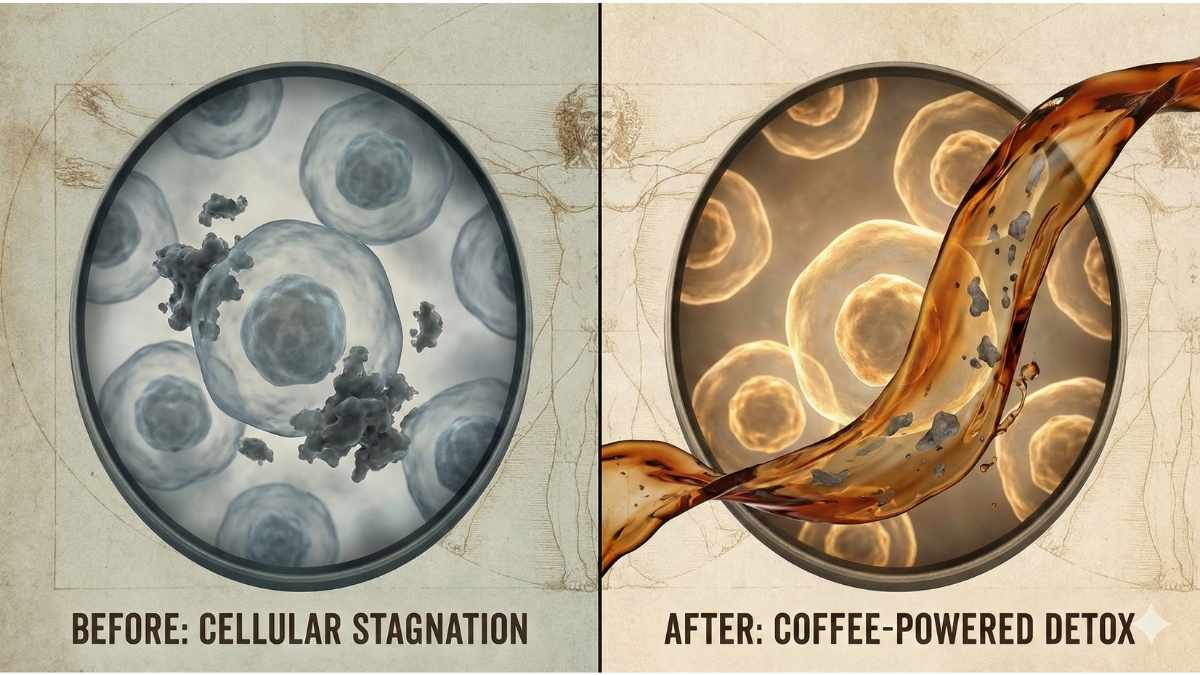 Autophagy in Action: Consuming black coffee in a fasted state helps clear "cellular debris" from your system.
Before we discuss toxins, we must establish why you are drinking them. The search for organic black coffee is often driven by health optimization. The "Black" part is just as important as the "Organic" part.
The Fasting Switch (Autophagy)
When you add milk or sugar, you spike insulin. Insulin is the "storage hormone" that shuts down fat burning. Black coffee, however, is unique.
- The Mechanism: It contains polyphenols that induce autophagy (cellular cleanup) in the liver and heart muscle.
- The Farmer's Take: Think of black coffee as "tilling the soil" of your metabolism. It clears out the debris (senescent cells) so new growth can happen. Adding cream is like parking a tractor on that fresh soil—it stops the process.
The Thermogenic Burn
Clinical data suggests that caffeine, combined with chlorogenic acid, stimulates thermogenesis (heat production).
- The Data: Consuming black coffee prior to exercise can increase fat oxidation (burning fat for fuel) by up to 29% in lean individuals. For the specific timing protocols on this, read our deep dive on Coffee & Metabolism Protocols.
2. The Toxicology Report: What "Organic"
Actually Means
The "pesticide-free" claim is the bedrock of the organic value proposition. However, recent surveillance has revealed a troubling porosity in the barrier between organic and conventional agriculture.
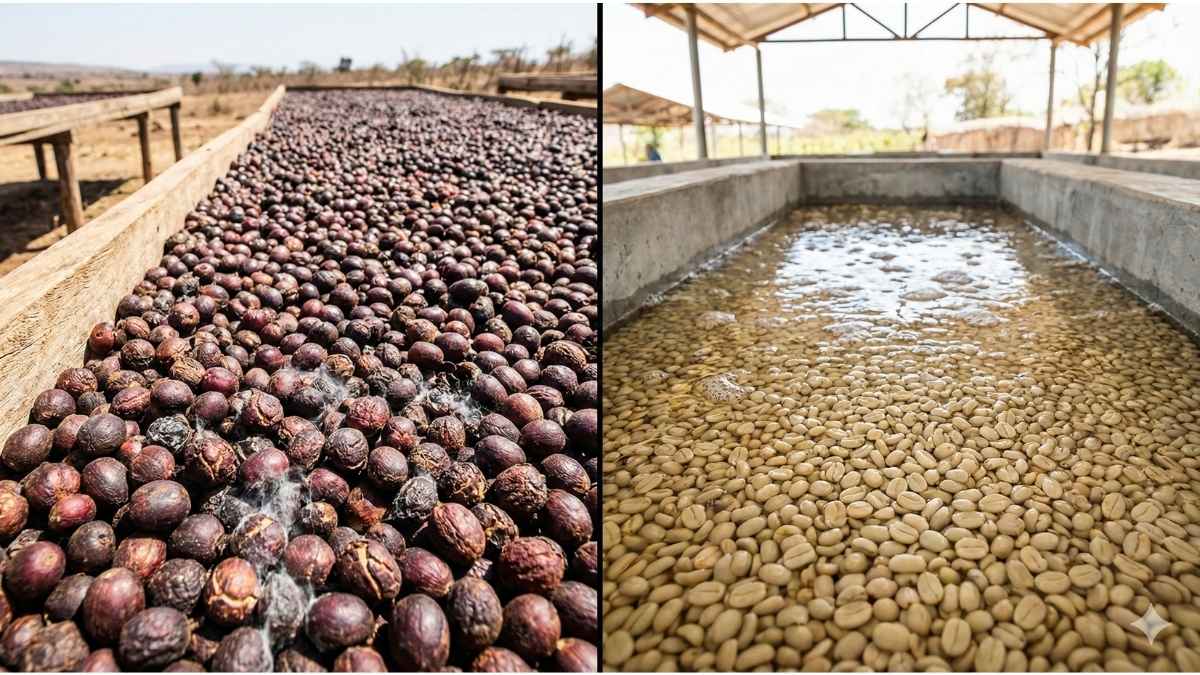 Left: "Natural" Process (Sugar remains = Higher Mold Risk). Right: "Washed" Process (Sugar removed = Safer).
The Glyphosate Loophole (AMPA)
Glyphosate (Roundup) breaks down into AMPA. A 2024 analysis by the Clean Label Project found AMPA in several organic brands.
- Why? Hydrology. If a conventional farm sits uphill, rain washes herbicides into the organic farm's water table.
- The Verdict: While organic coffee isn't immune to background pollution, it remains the only way to avoid direct application of systemic fungicides and insecticides. It is "Harm Reduction," not "Perfection."
The Fungal War: Ochratoxin A (OTA)
While pesticides are man-made, OTA is a kidney-toxic byproduct of mold. This is where my farming background overrides the "organic" label.
- High Risk: "Natural" or "Dry" Process. The cherry dries with the fruit flesh intact. The sugar feeds the mold.
- Low Risk: "Washed" Process. The fruit is stripped and fermented in water tanks. No sugar = No mold food.
- Action: Check the bag. If it says "Natural Process" or "Sun Dried," and you are sensitive to mold, put it back—even if it's organic. So, Is Organic Coffee Mold Free?.
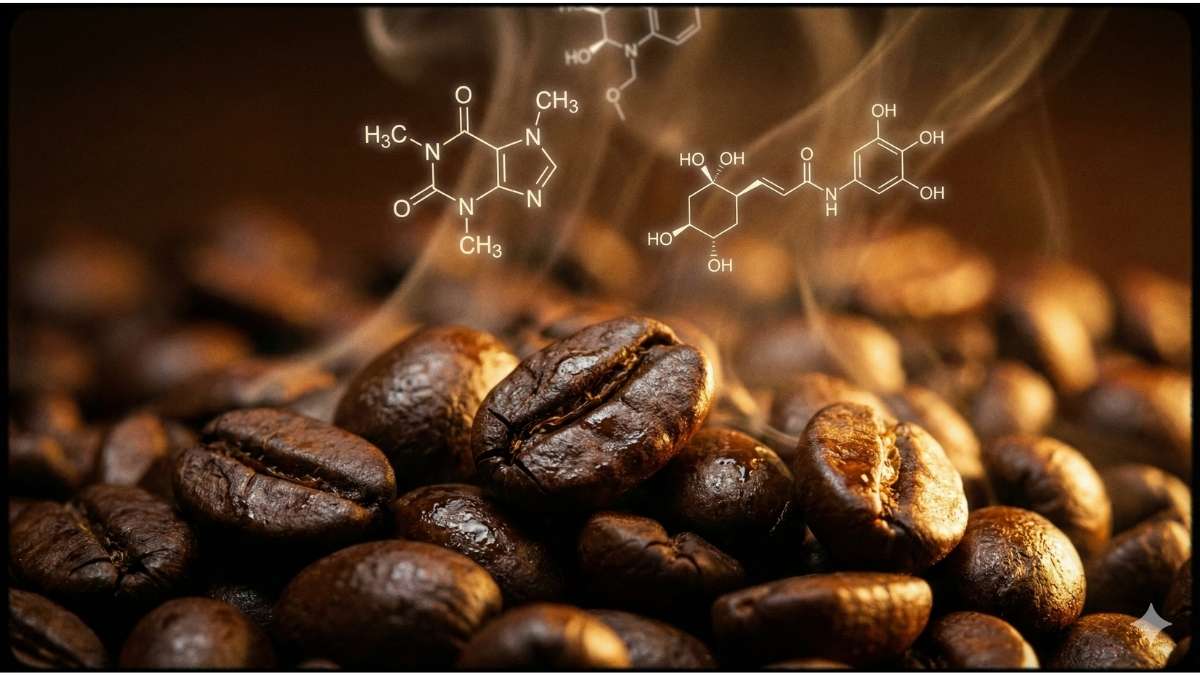 The Roast Paradox: Darker roasts actually contain less Acrylamide than light roasts due to thermal degradation.
3. The Roast Curve: The Acrylamide Paradox
Health-conscious consumers often buy Light Roast for "more antioxidants." This is a scientific trade-off that might backfire.
- The Chemistry: Acrylamide (a probable carcinogen) forms when beans are heated. However, it is thermally unstable.
- The Curve: As roasting temps climb past 200°C (Dark Roast), acrylamide is destroyed.
- The Recommendation: Medium-Dark Roast. It hits the "Goldilocks Zone"—safe levels of acrylamide, but still retains enough polyphenols to be beneficial.
4. The Farmer's Guide to Brewing (The "How-To")
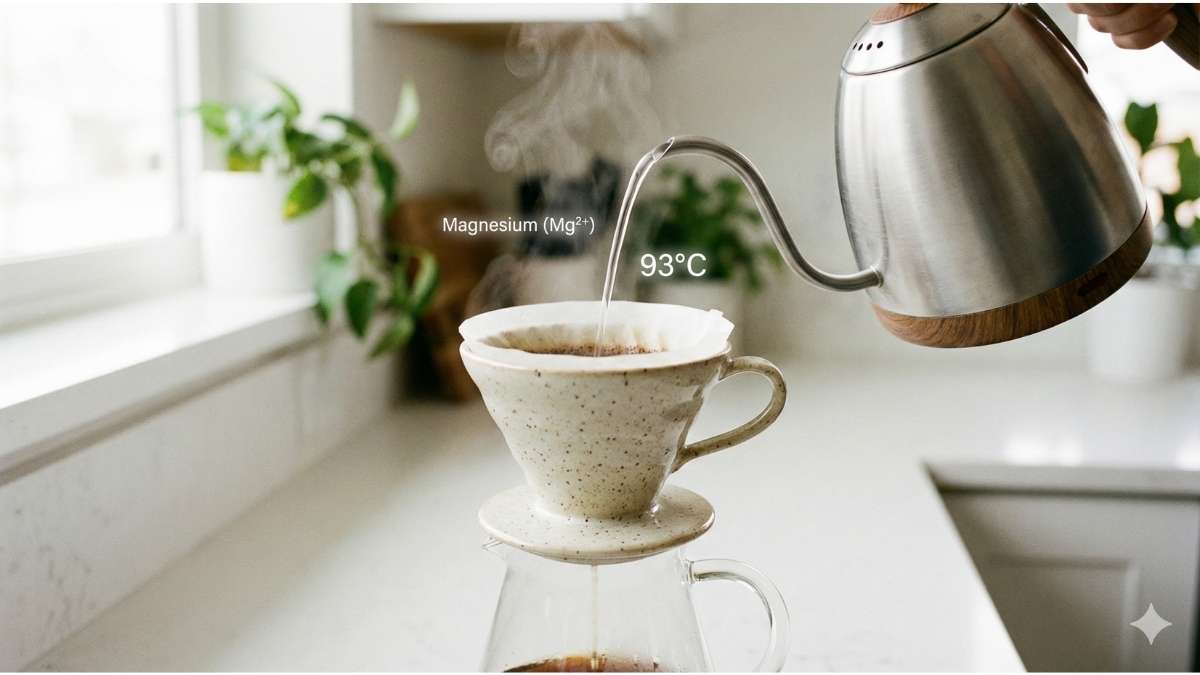
You can buy the best beans on Earth, but without the right minerals in your water, you’ll leave the flavor trapped in the grounds.
The Water Chemistry Rule
- Avoid: Distilled or Reverse Osmosis (RO) water. It is "hungry" water (no minerals) and will extract harsh acids, making the coffee taste sour and hollow.
- Use: Filtered water with Magnesium. Magnesium ions stick to flavor compounds better than calcium. If your organic coffee tastes like "batteries," your water is too soft.
The Storage Protocol
- The Container: Never leave beans in the "pretty" bag unless it has a one-way valve. Use an opaque, airtight canister.
- The Freezer Myth: Do not freeze daily coffee. Condensation forms every time you open the bag, introducing moisture and mold risk.
5. The Shoppable Guide: Best Brands by Use Case
We've analyzed the specs so you don’t have to. Here are the top contenders.
Category 1: The "Clinical" Grade (Top Pick)
- Ideal For: Bio-hackers, fasting protocols, autoimmune sensitivities.
- The Specs: USDA Organic, Third-Party Lab Tested (Mycotoxins/Heavy Metals), Nitrogen-Flushed.
- Why I Pick This: They don't just say "clean"; they show the Certificate of Analysis (CoA).
Top Picks:
- Purity Coffee (Flow): The industry standard for antioxidant retention.
- Lifeboost (Dark Roast): Low acid profile, single-origin Nicaragua.
Category 2: The Daily Staple (Value Pick)
- Ideal For: Families, 3-cup-a-day drinkers, routine brewing.
- The Specs: USDA Organic, Whole Bean, Fair Trade.
- Why I Pick This: You get the "Organic" safety baseline without the premium "Bio-hacker" markup.
Top Picks:
- Kicking Horse (Smart Ass): Reliable, consistent Medium-Dark roast.
- Equal Exchange (Mind, Body, Soul): Widely available and farmer-owned.
Category 3: The "Origin" Hack (Budget Pick)
- Ideal For: Smart budgeters who want purity without the certification cost.
- The Specs: Conventional (Non-Organic), High-Altitude African (Ethiopian/Kenyan), Washed Process.
- Why I Pick This: At 1,800m elevation in Ethiopia, pests are rare, so spray is minimal. You leverage geography instead of paying for a label.
Top Picks:
- Volcanica (Ethiopian Yirgacheffe: Classic washed profile, bright acidity, naturally clean.
Category 4: The "Hard Pass" (Avoid)
- Instant Coffee: Highest acrylamide levels due to processing.
- Plastic Pods: High risk of phthalate (endocrine disruptor) migration.
- Flavored Beans: "Hazelnut" and "Vanilla" are usually chemical solvents (Propylene Glycol) sprayed on low-grade beans. For a non-toxic setup, check our guide on Best Non-Toxic Coffee Makers
FAQ: The "Micro-Intents"
Q: Does organic coffee break a fast?
A: No. Pure organic black coffee has <5 calories. It actually enhances the fast by stimulating autophagy.
Q: Is "Low Acid" coffee a scam?
A: Mostly. "Low Acid" is usually just marketing for "Dark Roast." Dark roasting naturally produces N-methylpyridinium (NMP), which blocks acid secretion in your stomach. You don't need to pay extra; just buy a darker roast. For more details, see our Low Acid Coffee Guide.
Q: Why does my coffee taste like dirt?
A: If it's organic, it might be a "quality" defect called Phenol. This happens when a single over-ripe or insect-damaged bean gets into the batch. It is more common in lower-grade organic beans where manual sorting is skipped to save costs.

Meet Saqib
Saqib Ali Ateel is a PhD Scholar by training and a "student of the soil" by nature. He combines deep research, hands-on farming wisdom, and agricultural systems supervision to reveal what’s really on your plate. His mission is simple: to help your family navigate the food industry's complexity so you can eat cleaner, safer, and smarter.
- Black Coffee in the Morning
- Best Non-Toxic Coffee Makers
- Coffee for Metabolism Boost
- Best Organic Low-Acid Coffee
- Best Organic Decaf Coffee